
EXECUTIVE SUMMARY
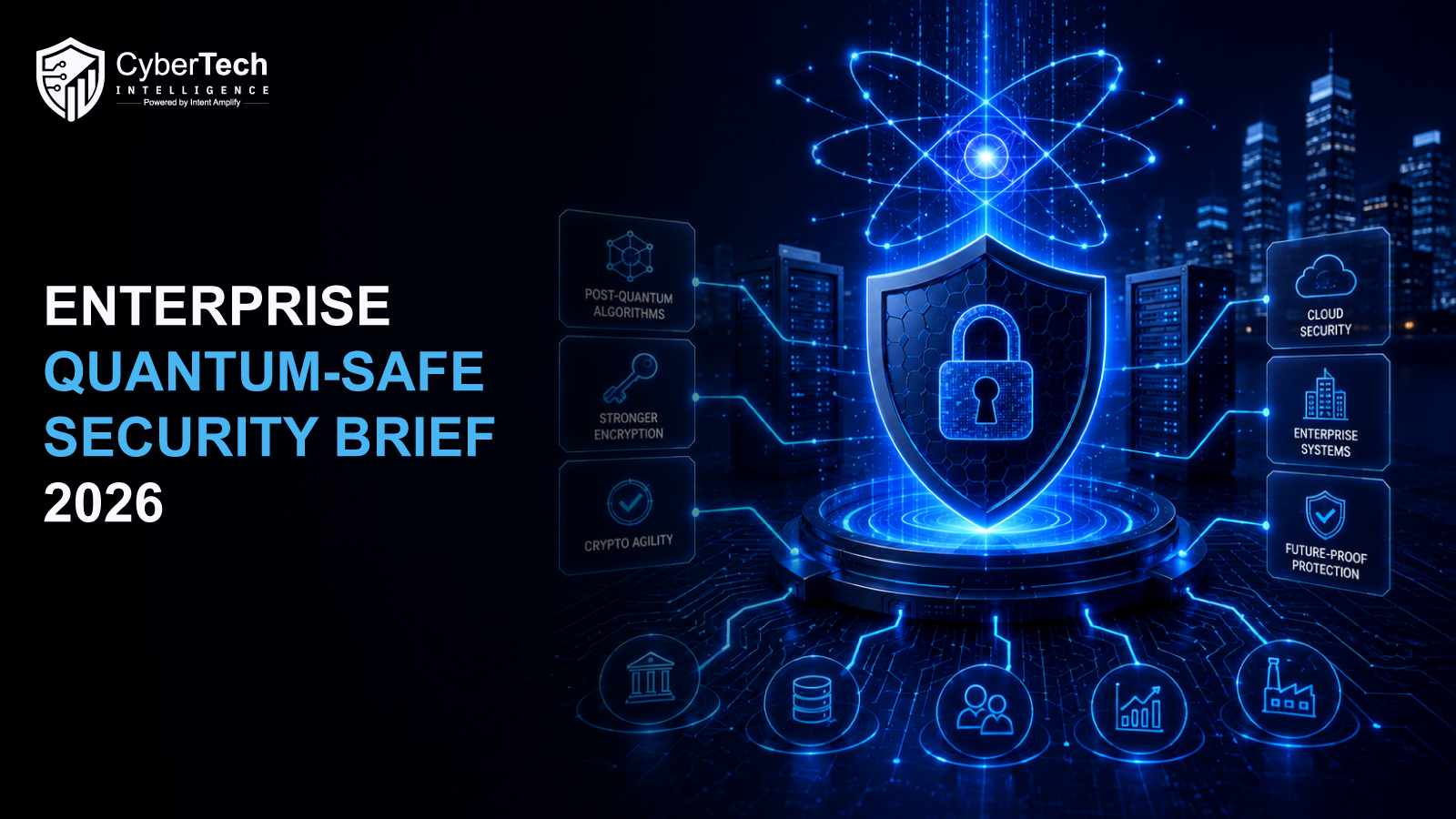
Post-quantum cryptography (PQC) is no longer a distant security concern waiting for a future “Q-Day.” In 2026, it has emerged as a practical enterprise resilience issue because encryption, identity, certificates, cloud workloads, virtual private networks, software signing, and public key infrastructure all depend on cryptographic systems that may not withstand future quantum attacks.
The urgency comes from two directions at once.
First, quantum hardware and software progress continue to compress planning timelines. IBM has warned that fault-tolerant quantum computers could begin approaching cryptographic relevance by the end of the decade, while “Harvest Now, Decrypt Later” attacks already place long-lived encrypted data at risk.¹
Second, major technology providers are no longer treating PQC as a research exercise. Microsoft is adding new Windows platform capabilities to help organizations reduce Harvest Now, Decrypt Later exposure.² Google Cloud has introduced post-quantum key encapsulation mechanisms in Cloud KMS preview.³ Cisco has published a quantum-ready migration path for mission-critical networks.⁴ Cloudflare has moved its full post-quantum security target to 2029.⁵
“For enterprise leaders, the question has changed. It is no longer ‘Should we prepare for post-quantum cryptography?’ It is now, ‘Where is cryptography embedded, which systems create the highest long-term exposure, which vendors are ready, and how will readiness be measured before migration pressure increases?’”
CyberTech Intelligence Framework: Five Enterprise Priorities for PQC Readiness™
Post-quantum cryptography readiness cannot be handled as a single encryption upgrade. It requires an enterprise operating model that connects visibility, infrastructure modernization, vendor accountability, and executive governance.
CyberTech Intelligence recommends that security leaders evaluate PQC readiness through five enterprise priorities: Discovery, Visibility, Modernization, Vendor Readiness, and Governance.
|
Priority |
Executive Question |
What Security Leaders Should Review |
|
Discovery |
Where is cryptography embedded? |
RSA, ECC, certificates, keys, VPNs, APIs, cloud workloads, identity systems, HSMs, software-signing workflows, and third-party platforms. |
|
Visibility |
Which business systems rely on vulnerable cryptography? |
Long-life sensitive data, regulated workloads, critical applications, internet-facing systems, legacy infrastructure, and identity dependencies. |
|
Modernization |
Which infrastructure should migrate first? |
PKI, certificate lifecycle management, cloud KMS, VPNs, firewalls, hybrid cryptography pilots, and application encryption. |
|
Vendor Readiness |
Are strategic technology partners prepared? |
PQC roadmaps, ML-KEM support, ML-DSA plans, product timelines, version dependencies, and upgrade limitations. |
|
Governance |
How will readiness be measured? |
Executive ownership, migration KPIs, board reporting, procurement requirements, risk acceptance, and funding. |
This framework gives CISOs, CIOs, enterprise architects, and infrastructure leaders a practical way to move PQC from strategic discussion to operational planning. The goal is not to replace every cryptographic system immediately. The goal is to identify exposure, understand business impact, prioritize modernization, validate vendor timelines, and measure progress before external pressure forces rushed migration.
Five Enterprise Priorities for PQC Readiness™
Discovery
↓
Visibility
↓
Modernization
↓
Vendor Readiness
↓
Governance
This sequence helps enterprise teams move from cryptographic discovery to measurable readiness, ensuring that PQC migration becomes a managed infrastructure roadmap rather than a reactive security project.
CyberTech Intelligence Research Desk Observation
Organizations beginning cryptographic discovery today are likely to face lower migration complexity than those waiting for vendor-driven or regulatory deadlines. The enterprises most at risk are not only those using legacy cryptography. They are the organizations that cannot clearly identify where cryptography exists across applications, certificates, VPNs, identity systems, cloud services, software dependencies, and third-party platforms.
WHY THIS MATTERS NOW
The most dangerous assumption in post-quantum planning is that the risk begins only when a cryptographically relevant quantum computer exists.
It does not.
Encrypted data can be stolen today and decrypted later. That is the core of the Harvest Now, Decrypt Later model. For organizations protecting healthcare records, government communications, financial archives, telecommunications traffic, intellectual property, or defense data, this matters immediately because some information must remain confidential over extended periods.
That timeline changes the conversation. A system that looks secure today may still be carrying future exposure if the data it protects has long-term value.
IBM’s Quantum Computers Are Speeding Towards Cryptographic Relevancy argues that organizations should begin quantum-safe journeys now because cryptographic inventories, risk assessments, vulnerable-cryptography migration, and crypto-agility frameworks can take several years to complete.¹
That is the real enterprise challenge: migration speed versus infrastructure complexity.
RECENT MARKET SIGNALS SECURITY LEADERS SHOULD WATCH
The strongest signals are now coming from product roadmaps and infrastructure updates rather than general market forecasts.
IBM’s Secure the Post-Quantum Future report developed a Quantum-Safe Readiness Index and identified the top 10% of quantum-safe adopters as Quantum-Safe Champions. The report also notes that surveyed organizations generated at least USD 250 million in annual revenue, showing that the readiness discussion has moved into large-enterprise leadership circles.⁶
Microsoft’s New Windows Features to Secure Today’s Data in a Post-Quantum World describes quantum safety as a staged transition across customer environments and highlights new Windows platform work intended to reduce Harvest Now, Decrypt Later risk.²
Google Cloud’s Announcing Quantum-Safe Key Encapsulation Mechanisms in Cloud KMS introduced post-quantum KEM support in preview, including key generation, encapsulation, and decapsulation capabilities for quantum-resistant encryption experimentation.³
Cisco’s Preparing for Post-Quantum Cryptography: The Secure Firewall Roadmap states that ML-KEM support is targeted for Secure Firewall Threat Defense 10.5 and ASA 9.25, with general availability expected in late 2026.⁷
Cloudflare’s Cloudflare Targets 2029 for Full Post-Quantum Security states that the company is accelerating its roadmap and now targets 2029 to become fully post-quantum secure across its product suite.⁵
These are practical signals. The largest infrastructure providers are building, testing, and publishing migration paths. Enterprises now need to make sure their own environments are ready to use them.
HARVEST NOW, DECRYPT LATER REMAINS THE CORE ENTERPRISE THREAT
The Harvest Now, Decrypt Later model is patient. That is what makes it dangerous.
Attackers do not need to break encryption immediately. They only need to capture traffic or data now, store it, and wait until quantum capabilities make decryption feasible.
The highest-risk sectors are those that handle long-life sensitive information:
- Financial services
- Healthcare
- Defense
- Government
- Telecommunications
- Energy and utilities
- Manufacturing
- Intellectual property-heavy enterprises
- Identity and authentication providers
- Critical infrastructure operators
Cisco’s Quantum-Ready Migration Guide describes Harvest Now, Decrypt Later as one of the critical realities driving the transition to PQC for mission-critical networks.⁴
The practical takeaway is uncomfortable but necessary: long-term confidentiality is now a present-day security requirement.
CRYPTOGRAPHIC VISIBILITY IS STILL THE FIRST GAP
Most enterprises do not have a complete map of where cryptography is used.
That sounds basic. It is not.
Cryptography is distributed across applications, databases, cloud services, network devices, certificate authorities, virtual private networks, operating technology systems, embedded devices, containers, software libraries, and vendor-managed products.
Visibility gaps commonly appear in:
- Legacy applications
- Cloud workloads
- Public key infrastructure environments
- Certificate inventories
- Embedded systems
- Operational technology networks
- Virtual private network platforms
- External software dependencies
- Identity and access management systems
- Hardware security modules
- DevSecOps pipelines
IBM’s Quantum 2026 roadmap notes that cryptographic inventory, risk assessment, vulnerable cryptography migration, and crypto-agility implementation can take several years.⁸
That is why the first milestone is not algorithm replacement. It is a cryptographic discovery.
Without a reliable cryptographic inventory, organizations cannot prioritize migration, evaluate vendor readiness, or understand which systems protect long-life data.
CLOUD AND PLATFORM PROVIDERS ARE ADVANCING FASTER THAN MANY ENTERPRISES
Cloud and infrastructure providers are moving quickly because they operate at a scale where a cryptographic transition cannot be improvised.
Google Cloud has introduced post-quantum KEM capabilities in Cloud KMS preview, allowing organizations to begin testing quantum-resistant key encapsulation workflows.³
Microsoft’s recent Windows security update positions PQC as a staged transition and focuses on helping organizations reduce Harvest Now, Decrypt Later risk across customer environments.² Microsoft’s Companion Guide: Transitioning to Post-Quantum Cryptography also points enterprises toward FIPS 203, FIPS 204, and FIPS 205 as core standards for PQC migration planning.⁹
Cloudflare has already expanded post-quantum support across parts of its infrastructure. In April 2026, Cloudflare announced that post-quantum encryption for Cloudflare IPsec was generally available and stated that more than two-thirds of human-generated TLS traffic to Cloudflare was already protected by post-quantum cryptography.¹⁰
The gap is clear: providers are building the rails, but enterprises still need to modernize the infrastructure that depends on them.
HYBRID CRYPTOGRAPHY IS BECOMING THE PRACTICAL BRIDGE
Most enterprises will not replace classical cryptography overnight. The migration will be phased, tested, and hybrid.
Hybrid cryptography combines classical algorithms with post-quantum algorithms. This allows organizations to maintain current interoperability while beginning to reduce future quantum exposure.
Common hybrid patterns include:
- ECC plus ML-KEM key exchange
- Hybrid TLS deployment
- Hybrid IPsec testing
- Quantum-safe cloud key management pilots
- Traditional signatures combined with ML-DSA planning
- Controlled PQC testing in non-production environments
Cloudflare’s post-quantum documentation explains that its hybrid key agreements include both X25519 for TLS 1.3 and post-quantum secure ML-KEM.¹¹
Enterprises prefer hybrid models because they help:
- Minimize disruption
- Preserve compatibility
- Support phased testing
- Reduce migration uncertainty
- Validate performance
- Avoid abrupt infrastructure replacement
Hybrid cryptography is not the final destination. It is the transition architecture.
NETWORK SECURITY ROADMAPS ARE BECOMING CRITICAL
Post-quantum migration is not only about cloud services or browsers. It also affects the network layer.
Cisco’s Preparing for Post-Quantum Cryptography: The Secure Firewall Roadmap explains that ML-KEM protects the handshake where two devices agree on a shared secret, replacing classical approaches such as Diffie-Hellman and Elliptic Curve Diffie-Hellman in quantum-risk contexts.⁷
The same roadmap states that support for ML-KEM is targeted for Secure Firewall Threat Defense 10.5 and ASA 9.25, with general availability planned for late 2026.⁷
That matters because enterprise firewalls, site-to-site tunnels, remote access platforms, and IPsec environments are often deeply embedded in business operations.
Security leaders should monitor:
- Firewall PQC support
- IPsec roadmap maturity
- VPN compatibility
- TLS inspection behavior
- Hardware acceleration requirements
- Certificate handling
- Logging and monitoring changes
- Interoperability with third-party network equipment
For many organizations, the network team will become one of the most important stakeholders in PQC migration.
CERTIFICATE INFRASTRUCTURE WILL NEED MODERNIZATION
Public key infrastructure will be one of the hardest parts of the transition.
Certificates are used for domain authentication, code signing, Transport Layer Security, device enrollment, application trust, internal services, and identity workflows.
Microsoft’s Post-Quantum Cryptography in AD CS Overview states that Active Directory Certificate Services now supports ML-DSA and describes the scope of PQC support for issuing and managing certificates designed to resist attacks from quantum-capable computers.¹²
That is a major enterprise signal.
PKI teams should begin reviewing:
- Certificate authorities
- Trust stores
- Code-signing certificates
- Device enrollment flows
- TLS certificate lifecycles
- Internal service certificates
- Automated renewal systems
- Certificate-size and compatibility constraints
- Application dependencies
A future PQC program that ignores PKI will stall quickly.
WHAT CISOS SHOULD MEASURE IN 2026
For security leaders, PQC should move from awareness to structured planning.
The immediate focus areas are:
- Cryptographic discovery
- Crypto-agility assessments
- Hybrid cryptography pilots
- Certificate modernization
- Cloud-native PQC testing
- Firewall and VPN roadmap reviews
- Infrastructure interoperability assessments
- Vendor readiness tracking
- Third-party cryptography management
- Long-life data classification
- PKI modernization
- Board-level risk reporting
A useful first question is: “Which systems protect data that must remain confidential for more than 10 years?”
That answer usually points to the first migration priorities.
The strongest PQC programs in 2026 will not be measured only by algorithm adoption. They will be measured by cryptographic inventory coverage, PKI modernization progress, cloud KMS testing, vendor roadmap clarity, hybrid pilot completion, and board-level visibility into migration risk. These measures give executives a clearer view of whether PQC readiness is becoming operational or remaining trapped in strategy decks.
Enterprise PQC Readiness Checklist
|
Readiness Area |
Executive Checkpoint |
Status |
|
Cryptographic Inventory |
Have RSA, ECC, certificates, keys, protocols, VPNs, APIs, HSMs, and software-signing dependencies been mapped? |
Not Started / In Progress / Mature |
|
PKI Review |
Has the organization reviewed certificate authorities, trust stores, code-signing certificates, renewal workflows, and automation gaps? |
Not Started / In Progress / Mature |
|
Cloud KMS Evaluation |
Have cloud key-management workflows, application encryption, and long-life data exposure been assessed for PQC readiness? |
Not Started / In Progress / Mature |
|
Hybrid Cryptography Pilot |
Has the organization started controlled testing for hybrid TLS, IPsec, VPN, or cloud encryption use cases? |
Not Started / In Progress / Mature |
|
Vendor Roadmap Review |
Have critical vendors provided PQC timelines, algorithm support, product-version details, and migration limitations? |
Not Started / In Progress / Mature |
|
Governance Model |
Is PQC readiness tracked through executive ownership, KPIs, risk reporting, procurement controls, and funding decisions? |
Not Started / In Progress / Mature |
This checklist helps leaders quickly identify whether PQC readiness is moving beyond awareness. A mature program should show measurable progress across cryptographic discovery, PKI modernization, cloud readiness, hybrid testing, vendor accountability, and executive governance.
THE ENTERPRISE REALITY
Quantum readiness is not a narrow encryption upgrade. It is an infrastructure continuity program.
Cryptography sits beneath identity, cloud access, software delivery, remote connectivity, digital certificates, application security, and data protection. Changing it safely will require planning, ownership, testing, and executive sponsorship.
The organizations that succeed will not be the ones that wait for a fixed quantum deadline. They will be the ones who build visibility early, test hybrid models carefully, modernize PKI, and hold vendors accountable.
The hardest part will not be selecting a post-quantum algorithm. The harder challenge will be changing enterprise infrastructure safely, consistently, and without disrupting business operations.
ENTERPRISE INTELLIGENCE OUTLOOK
Post-quantum security is entering an operational phase.
IBM, Microsoft, Google Cloud, Cisco, and Cloudflare have all published recent guidance, product updates, or roadmaps that show PQC is moving into real infrastructure planning. The direction is clear: cryptographic resilience is becoming a long-term enterprise requirement.
Security leaders should treat PQC as part of cyber resilience, not as a future research topic.
The near term should be used to build inventories, test hybrid models, review vendor readiness, modernize certificate systems, and prioritize long-life data.
Waiting for certainty will be expensive.
QUICK READ: LEADERSHIP TAKEAWAYS
- IBM’s Secure the Post-Quantum Future identifies the top 10% of organizations in its readiness model as Quantum-Safe Champions.⁶
- IBM’s Quantum 2026 roadmap says cryptographic inventory, risk assessment, migration, and crypto-agility implementation can take several years.⁸
- Microsoft’s June 2026 Windows security update frames quantum safety as a staged transition across customer environments.²
- Google Cloud introduced post-quantum KEM support in Cloud KMS preview within the past 8 months.³
- Cisco targets ML-KEM support for Secure Firewall Threat Defense 10.5 and ASA 9.25 in late 2026.⁷
- Cloudflare now targets 2029 for full post-quantum security across its product suite.⁵
- Cloudflare says more than two-thirds of human-generated TLS traffic to Cloudflare is already protected by post-quantum cryptography.¹⁰
- The first enterprise priority is cryptographic visibility, not wholesale algorithm replacement.
CyberTech Intelligence views PQC readiness as an infrastructure continuity challenge. The organizations that move fastest will not simply be those with the largest security budgets. They will be the ones that understand where cryptography is embedded, which systems protect data with long confidentiality lifespans, which vendors can support quantum-safe migration, and which parts of the infrastructure can be modernized without business disruption.
FINAL VIEW
Assess Your Enterprise PQC Readiness
CyberTech Intelligence helps security, infrastructure, cloud, identity, and risk leaders move PQC readiness from strategic planning to infrastructure execution. Through the Enterprise PQC Readiness Assessment, organizations can identify hidden cryptographic dependencies, evaluate long-life data exposure, review PKI maturity, assess vendor roadmaps, and build a practical quantum-safe migration plan.
CyberTech Intelligence also supports enterprise teams through:
- Quantum Readiness Workshop
- Cryptographic Discovery Review
- Executive Quantum-Safe Security Briefing
- Vendor PQC Readiness Assessment
Use this newsletter as the starting point for a structured readiness conversation that connects cryptography, cloud security, PKI, infrastructure modernization, and executive governance.
REFERENCES
- IBM (2025) Quantum Computers Are Speeding Towards Cryptographic Relevance. IBM Corporation, 2025. Available at: https://www.ibm.com/think/perspectives/quantum-computers-are-speeding-towards-cryptographic-relevancy
- Microsoft (2025) New Windows Features to Secure Today’s Data in a Post-Quantum World. Microsoft Security Blog, 2025. Available at: https://techcommunity.microsoft.com/blog/microsoft-security-blog/new-windows-features-to-secure-today%E2%80%99s-data-in-a-post-quantum-world/4523370
- Google Cloud (2025). Announcing Quantum-Safe Key Encapsulation Mechanisms in Cloud KMS. Google Cloud, 2025. Available at: https://cloud.google.com/blog/products/identity-security/announcing-quantum-safe-key-encapsulation-mechanisms-in-cloud-kms/
- Cisco (2025) Quantum-Ready Migration Guide. Cisco Systems, 2025. Available at: https://www.cisco.com/c/en/us/td/docs/solutions/CVD/Campus/Quantum-Ready-Migration-Guide.html
- Cloudflare (2025) Cloudflare Targets 2029 for Full Post-Quantum Security. Cloudflare, 2025. Available at: https://blog.cloudflare.com/post-quantum-roadmap/
- IBM (2025) Secure the Post-Quantum Future. IBM Institute for Business Value, 2025. Available at: https://www.ibm.com/thought-leadership/institute-business-value/en-us/report/2025-quantum-safe-readiness
- Cisco (2025). Preparing for Post-Quantum Cryptography: The Secure Firewall Roadmap. Cisco Systems, 2025. Available at: https://blogs.cisco.com/security/preparing-for-post-quantum-cryptography-the-secure-firewall-roadmap
- IBM (2026) Quantum 2026 – IBM Technology Atlas. IBM Corporation, 2026. Available at: https://www.ibm.com/roadmaps/quantum/2026/
- Microsoft (2025) Companion Guide: Transitioning to Post-Quantum Cryptography. Microsoft Tech Community, 2025. Available at: https://techcommunity.microsoft.com/discussions/windows-security/companion-guide-transitioning-to-post-quantum-cryptography/4504853
- Cloudflare (2025) Post-Quantum Encryption for Cloudflare IPsec Is Generally Available. Cloudflare, 2025. Available at: https://blog.cloudflare.com/post-quantum-ipsec/
- Cloudflare Docs (2025) Post-Quantum Between Cloudflare and Origin Servers. Cloudflare, 2025. Available at: https://developers.cloudflare.com/ssl/post-quantum-cryptography/pqc-to-origin/
- Microsoft Learn (2025) Post-Quantum Cryptography in AD CS Overview. Microsoft Corporation, 2025. Available at: https://learn.microsoft.com/en-us/windows-server/identity/ad-cs/post-quantum-cryptography-overview