
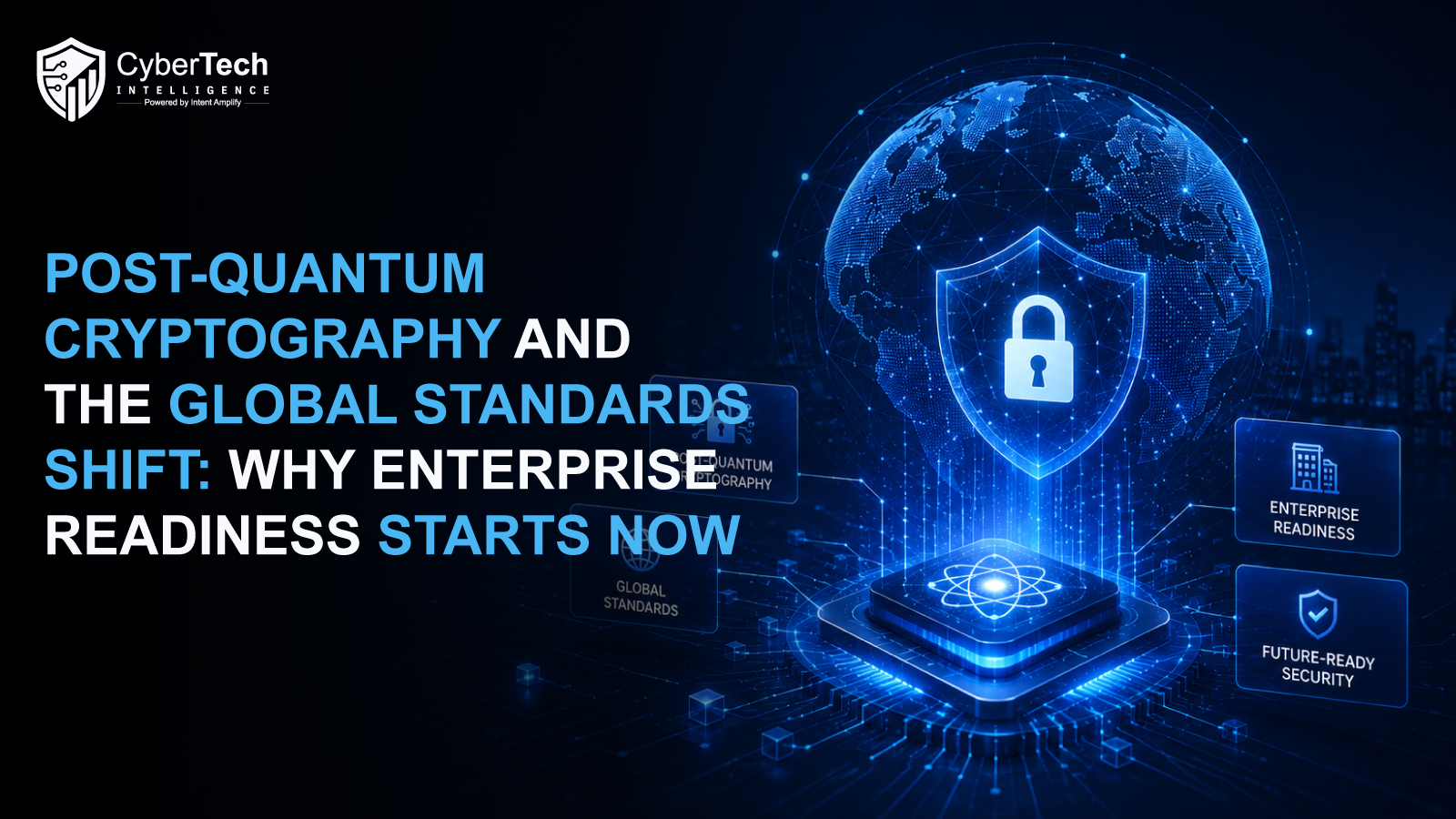
Post-quantum cryptography (PQC) is reshaping how enterprises think about digital trust, cyber resilience, and long-term infrastructure modernization. It has moved beyond cryptographic research and become an enterprise governance priority.
Quantum computing has stopped being a distant laboratory story. For governments, banks, cloud providers, telecom operators, healthcare networks, and critical infrastructure owners, it is becoming a practical cybersecurity planning issue. Much of today's digital trust still depends on public-key cryptography that was never designed to resist cryptographically relevant quantum computers. This dependence turns cryptographic modernization into an enterprise risk management challenge rather than a purely technical upgrade.
RSA and other conventional asymmetric cryptographic systems have protected secure communications, software signing, identity, payment flows, and sensitive data exchange for decades. PQC is not another cybersecurity product category. It is a modernization of the enterprise trust layer that underpins identity, certificates, cloud workloads, APIs, software signing, payment systems, and secure communications. Today, the challenge for security leaders is no longer understanding why PQC matters, but rather determining how to modernize cryptographic infrastructure without disrupting business operations.
CyberTech Intelligence views post-quantum cryptography or PQC as a trust-layer modernization initiative rather than an encryption upgrade. Organizations that begin with cryptographic visibility, governance, and crypto agility are likely to execute lower-risk migrations than those waiting for external pressure from vendors or regulators.
The Standards Moment That Changed the Conversation
The post-quantum conversation changed materially when the National Institute of Standards and Technology finalized the first set of post-quantum cryptography standards in 2024: FIPS 203 for ML-KEM, FIPS 204 for ML-DSA, and FIPS 205 for SLH-DSA.
That standardization mattered because enterprises do not move critical encryption systems on a whim. They move when standards, interoperability, procurement confidence, and compliance expectations begin to align. PQC shifted from research-track discussion to board-level resilience issues, vendor governance concerns, and practical security architecture priorities.
ML-KEM, formerly CRYSTALS-Kyber, supports key establishment. ML-DSA, formerly CRYSTALS-Dilithium, supports digital signatures. SLH-DSA provides stateless hash-based signature resilience. The labels are technical; the business implication is simple: the foundations for quantum-resistant encryption and signing are now formal enough for planning.
CyberTech Intelligence assesses that standardization is acting as the primary catalyst for enterprise mobilization. Once PQC moved from candidate algorithms to approved standards, the market gained the confidence needed to begin migration planning.
Why the Preparation Window Is Narrower Than It Looks
The danger is not that quantum decryption will arrive everywhere tomorrow. The danger is that enterprise migration can take years, and most organizations still have limited visibility into where cryptography lives.
Industry guidance increasingly points to a narrowing preparation window. Large-enterprise cryptographic migration can require discovery, vendor coordination, certificate modernization, key management changes, application testing, phased deployment, and governance alignment. Security leaders should therefore treat PQC readiness as a current planning issue rather than a future replacement task. [2]
Cryptography is everywhere, but rarely owned cleanly. It sits inside applications, APIs, identity platforms, cloud workloads, endpoint systems, embedded devices, network appliances, backup environments, and third-party software. PQC migration is therefore not just an algorithm replacement. It is about rebuilding visibility and control over the enterprise cryptographic fabric.
|
Enterprise PQC Requirement |
Why It Matters |
|
Cryptographic discovery |
Identifies algorithms, certificates, keys, libraries, and protocols currently in use. |
|
Crypto agility |
Allows algorithms and certificates to change without major service disruption. |
|
Vendor alignment |
Reduces inherited risk from SaaS, cloud, hardware, and software suppliers. |
|
Compliance planning |
Prepares regulated organizations for emerging quantum-readiness expectations. |
|
Phased migration |
Limits outage, interoperability, and performance risk during transition. |
“Harvest Now, Decrypt Later” Makes the Risk Present-Tense
One reason post-quantum cryptography cannot be treated as distant is the “harvest now, decrypt later” threat model. In this scenario, adversaries collect encrypted data today and store it until quantum capabilities become strong enough to decrypt it.
That threat changes the clock. If data remains valuable for ten, twenty, or thirty years, the risk is not waiting patiently in the future. The theft may happen years before the decryption does.
Healthcare records, financial archives, classified communications, source code, intellectual property, payment infrastructure data, legal records, and strategic business documents can retain value for long periods. Organizations that protect this data only against today’s decryption capabilities may be underestimating its future exposure.
Global Adoption Is Moving From Experimentation to Planning
The release of PQC standards has pushed governments, cloud providers, cybersecurity vendors, and regulated industries from experimentation toward adoption planning. Major infrastructure providers are already testing or deploying PQC capabilities, while public-sector guidance is beginning to turn quantum-safe migration into a resilience-planning issue. The ecosystem is not moving evenly, but the direction is clear: quantum-safe cryptography is entering enterprise planning cycles. [3]
Cloudflare is a useful signal. The company has documented post-quantum cryptography support in its TLS stack and frames PQC as protection against “harvest now, decrypt later” risk. That does not mean every enterprise should copy a hyperscale provider’s roadmap. It means the infrastructure ecosystem is already moving, and enterprise teams need enough internal readiness to adapt as vendors, browsers, cloud platforms, and certificate authorities evolve. [4]
Government guidance is also sharpening the direction of travel. Public-sector cybersecurity agencies are encouraging organizations to inventory vulnerable cryptography, prioritize high-value systems, and prepare migration plans rather than waiting for quantum capability to become immediate.
Industries Moving First
PQC adoption is most visible in sectors where data lasts a long time, downtime is costly, and trust infrastructure is mission-critical.
|
Industry |
Why PQC Readiness Is Urgent |
|
Financial Services |
Long-term records, payment systems, encrypted transactions, authentication, and regulatory obligations. |
|
Healthcare |
Sensitive patient data, long retention periods, medical device complexity, and ransomware exposure. |
|
Defense and Government |
Classified intelligence, secure communications, satellite systems, military encryption, and supply chain risk. |
|
Telecommunications |
5G infrastructure, secure routing, subscriber data, IoT ecosystems, and edge platforms. |
|
Critical Infrastructure |
Operational technology, supplier systems, long-lifecycle assets, and national resilience requirements. |
Financial services firms depend on cryptography for transaction integrity, customer authentication, payment processing, and digital trust. Healthcare organizations carry sensitive records that may remain valuable for decades, often protected by fragmented systems and vendor-heavy environments.
Defense and government agencies face long-lifecycle secrecy requirements, while telecom providers must think about secure routing, 5G, edge computing, and subscriber data.
Market Signals Are Getting Louder
The commercial market is responding to this shift. Market research cited in a recent PQC readiness analysis estimates that the worldwide post-quantum cryptography market could grow at a rate of 37.8%, rising from $1.6 billion in 2025 to $29.95 billion in 2034. [5]
That level of growth would not warrant a minor security refresh. It reflects demand for cryptographic inventory tools, migration advisory services, certificate modernization, hardware readiness, crypto-agility platforms, and vendor assurance.
Large enterprises may operate thousands of undocumented cryptographic dependencies. Migration costs are expected to rise for organizations that delay modernization because each year adds more applications, suppliers, certificates, machine identities, cloud services, and technical debt to the inventory problem.
Industry readiness remains uneven, with many organizations still in the awareness stage rather than operating with funded, accountable quantum-transition plans.
CyberTech Intelligence Research Desk Observation
Organizations that treat post-quantum cryptography as a cryptographic governance program rather than a future encryption replacement exercise are likely to reduce migration complexity, vendor exposure, and operational disruption. The enterprises that move first on cryptographic discovery, crypto agility, and executive ownership will be better positioned to absorb standards updates, supplier roadmap changes, and regulatory expectations without turning PQC migration into a high-pressure remediation program.
A Five-Layer Readiness Framework
CyberTech Intelligence recommends that enterprises begin with cryptographic discovery assessments before evaluating replacement algorithms.
Discovery → Data Longevity → Crypto Agility → Third-Party Dependencies → Quantum Threat Exposure
1. Cryptographic Discovery Layer
Identify where cryptographic functions exist across applications, APIs, cloud workloads, endpoint systems, identity infrastructure, network services, and embedded devices. Without discovery, migration planning becomes guesswork.
2. Data Longevity Mapping
Determine which datasets remain sensitive long enough to face future quantum exposure. Not every system deserves the same priority, but long-retention data should move higher on the roadmap.
3. Crypto Agility Assessment
Evaluate whether systems can replace algorithms rapidly, rotate certificates dynamically, and support hybrid cryptographic models. Crypto agility turns migration from emergency remediation into planned modernization.
4. Third-Party Dependency Analysis
Assess vendor readiness and inherited cryptographic risk across SaaS platforms, software suppliers, cloud providers, hardware vendors, and managed services.
5. Quantum Threat Exposure Scoring
Prioritize migration based on sensitivity, business criticality, regulatory impact, and adversarial attractiveness. A public marketing database and a defense archive should not sit in the same risk tier.
Enterprise PQC Readiness Scorecard
Executives need a practical way to assess whether PQC readiness is still an awareness exercise or has become an accountable transformation program. CyberTech Intelligence recommends using the following scorecard to evaluate organizational maturity before launching large-scale migration planning.
|
Assessment Area |
Low Readiness |
Developing Readiness |
High Readiness |
|
Cryptographic Discovery |
No centralized inventory of cryptographic assets. |
Partial inventory exists, but coverage is inconsistent. |
Enterprise-wide inventory is maintained and updated. |
|
Crypto Agility |
Algorithm changes require manual effort or system redesign. |
Some platforms support rotation, but legacy gaps remain. |
Systems support rapid algorithm, certificate, and hybrid model changes. |
|
Vendor Readiness |
Supplier PQC roadmaps are unknown. |
Key vendors have been contacted, but timelines remain unclear. |
PQC readiness is built into procurement, renewals, and third-party risk reviews. |
|
PKI Modernization |
PKI is fragmented, manual, or poorly documented. |
Certificate lifecycle controls are improving, but automation gaps remain. |
PKI is automated, governed, and aligned with quantum-safe requirements. |
|
Governance |
PQC has no formal ownership, funding, or roadmap. |
Security has initiated planning, but accountability is limited. |
PQC is governed across security, IT, risk, legal, procurement, and leadership. |
|
Executive Ownership |
No executive or board-level accountability exists. |
Leadership receives updates, but decisions remain tactical. |
A named executive sponsor owns PQC readiness as a resilience priority. |
The Real Weakness: Visibility and Agility
The greatest enterprise weakness is not algorithm vulnerability alone. It is the absence of cryptographic visibility and migration agility.
Organizations with decentralized IT, legacy infrastructure, unmanaged third-party integrations, and hybrid cloud architectures are likely to face the highest transition complexity. Hybrid cloud environments increase PQC migration difficulty because encryption implementations often differ across platforms, teams, and providers.
Enterprises with mature crypto inventories can reduce migration complexity compared with organizations lacking cryptographic governance. Operational downtime risk rises when modernization lacks phased planning. Legacy infrastructure remains one of the largest barriers because older systems may not support newer algorithms, larger key sizes, or hybrid cryptographic models.
This is where CISOs need to be direct with executive stakeholders. The quantum risk conversation is not only about future attackers. It is about whether the enterprise can change its own trust infrastructure under pressure.
What CISOs Can Do in the Next 90 Days
PQC readiness does not require replacing everything immediately. It does require forward motion.
|
90-Day Action |
Purpose |
|
Start cryptographic discovery |
Identify algorithms, certificates, keys, libraries, protocols, and systems using public-key cryptography. |
|
Map long-retention data |
Prioritize data that would remain valuable if decrypted years from now. |
|
Identify high-risk dependencies |
Find applications, devices, vendors, and cloud services that would be difficult to migrate. |
|
Ask vendors for PQC roadmaps |
Understand which providers are preparing for quantum-safe standards. |
|
Select pilot environments |
Test PQC performance, compatibility, and operational impact in controlled conditions. |
These actions turn an abstract quantum discussion into an executable security program.
Executive Questions That Should Be Asked Now
Boards do not need a lecture on lattice-based cryptography. They need clarity on readiness, exposure, and accountability.
|
Executive Question |
Why It Matters |
|
Do we know where vulnerable cryptography exists? |
Establishes whether the organization can scope migration. |
|
Which data would remain valuable after 5, 10, or 20 years? |
Identifies harvest-now, decrypt-later exposure. |
|
Which vendors support PQC migration planning? |
Reveals supply chain readiness and inherited risk. |
|
Can our systems support rapid algorithm replacement? |
Measures crypto agility and operational resilience. |
|
Who owns the quantum-transition plan? |
Converts awareness into accountability. |
What Enterprises Should Do Next
The first step is disciplined visibility. Enterprises should build a cryptographic inventory across applications, certificates, APIs, identity systems, cloud workloads, and third-party dependencies. They should then map long-retention data and prioritize assets that would remain valuable if decrypted years from now.
Next, organizations should assess crypto agility. Can certificates be rotated efficiently? Can algorithms be changed without rewriting critical systems? Can hybrid cryptographic models be supported during transition?
Vendor readiness should follow closely. Every major software supplier, SaaS provider, cloud platform, hardware vendor, and managed service provider should be evaluated for PQC support and migration planning.
Finally, enterprises should launch controlled pilots for quantum-safe VPN, TLS, signing, and key exchange use cases before regulatory, vendor, or threat pressure increases.
Conclusion: PQC Is a Decade-Scale Transformation of Trust
Post-quantum cryptography is becoming a foundational cybersecurity priority across global enterprise environments. The convergence of NIST standardization, rising quantum investment, public-sector guidance, and concern over long-term data exposure is accelerating the global standards shift.
The transition to PQC is not a single technology deployment. It is a decade-scale transformation of trust infrastructure across the digital economy. Enterprises that begin now can approach that transformation with planning, governance, and control.
Those who wait may discover that the hardest part of quantum risk is not the quantum computer. It is the cryptographic complexity they never mapped.
For most organizations, quantum computing does not create an immediate decryption crisis, but it does create an urgent planning requirement. The real challenge begins with visibility: enterprises must identify where cryptography exists across applications, infrastructure, cloud workloads, vendors, and identity systems before they can migrate safely.
Financial services, healthcare, government, telecommunications, defense, and critical infrastructure should move early because their data retention needs, regulatory exposure, and operational sensitivity make PQC readiness more pressing.
Current cryptography will not disappear overnight; most enterprises will operate hybrid environments where post-quantum and existing cryptographic systems coexist during transition. For CISOs, the first practical step is to start with cryptographic discovery, data longevity mapping, vendor readiness assessments, and controlled PQC pilots.
Turn PQC Readiness Into an Executive Action Plan
Post-quantum cryptography is no longer a distant standards discussion. It is becoming a strategic resilience priority that requires cryptographic visibility, vendor assurance, PKI modernization, and executive ownership. CyberTech Intelligence helps organizations assess where PQC risk exists today, how prepared their cryptographic infrastructure is for migration, and which actions should be prioritized before regulatory or supplier pressure accelerates.
Through an Enterprise PQC Readiness Assessment, Quantum Strategy Workshop, or Executive Cryptographic Discovery Session, CyberTech Intelligence can help security and technology leaders convert quantum-readiness planning into a practical roadmap.
Request an Enterprise PQC Readiness Assessment
References
- National Institute of Standards and Technology (NIST) (2024) Post-Quantum Cryptography Standards Approved by NIST. Available at: https://csrc.nist.gov/News/2024/postquantum-cryptography-fips-approved.
- National Institute of Standards and Technology (NIST) National Cybersecurity Center of Excellence (NCCoE) (2025) Migration to Post-Quantum Cryptography FAQ. Available at: https://pages.nist.gov/nccoe-migration-post-quantum-cryptography/FAQ/index.html.
- National Institute of Standards and Technology (NIST) (2025) Post-Quantum Cryptography Project. Available at: https://csrc.nist.gov/projects/post-quantum-cryptography.
- Cloudflare (2025) Post-Quantum Cryptography. Available at: https://developers.cloudflare.com/ssl/post-quantum-cryptography/.