Executive Snapshot
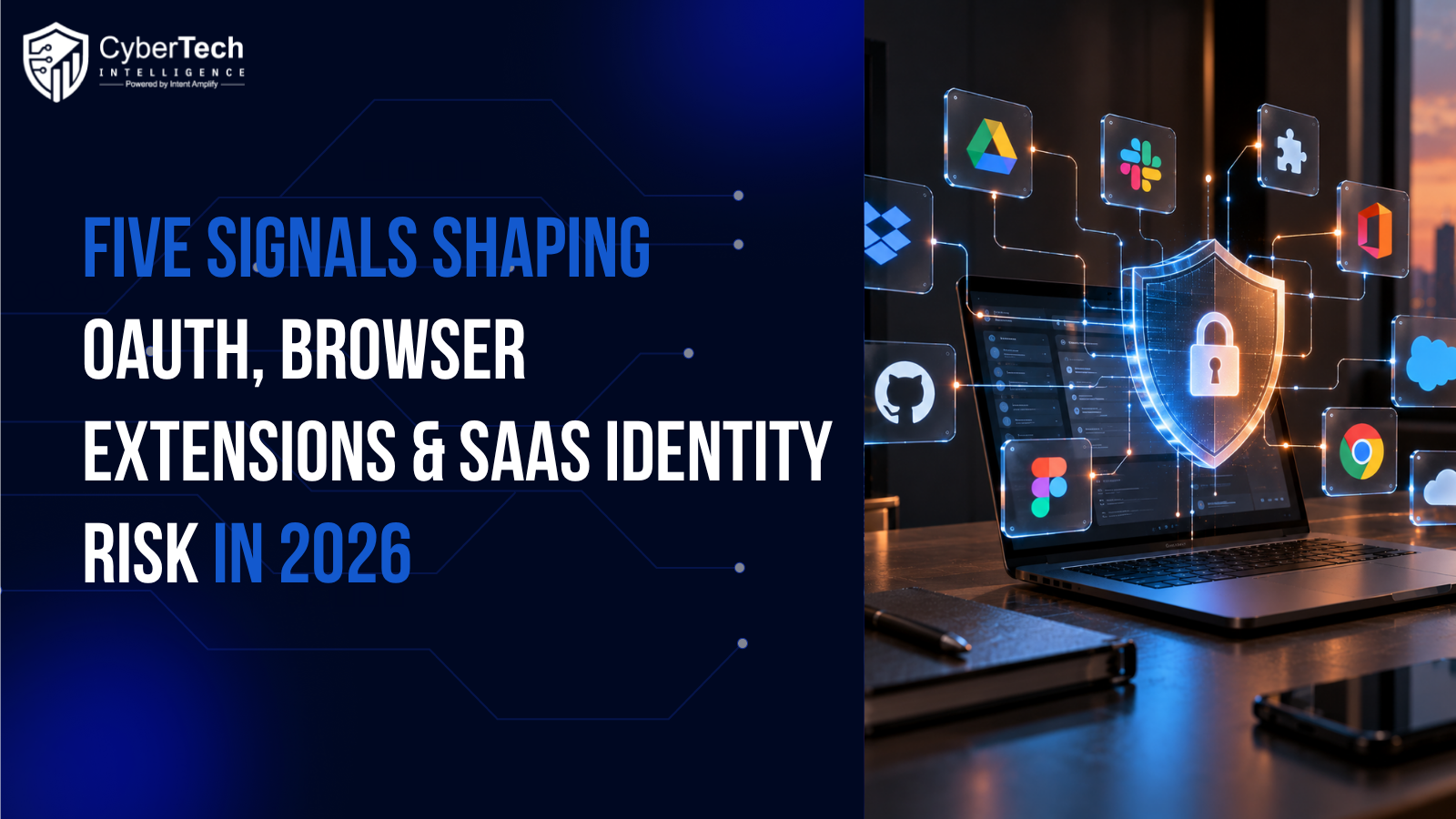
SaaS identity governance is moving beyond a one-time app approval. Current platform evidence shows controls for policy-based OAuth app monitoring, connected-app review and disconnection, session revocation, behavior-based detection, and new agent-to-tool connections that still rely on delegated authorization. [1] [2] [3] [4] [5] Each source describes its own product or platform, so the useful signal is the direction of access governance—not a claim that every organization has the same exposure or controls.
OAuth App Governance Is Combining Permissions with Behavior
Microsoft's app-governance documentation, updated June 25, 2026, describes predefined and custom policies for OAuth applications and includes usage- and permissions-based policy options. The product can generate alerts and, depending on configuration, take actions such as disabling an app. This is a Microsoft product capability, not evidence of a problem in a particular tenant. [1]
Connected-App Lifecycle Is Becoming Easier for Users to See
Dropbox's App Center help, updated August 13, 2026, documents how users can connect third-party applications and later view connected apps, manage settings, or disconnect them. The workflow is Dropbox-specific, but it highlights a broader access-governance requirement: the ability to identify a connection and remove it should be part of the same lifecycle as the initial connection. [2]
OAuth Session Control Can Be an Administrative Response Point
Salesforce's Connected Apps OAuth Usage page documents current OAuth app connections and administrative actions including revoking active sessions, blocking or unblocking organization-wide access, and installing or uninstalling connected apps. These are Salesforce controls, not universal capabilities, but they show why governance should distinguish approval, active sessions, and the ability to stop future access. [3]
Behavioral Evidence Is Becoming Part of OAuth App Review
Microsoft's July 3, 2026 OAuth app threat-detection guidance describes alerts that can include application activity, granted scopes, and user activity as investigation evidence. Detection results still require investigation: the guidance explicitly discusses true-positive and false-positive assessment. The leadership signal is therefore not 'an alert proves compromise,' but 'permission context and observed behavior increasingly need to be reviewed together.' [4]
Agentic Integrations Extend the Same Delegated-Access Questions
Slack's June 17, 2026 description of its MCP client says developers register MCP server endpoints in Slack apps, an administrator approves the app, users connect through supported authentication, and OAuth can be used for third-party MCP servers. This is Slack's architecture and security description, not a universal agent-security model. It nonetheless reinforces a current governance question: when AI-enabled tools connect to external systems, existing app approval, identity, permission, and revocation decisions still matter. [5]
CyberTech Intelligence Perspective
The strongest SaaS identity posture starts with a verified map of connected access and decision ownership. Leaders should know which apps, extensions, and new tool connections exist; what permissions they can use; which users or service identities are involved; how access was approved; what current-use evidence exists; and how the connection can be narrowed or removed. Alerts and platform features are useful evidence, but they are not substitutes for local ownership and current access state.
Five Questions for the Next Leadership Review
-
Which business-critical SaaS services have a current inventory of OAuth applications, connected integrations, browser extensions, and accountable owners?
-
Which grants or extensions have permissions that can read, write, administer, or act on behalf of users, and what current business purpose justifies that access?
-
Which applications changed permissions, requested new scopes, or changed ownership since the last review?
-
Can administrators and business owners see last-used or activity evidence, active sessions where available, exceptions, and the documented removal path for important connections?
-
Are new AI or agentic integrations entering the same approval, permission, ownership, logging, and revocation model as other third-party applications?
Go Deeper with the 2026 SaaS Identity Risk Evidence Model
Use these five questions as an executive scan. Then move to the CyberTech Intelligence Research Report for this campaign to compare current OAuth, browser-extension, connected-app, consent, permission, monitoring, and revocation evidence with the CyberTech Intelligence SaaS Identity Access Governance Framework™ and its readiness benchmark.
About CyberTech Intelligence
CyberTech Intelligence provides research-led cybersecurity intelligence, executive content, and market engagement programs. This publication is vendor-neutral and intended for education, decision support, and claim-safe GTM planning.
Evidence and Citation Note
This newsletter uses platform documentation and provider architecture statements only within each source's stated scope. Policy features, connected-app controls, threat-detection alerts, and agentic integration designs are different evidence types. They are not combined into a universal risk rate, adoption claim, breach finding, or local readiness judgment. CyberTech Intelligence does not infer a named organization's OAuth exposure, extension risk, incident, project, or buying posture without direct evidence.
References
- Microsoft Learn, "Learn about OAuth app policies with app governance," last updated June 25, 2026. https://learn.microsoft.com/en-us/defender-cloud-apps/app-governance-app-policies-overview (Accessed October 5, 2026. Relevance: current Microsoft Defender for Cloud Apps documentation on predefined and custom OAuth app policies, usage and permissions policy options, alerts, and configurable response actions.)
- Dropbox Help, "What is the Dropbox App Center?" updated August 13, 2026. https://help.dropbox.com/integrations/app-center (Accessed October 5, 2026. Relevance: current Dropbox workflow for discovering, connecting, managing, and disconnecting third-party applications; used only within Dropbox's stated user experience.)
- Salesforce Help, "Manage Current OAuth Connected App Sessions," current documentation. https://help.salesforce.com/s/articleView?id=sf.connected_app_manage_current_sessions.htm&language=en_US&type=5 (Accessed October 5, 2026. Relevance: Salesforce controls for viewing current OAuth connections, revoking sessions, blocking or unblocking access, and managing connected applications.)
- Microsoft Learn, "Investigate OAuth app threat detection alerts with app governance," last updated July 3, 2026. https://learn.microsoft.com/en-us/defender-cloud-apps/app-governance-anomaly-detection-alerts (Accessed October 5, 2026. Relevance: Microsoft guidance on investigating OAuth app detections using application activity, scopes, user activity, and true-positive/false-positive analysis.)
- Slack, "How Slack Keeps MCP Secure," June 17, 2026. https://slack.com/blog/news/slackbot-mcp-security (Accessed October 5, 2026. Relevance: Slack's description of MCP server registration, app approval, user connection, supported authentication, and administrative controls; used only as a scoped example of agentic third-party access.)