AI agents are becoming active participants in enterprise workflows. They can access data, interact with business systems, make decisions, and execute actions with increasing autonomy. That shift creates a security challenge that traditional controls, largely designed around human users and predictable applications, were not built to address.
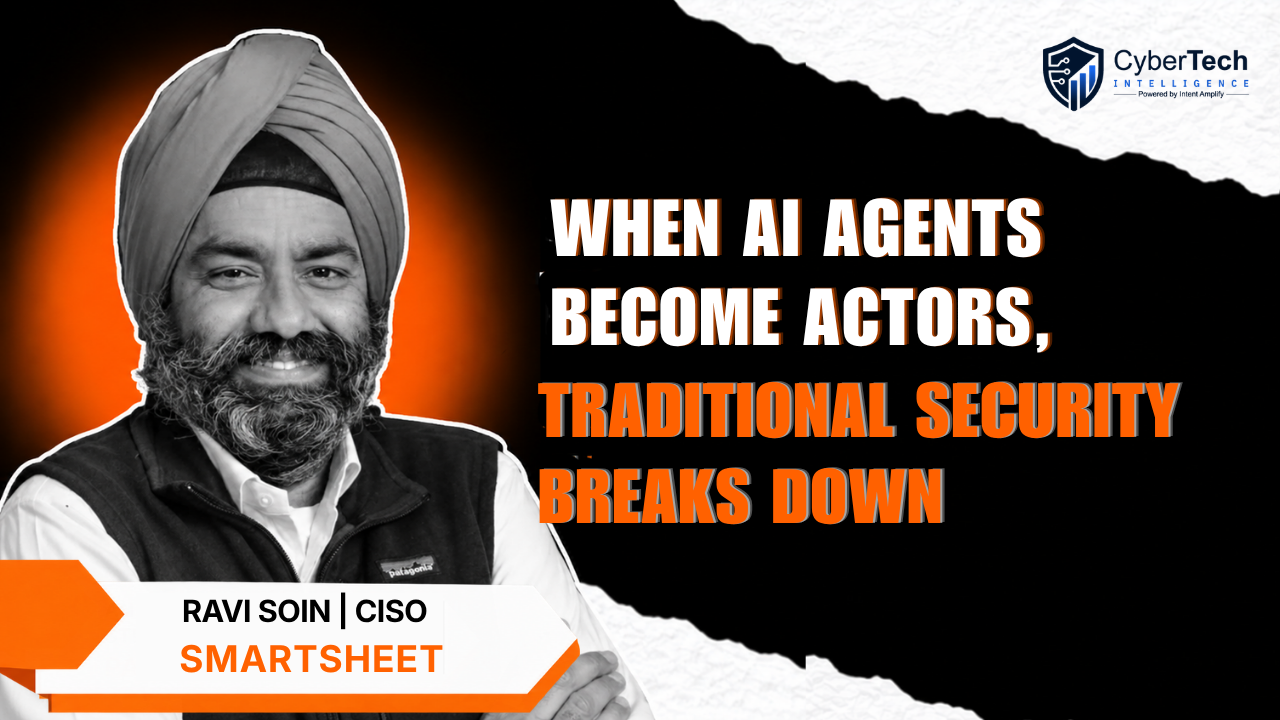
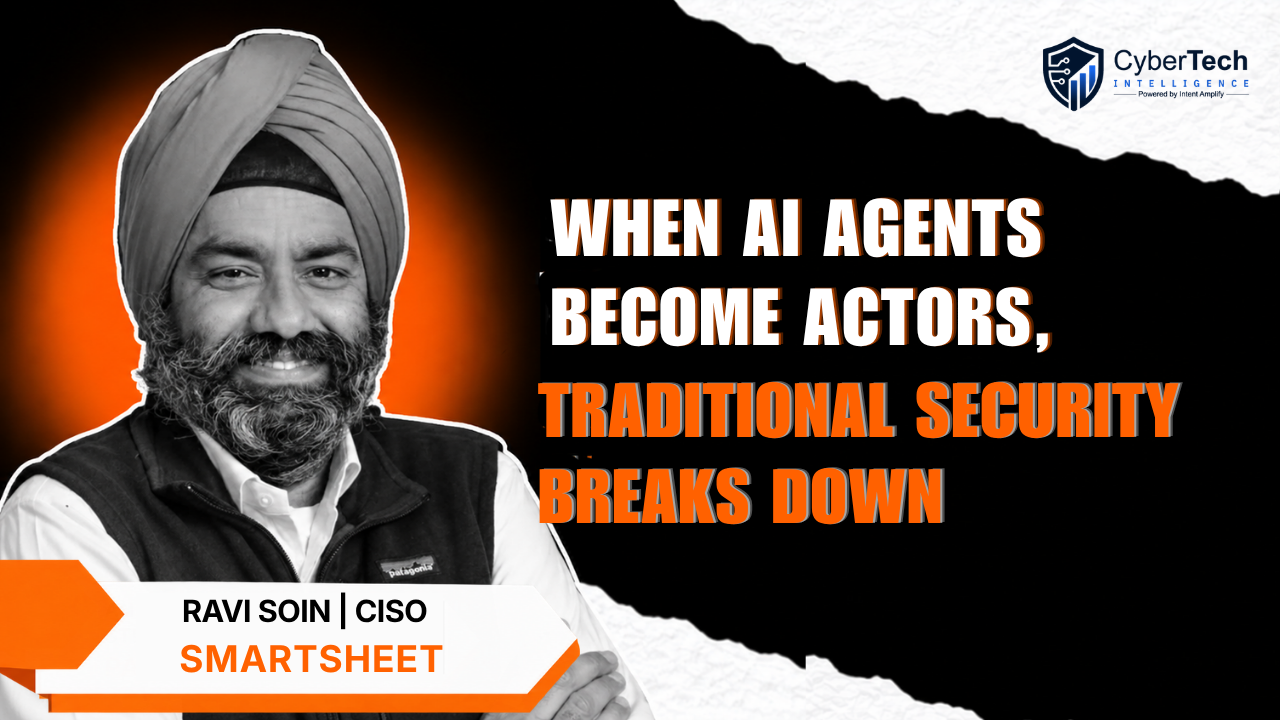
In this episode of the CyberTech Intelligence Podcast, Ravi Soin of Smartsheet explores what changes when AI moves from assistant to enterprise actor.
The conversation examines why security and AI governance need to be built into workflows from the beginning. As organizations give AI agents greater autonomy, they need clear visibility into what each agent can access, what actions it performs, which data it uses, and who authorized the workflow.
A major focus is identity and access management for AI agents. The discussion looks at why agents need distinct identities, purpose-specific permissions, controlled lifecycles, traceable activity, and automatic access revocation.
The episode also explores shadow AI, excessive privileges, lateral movement, privacy, data governance, regulatory requirements, and the challenge of governing AI across organizational and geographic boundaries.
For CISOs, CIOs, IAM professionals, AI governance teams, security practitioners, and technology leaders, this episode offers a practical perspective on building security and accountability around increasingly autonomous AI systems.
I recommend using bullets in this CMS field, matching the format of your existing podcast page:
Securing the Shift From AI Assistants to Enterprise Actors
Enterprise AI is entering a different phase.
The first wave of generative AI largely focused on assistance: summarizing information, generating content, answering questions, and helping employees complete individual tasks. AI agents change that relationship because they can increasingly interact with enterprise systems and take action.
An agent might retrieve information, update a record, initiate a workflow, communicate with another system, or make a decision based on organizational data. Once AI can act rather than simply recommend, security teams have to think differently about identity, access, accountability, and governance.
Every AI Agent Needs an Identity
Traditional identity and access management has primarily been designed around people. A user receives an identity, authenticates, receives appropriate permissions, and has access changed or revoked as their role changes.
AI agents require a comparable control model, but machine autonomy introduces additional complexity.
Organizations need to know which agent is acting, what purpose it serves, what systems and data it can access, which actions it is authorized to perform, and when those permissions should expire.
Applying zero-trust principles to AI agents means avoiding implicit trust simply because an agent operates inside an approved platform. Access should remain limited to what is required for the specific task.
Autonomy Requires Accountability
As agents become capable of executing workflows, organizations also need reliable records of their actions.
That means being able to answer questions such as: What did the agent do? What information did it use? What permissions were available at the time? What workflow triggered the action? Who authorized that workflow?
This traceability becomes particularly important when AI operates within regulated or data-sensitive environments.
Governance therefore cannot exist only as a policy document. It needs to become part of the architecture and workflow through which AI operates.
Data Governance Becomes AI Governance
AI security also depends heavily on the quality of an organization's existing data governance.
An enterprise cannot effectively control AI access if it does not understand where sensitive information resides, who owns it, which systems contain it, and what policies apply to its use.
This becomes more complicated when AI systems operate across platforms, business units, cloud environments, and geographic boundaries.
Privacy requirements, data residency rules, regulatory obligations, and organizational policies all need to be considered when determining what an agent should be allowed to access or process.
Shadow AI Adds Another Layer of Risk
Employees will naturally gravitate toward tools that make their work easier. Blocking every unapproved AI tool may therefore push some usage outside established security processes rather than eliminate it.
Organizations need visibility into how AI is being used while giving employees secure, practical alternatives.
The goal is to make the governed path the easiest path.
Security Has to Evolve With AI
AI governance does not have to work against innovation. Strong identity controls, appropriate permissions, transparent workflows, and reliable audit trails can give organizations greater confidence to deploy AI responsibly.
As AI evolves from a tool employees use into an actor capable of operating within enterprise environments, cybersecurity architecture must evolve alongside it.
The question is no longer only whether an AI system is secure. Organizations increasingly need to understand what an AI agent is allowed to do, why it is allowed to do it, and how every consequential action can be traced back to an accountable workflow.