Enterprise AI adoption is expanding faster than the governance models designed to secure it. Across the business, teams are embedding AI into analytics, software development, customer operations, productivity workflows, security tooling, and decision support. For the CISO, this creates a new leadership problem: AI risk is no longer contained within a single model, application, or innovation team. It now spans identity, data, cloud, software supply chains, third-party platforms, employee behavior, and regulatory accountability.
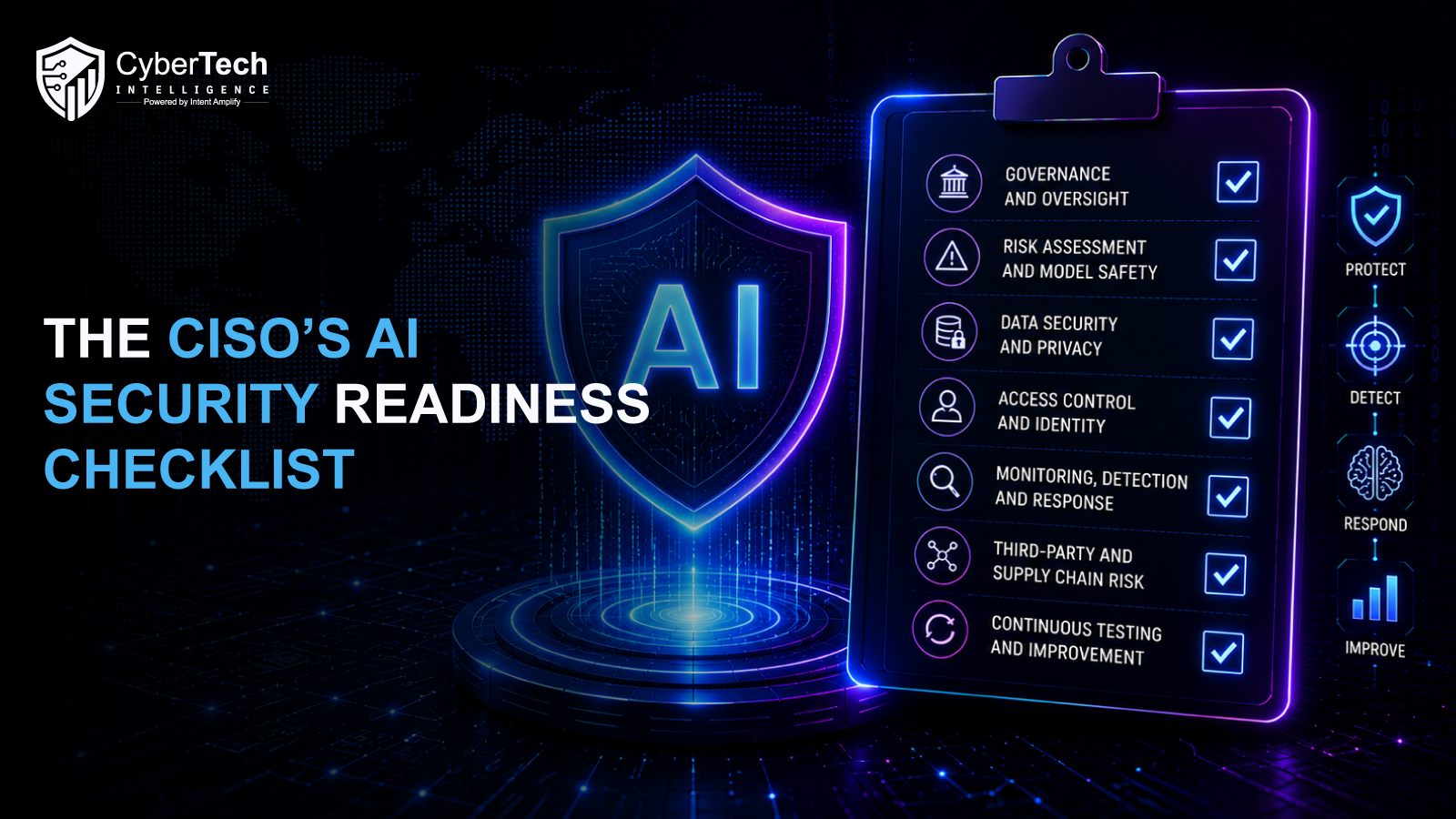
The CISO’s AI security readiness checklist has become a practical governance tool rather than a technical side document. It helps security leaders answer the questions that matter most: Where is AI being used? What data does it process? Who can access it? How is it tested? How is it monitored? What happens when it fails, leaks, or is manipulated? And, perhaps most importantly, can the organization prove that AI adoption is being secured with the same seriousness as any other business-critical technology?
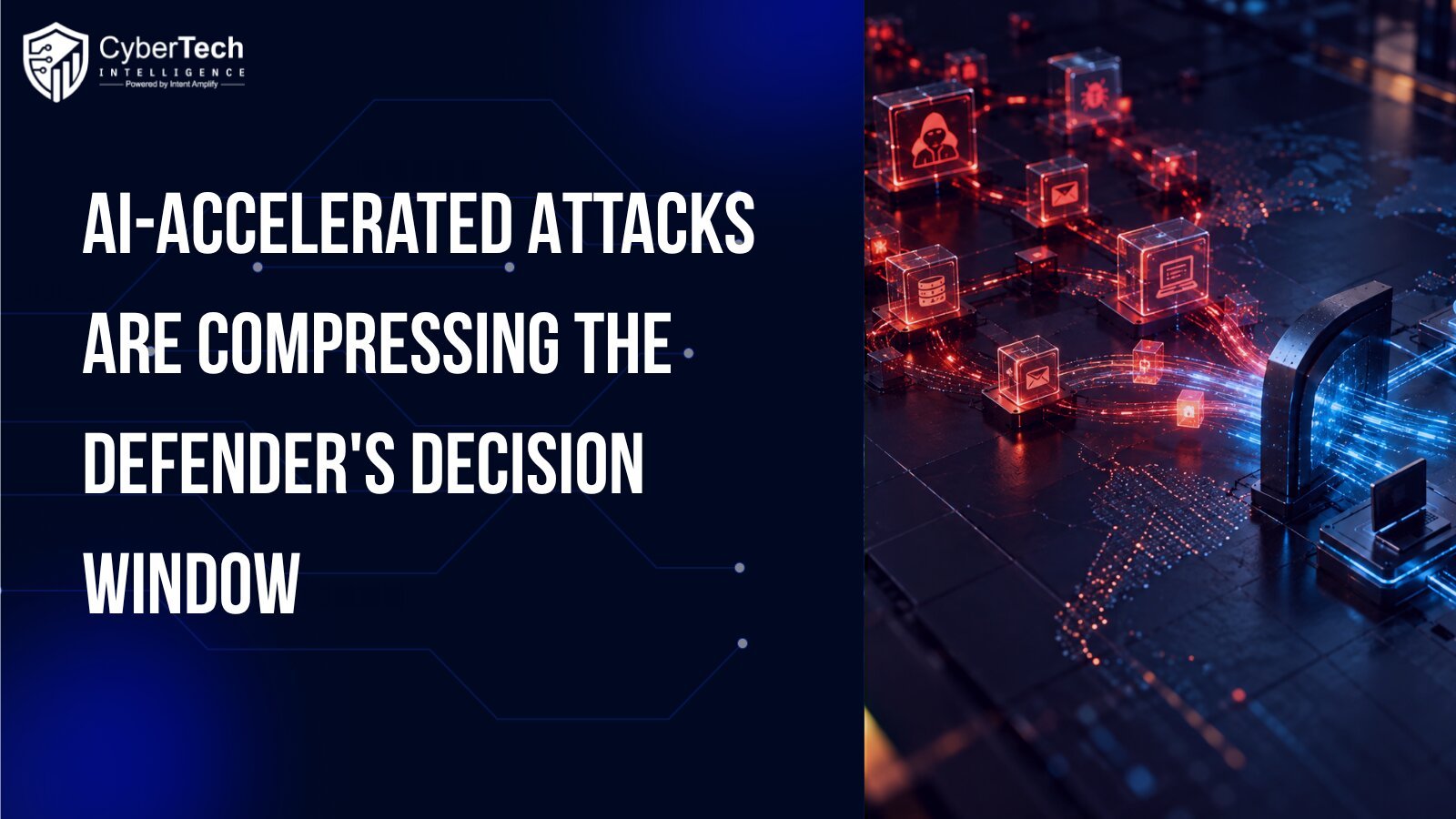
Current incident data make this an immediate concern. According to the 2026 Unit 42 Global Incident Response Report by Palo Alto Networks Unit 42, today’s attacks are 4x faster, with the quickest data exfiltration taking place in roughly 72 minutes. The same report indicated that 87% of all the intrusions detected had been conducted using multi-attack surfaces, which included identity, endpoint, cloud, network, and SaaS spaces. It must connect AI governance with identity security, data protection, cloud visibility, incident response, and executive risk management.1
Why AI Readiness Starts With Visibility
An effective AI security readiness checklist starts with visibility since companies fail to understand the extent to which AI is currently deployed within their organizations. There may be officially sanctioned use cases, like enterprise co-pilots, security via AI, and model-based analytics platforms. But other use cases may emerge informally through SaaS applications, browser-based tools, employee experimentation, external integrations, code assistants, or productivity platforms.
The CISO should not treat AI visibility as an administrative inventory exercise. It is a control foundation. A useful AI assets inventory will list approved AI systems, unauthorized use of AI, AI-based SaaS, vendor AI capabilities, internal models, generative AI, APIs, data retrieval systems, datasets, plugins, and autonomous or semi-autonomous agents. It should indicate whether or not the AI system is used for processing sensitive data, connecting to enterprise systems, implementing a regulated workflow, or making critical business decisions.
IBM's findings reinforce the financial impact of weak AI governance. IBM reported that 63% of breached organizations studied lacked AI governance policies, while only 37% had formal approval processes or oversight mechanisms. It also found that 20% of organizations experienced breaches involving shadow AI, and those incidents added as much as USD 670,000 to average breach costs compared with organizations with low or no shadow AI exposure. These figures reposition AI inventory as a financial risk control, not merely a documentation task. 2
The Checklist Should Treat AI Access as Privileged Access
Discussions about AI security often focus on advanced threats such as prompt injection, model tampering, and data poisoning. While those risks are real, the more immediate enterprise challenge is identity and access governance. AI systems are accessed through employees, service accounts, APIs, SaaS integrations, privileged users, developers, data teams, and third-party vendors. If those access paths are poorly governed, AI becomes another route into sensitive data, business processes, and operational systems.
A CISO's AI security readiness assessment should therefore evaluate whether AI access is governed with the same rigor applied to privileged identities. Who can access the system? Who can modify prompts, retrieval sources, policies, or model behavior? Which identities can connect AI tools to enterprise data? Are API keys monitored? Are integration tokens protected? Can sensitive outputs be exported? Are logs retained long enough to support investigations and compliance requirements?
The importance of these questions is increasing as attackers rely more heavily on identity abuse than traditional malware. Unit 42 identifies identity misuse, AI-driven threats, and software supply-chain risk as major components of the current threat environment, with identity remaining a primary breach vector. For enterprise security leaders, the implication is clear: model-access controls should not be treated as optional AI configurations. They should be integrated into the organization's broader identity-security strategy.
Data Governance Is the Center of AI Security
AI security readiness is ultimately a data governance issue. Models become risky when they ingest, retrieve, expose, summarize, or act on sensitive information without adequate controls. A chatbot that answers harmless internal questions may be low risk. A retrieval-augmented generation system connected to contracts, customer records, security incidents, or financial data requires a different level of oversight.
CISOs should work with data, privacy, legal, compliance, and business teams to classify AI-connected data sources. The list should highlight whether AI systems handle personally identifiable information, intellectual property, credentials, regulated information, customer information, confidential strategy information, or security telemetry. The list should inquire about whether the data is stored, whether it is utilized for training models, whether the data is accessible to third parties, and whether outputs disclose any protected information.
As per the Digital Defense Report 2025 by Microsoft, there is a threat landscape that includes attackers who have employed AI-based phishing attacks, chained attacks, and rapid exploitation of vulnerabilities. The report does not limit itself to the changing threat landscape but highlights the importance of AI preparedness for an organization where attackers don’t necessarily have to hack any AI-based process as long as the data flow, web applications, remote services, and identity paths remain unprotected.3
AI Red Teaming Must Become Continuous
A readiness assessment that excludes AI red teaming is incomplete. Traditional penetration testing remains valuable, but AI systems introduce failure modes that conventional application-security testing may not identify. These include prompt injection, unsafe output generation, retrieval poisoning, model misuse, excessive autonomy, sensitive-data exposure, unauthorized tool execution, and manipulation of AI-assisted workflows.
The CISO's objective should be to make AI red teaming a repeatable security discipline rather than a one-time exercise. A test conducted before deployment may no longer reflect the risk profile of the system several months later if prompts, datasets, workflows, plugins, APIs, permissions, or connected tools have changed. Because AI environments evolve continuously, testing programs should evolve with them. High-risk AI systems should be reassessed before deployment, after significant architectural changes, following major data-source updates, and whenever workflows begin influencing sensitive business decisions.
The importance of this approach increases as agentic AI becomes more common. A system that generates content presents one category of risk. A system that can retrieve information, invoke tools, execute actions, create tickets, modify workflows, or initiate operational processes presents a much broader governance and security challenge. As AI gains authority to act within enterprise environments, organizations must validate not only what the system can generate but also what it can access, influence, and execute.
Detection and Response Plans Must Include AI-Specific Scenarios
Most of the incident response plans have been based on known categories of attacks like ransomware, phishing, endpoint compromise, cloud breach, business email compromise, insider threat, and data breach. Most of them do not even describe the course of action if the AI generates some undesired output, leaks confidential information, executes some malicious commands, poisons retrieval content, and undesired agent action.
The 2026 Google Cloud Mandiant’s M-Trends report is based on over 500,000 hours of front-line incident investigations performed throughout the world during 2025. It notes that the median dwell time grew to 14 days, rising from 11 days, whereas the percentage of internal detections rose to 52%, as opposed to 43% before. These two elements combined play a key role in the preparedness of an organization for using AI technology in its security systems.4
In the context of AI-enabled environments, incident response should entail responses related to prompts, output, logging, model access, API usage, data access actions, vector database use, plug-ins, integration tokens, third-party notification, and business owner notification. The group should be aware of when to stop the AI flow process, revoke access, disconnect systems, collect evidence, notify legal teams, or contact executives.
Vendor Risk Reviews Need an AI Layer
Third-party governance is another factor in AI readiness. Third parties are increasingly integrating AI into their current products through functionalities that affect how data is used. For instance, an organization that had previously categorized a vendor as being relatively low-risk might now need to reassess that vendor's level of risk because the vendor integrates AI into its platform.
The CISO’s checklist should require AI-specific vendor questions. Does the vendor use customer data to train models? Where is the data processed? Are model outputs retained? Can the customer disable AI features? Are prompts and responses logged? Which subcontractors support the AI capability? Does the vendor provide audit evidence, security documentation, and contractual protections around AI data use?
This layer is essential because AI adoption often enters the enterprise through procurement paths that security teams do not fully control. Without AI-aware vendor risk management, organizations may approve technology without understanding how AI changes the data-processing and operational-risk profile.
Board Reporting Should Translate AI Risk Into Business Exposure
CISOs should not present AI security readiness to the board as a list of technical controls. The board needs to understand business exposure. This means reporting on the number of approved AI systems, high-risk AI workflows, shadow AI indicators, sensitive data exposure, third-party AI usage, control maturity, testing coverage, incident readiness, and unresolved executive decisions.
The strongest board narrative is not “AI is dangerous.” It is more precise: AI creates value when the organization can govern where it is used, control what data it touches, monitor how it behaves, and respond when something goes wrong. That message allows the CISO to support innovation while still defining clear boundaries.
A mature AI security dashboard should therefore answer practical questions. How many AI systems are sanctioned? How many are high risk? How many touch regulated or confidential data points? How many have been red-teamed? How many have incident-response playbooks? How many vendors use AI in ways that affect enterprise data? These metrics help executives see whether AI adoption is governed or simply spreading.
Where CyberTech Intelligence Can Help
AI security readiness is not only a control challenge. It is also a market education, buyer intelligence, and strategic communication challenge. Security leaders need clear frameworks for decision-making, while cybersecurity vendors need sharper ways to explain how their solutions address real enterprise AI risk without adding unnecessary complexity.
CyberTech Intelligence meets this requirement with cybersecurity intelligence, market intelligence, research-based content, and executive engagement. Our services include helping companies recognize new cyber threats, buyers’ preferences, technological changes, and themes around AI Security, Threat Intelligence, Identity Security, Cloud Security, SOCs, Zero Trust, and Cyber Governance.
Utilizing pipeline activation and GTM intelligence services, CyberTech Intelligence enables cybersecurity brands to communicate effectively with their intended audience using more refined messaging and targeting, based on robust research and campaign implementation.
CyberTech Intelligence also offers CISO round tables, webinars, expert insights, newsletters, podcasts, blogs, case studies, reports, whitepapers, ebooks, surveys, and strategic consulting.
Explore how we can support your cybersecurity growth and audience engagement goals.
Contact Us
The Readiness Checklist That Matters
The CISO AI security readiness checklist must not be considered an inert policy document. Instead, it should work as a dynamic operational framework that adapts to business needs. It should at least verify that the organization is able to detect AI utilization, categorize AI-associated information, control AI model access, monitor high-risk processes, test AI solutions, assess vendor risks, respond to AI security events, and report risks to executives.
These organizations won't be those that restrict AI deployment out of the gate. It'll be those that embrace AI deployments that are observable, secure, measurable, and accountable. This is what the CISO mandate truly is for 2026: ensuring trust without impeding innovation and advancing AI with appropriate controls and evidence gathering.
References
-
Palo Alto Networks Unit 42, 2026 Unit 42 Global Incident Response Report, 2026
https://www.paloaltonetworks.com/blog/2026/02/unit-42-global-ir-report/ -
IBM, Cost of a Data Breach, 2025/2026 insights page
https://www.ibm.com/think/insights/data-matters/cost-of-a-data-breach -
Microsoft, Microsoft Digital Defense Report 2025, 2025
https://www.microsoft.com/en-us/corporate-responsibility/cybersecurity/microsoft-digital-defense-report-2025/ -
Google Cloud Mandiant, M-Trends 2026: Data, Insights, and Strategies From the Frontlines, March 24, 2026
https://cloud.google.com/blog/topics/threat-intelligence/m-trends-2026/

Author
CyberTech Intelligence Research Desk
Author