
At a Glance
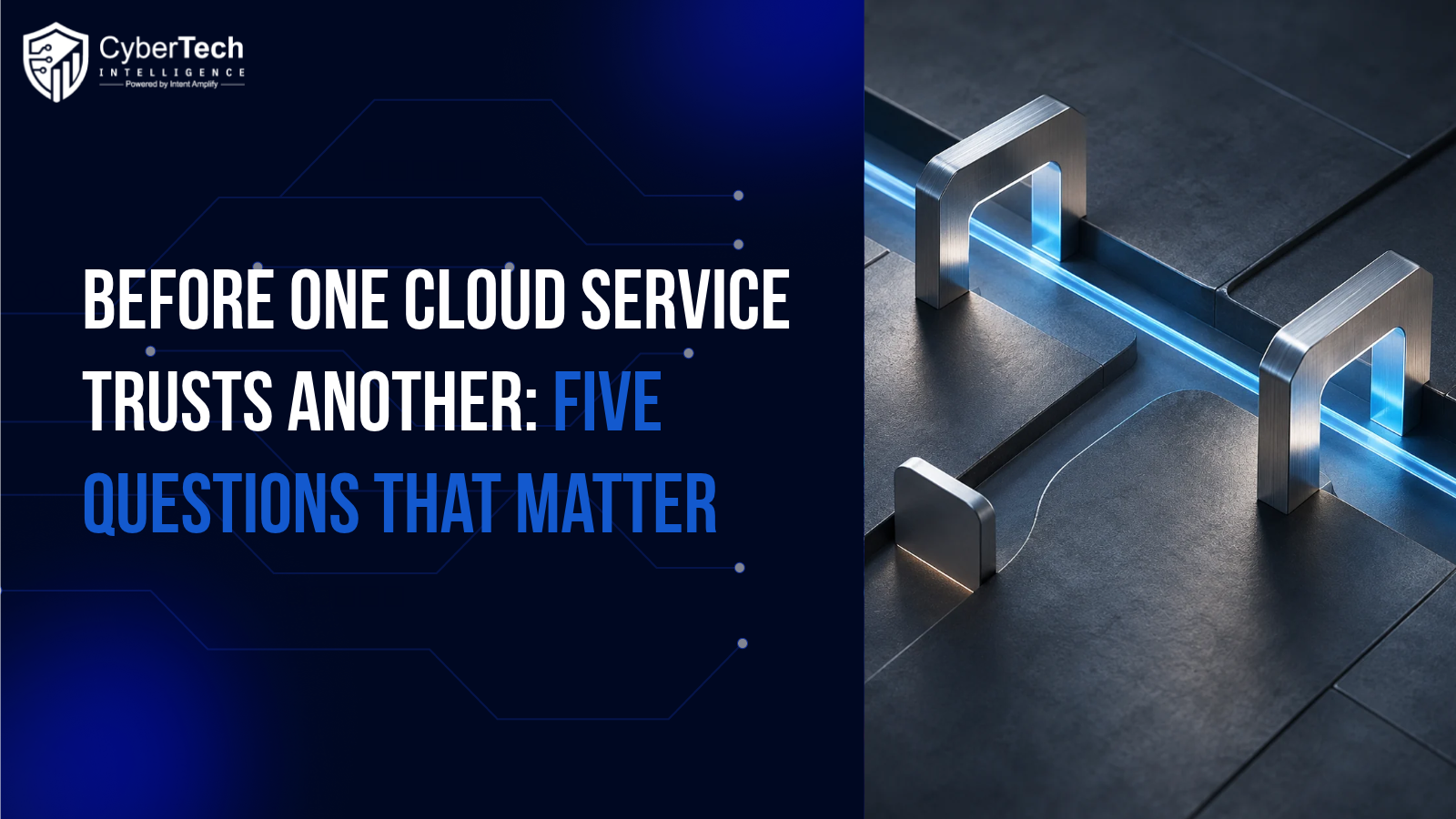
An application running in several clouds is not protected simply because its components can recognize one another. Each software service needs a dependable identity, a clear description of what it may access, and controls that apply when a request crosses a boundary. NIST SP 800-207A describes an approach that bases application-level access decisions on identities rather than network location alone. It identifies gateways, service identity infrastructure, and policy enforcement as components of a multi-cloud zero trust architecture. [1]
A service mesh can help teams apply consistent security services to communicating applications. It does not, by itself, establish that every connection is permitted, every cloud is configured identically, or every access rule has been tested. Those are operational questions. A useful buyer conversation should therefore distinguish a supplier’s documented capability from the evidence that a customer has configured, tested, and maintained it. [2]
Why the Boundary Deserves a Business Conversation
Cloud projects are often described by platform, region, or product. Business risk follows the application dependency: One service asks another to return data, change a record, or invoke a downstream process. A location-centered inventory may miss that business relationship. A buyer evaluating a cybersecurity supplier needs to understand whether policies follow application identities across environments and whether those policies can be reviewed without exposing credentials or confidential traffic. [1]
The central distinction is simple. Authentication asks whether the calling service is who it claims to be. Authorization asks whether that identified service may perform the requested action. Istio’s security guidance explicitly cautions that mutual authentication alone does not grant the right to access a protected service. A compelling vendor explanation should show both decisions separately. [4]
Five Questions Buyers Should Ask
The following questions are designed for a first discussion, not as a certification checklist. They help buyers ask for scoped records before comparing platform promises.
|
Buyer Question |
Evidence Worth Requesting |
What It Cannot Establish |
|
1. Which service is making the request? |
Workload identity, issuer, environment, and lifecycle rule |
That the caller should have access |
|
2. What is it allowed to do? |
Named resource, operation, and policy owner |
That every route uses the rule |
|
3. What changes across cloud boundaries? |
Approved trust-domain mapping, gateway path, and exceptions |
That cloud locations are interchangeable |
|
4. What happens when a rule changes? |
Versioned policy, review record, and authorized test |
That no disruption can occur |
|
5. What can reviewers see afterward? |
Relevant decision logs and recorded disposition |
That each rejection was an attack |
Service Identity Is Not a Permission Slip
The SPIFFE project provides open standards for assigning and verifying identities for software workloads in changing environments. It describes identity documents that services may use to authenticate. That is an important building block, but it is not a substitute for a well-defined policy that limits which service may access which resource. Different trust domains can also represent separate organizational or environmental boundaries, so an identity exchange needs appropriate trust configuration. [3]
For a buyer, the most informative demonstration may be a narrow scenario: A billing service in one cloud needs to read one approved customer field from a service hosted elsewhere. The supplier should explain the specific identity, allowed operation, denial behavior, and records available for review. Such a demonstration must disclose its test environment and assumptions; it does not prove every application path or deployment is protected.
Start With One Clear Buyer Question
A useful first step is to ask whether service identity, permission, or cross-cloud policy consistency is the primary concern in a target buying committee.
Explore Research-Led Targeted Content
From Technical Detail to Buyer-Ready Evidence
Security Architects may want the identity format, rule location, and enforcement component. A Chief Information Security Officer may focus on accountability and exceptions. Product Marketing Leaders need to know precisely which deployment and feature conditions a claim describes. These are related but different decisions. An educational asset can translate one technical record into role-specific, verifiable explanations without assuming that a prospect has an incident or an approved budget.
A practical claim-to-evidence record should contain the claim wording, referenced product documentation, required configuration, evidence owner, known exceptions, test date if an authorized test exists, and the limits of that test. Supplier documentation can substantiate what the product is designed to support. It does not independently establish customer protection, adoption, implementation quality, or a specific return on investment.
The distinction becomes particularly important during a renewal or expansion. A security vendor may have excellent technical documentation while an enterprise buyer still needs a short, scoped explanation of how its own environments would be covered. The useful answer identifies which tasks the product supports, which tasks belong to internal platform teams, and which questions cannot be settled without authorized testing. That is a stronger basis for a procurement conversation than the claim that a tool makes multi-cloud trust automatic.
CyberTech Intelligence Perspective: Connect Understanding to Qualified Demand
CyberTech Intelligence can support cybersecurity vendors through Buyer Intelligence that maps priority accounts, security buying roles, and relevant research themes. Managed Demand Generation can turn the five questions into educational articles, guided comparisons, or short expert discussions. Pipeline Activation can preserve a buyer’s expressed question, confirmed permission to engage, and agreed next action rather than treating a content view as proof of buying intent. These are potential service applications, not measured campaign outcomes. [5]
Strategic Business Consulting can add a broader commercial view. Market Opportunity Assessment can segment demand by cloud operating model and enterprise evaluation job. Competitive Due Diligence and Benchmarking can compare published service identity, policy, and audit capabilities with their disclosed limits. Go-To-Market and Expansion Strategies can prioritize buyer groups and geographic opportunities, while Strategic Alliances and Supply Chain Optimization can examine how integration dependencies affect the vendor’s proposition. None of these methods should invent buyer interviews or competitor performance data.
A Practical First Review
Select one documented service-mesh claim from a cybersecurity supplier. Write down who should make the access decision, which cloud boundary is relevant, and what record would show that the decision was enforced. Then identify which questions require authorized customer evidence rather than public product descriptions. This small exercise creates a clearer foundation for market education and procurement dialogue.
References and Source Boundaries
The numbered citations support the specific architecture, method, or service statements near them. Standards and documentation are not deployment tests, company-specific findings, prevalence estimates, customer endorsements, or evidence of completed commercial engagements. CyberTech Intelligence descriptions identify possible programs, not verified client results.
- NIST SP 800-207A (Final, 2023). Use in this asset: Multi-cloud identity-based access architecture, not evidence of a live customer deployment. URL: https://csrc.nist.gov/pubs/sp/800/207/a/final
- NIST SP 800-204A (Final, 2020). Use in this asset: Service mesh secure communication and identity architecture guidance, not a performance comparison. URL: https://csrc.nist.gov/pubs/sp/800/204/a/final
- SPIFFE Project, SPIFFE Overview. Use in this asset: Open-source software workload identity standards; not a provider certification. URL: https://spiffe.io/docs/latest/spiffe-about/overview/
- Istio, Security Best Practices. Use in this asset: Implementation conditions that distinguish authenticating peers from authorizing actions. URL: https://istio.io/latest/docs/ops/best-practices/security/
- CyberTech Intelligence, Targeted Content. Use in this asset: Provider-described editorial and educational content services, not a conversion result. URL: https://cybertechintelligence.com/services/targeted-content

Author
CyberTech Intelligence Research Desk
Author