
Ransomware Has Moved Beyond Encryption
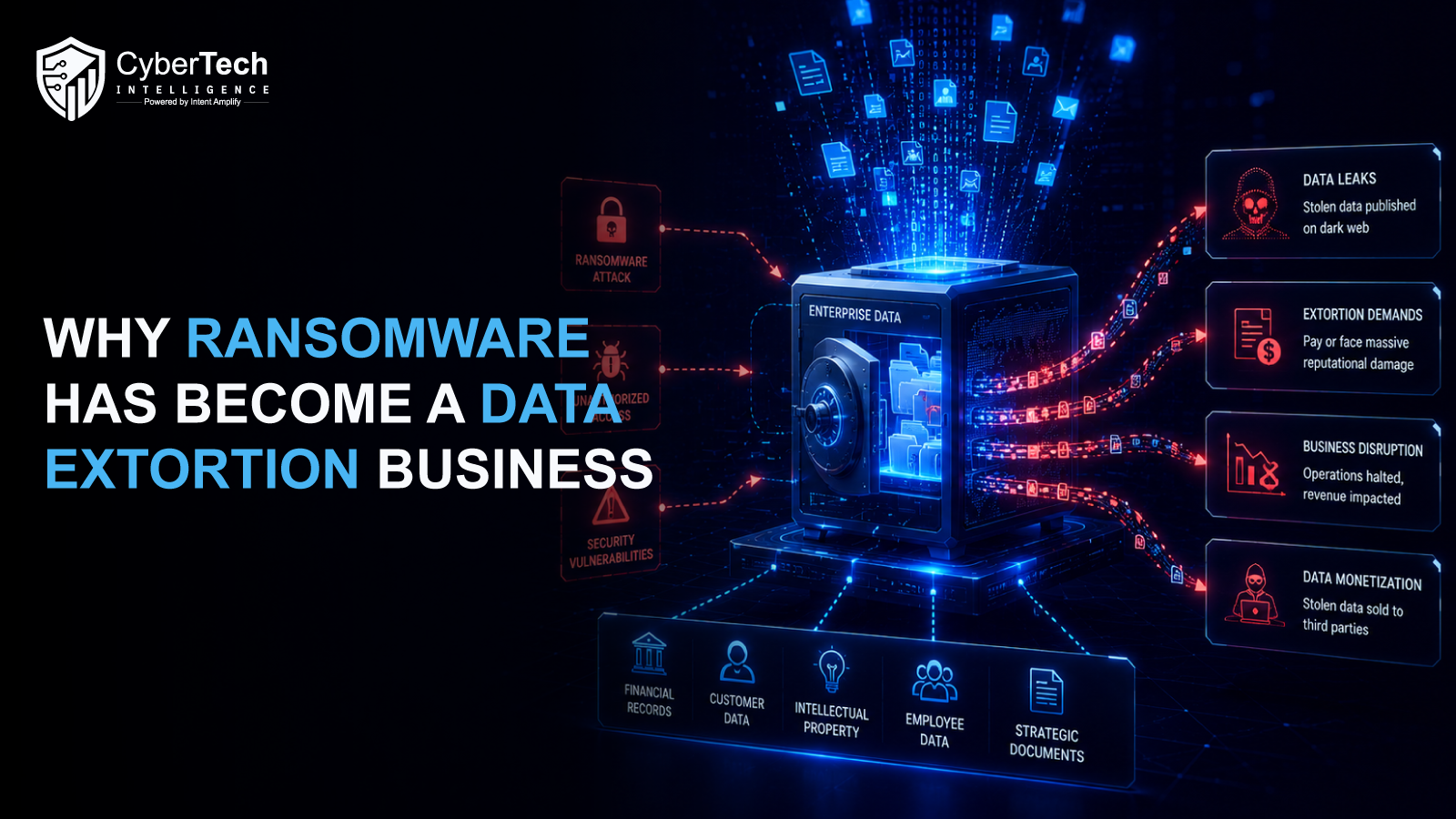
Ransomware is no longer defined only by locked files, ransom notes, and business downtime. The modern ransomware economy has shifted toward data extortion, where attackers steal sensitive enterprise information before, during, or even instead of encryption. For CISOs and executive leaders, this changes the risk conversation because restoration from backups may recover systems, but it cannot reverse the exposure of customer records, employee data, intellectual property, legal files, financial documents, or strategic business information.
Microsoft’s Digital Defense Report 2025 found that more than 52% of cyberattacks with known motives were driven by extortion or ransomware, while attacks focused only on espionage represented just 4% of incidents.¹ The evidence suggests that cybercrime is increasingly shaped by financially motivated extortion models, where attackers use stolen data, public leak threats, business disruption, and reputational exposure to force payment decisions.
Why Data Theft Creates Stronger Pressure
Traditional ransomware depended heavily on encryption. If an organization had reliable backups, tested recovery plans, and a segmented infrastructure, it could often restore operations without paying. Attackers adapted because encryption alone became less reliable as a pressure mechanism.
Data theft gives ransomware groups leverage that backups cannot neutralize. A company may restore servers, but it cannot “restore” confidentiality once sensitive data has been copied, sold, or published. That is why data extortion affects more than IT recovery. It creates legal, regulatory, contractual, customer-trust, and board-level consequences.
IBM’s ransomware research, linked to the 2026 X-Force Threat Intelligence Index, found that active ransomware and extortion groups increased by 49% year over year, rising from 73 groups in 2024 to 109 in 2025.² This growth reflects a larger market shift: data extortion is now a scalable business model, supported by access brokers, ransomware affiliates, leak-site operators, negotiators, and cryptocurrency laundering networks.
Ransomware Is Becoming an Organized Data Economy
The ransomware ecosystem now behaves less like isolated criminal activity and more like an industrialized service economy. Some actors specialize in stealing credentials, others sell initial access, affiliates conduct intrusions, and ransomware operators manage negotiation portals, leak sites, and pressure campaigns.
Microsoft describes the cybercrime economy as a specialized ecosystem made up of access brokers, ransomware operators, and data extortion groups.³ This structure lowers the barrier to entry because one criminal group no longer needs to manage the full attack lifecycle. It can buy access, use rented tooling, exfiltrate data through common utilities, and outsource parts of the monetization process.
Cisco Talos’ Ransomware in 2025: Blending in Is the Strategy shows how ransomware operators increasingly rely on identity abuse, legitimate tools, and stealthy behavior rather than obvious malware-only tactics.⁴ Talos also reported that Qilin used a double-extortion model and targeted more than 40 victims per month during most months of 2025, based on its data leak site activity.⁴
The Attack Pattern Is Changing
Modern ransomware campaigns often begin quietly. Attackers may first compromise an identity, access cloud or SaaS systems, identify sensitive repositories, disable recovery options, and exfiltrate information before launching encryption. In some cases, encryption is used mainly as an additional pressure tactic; in others, the attack becomes pure extortion without file locking.
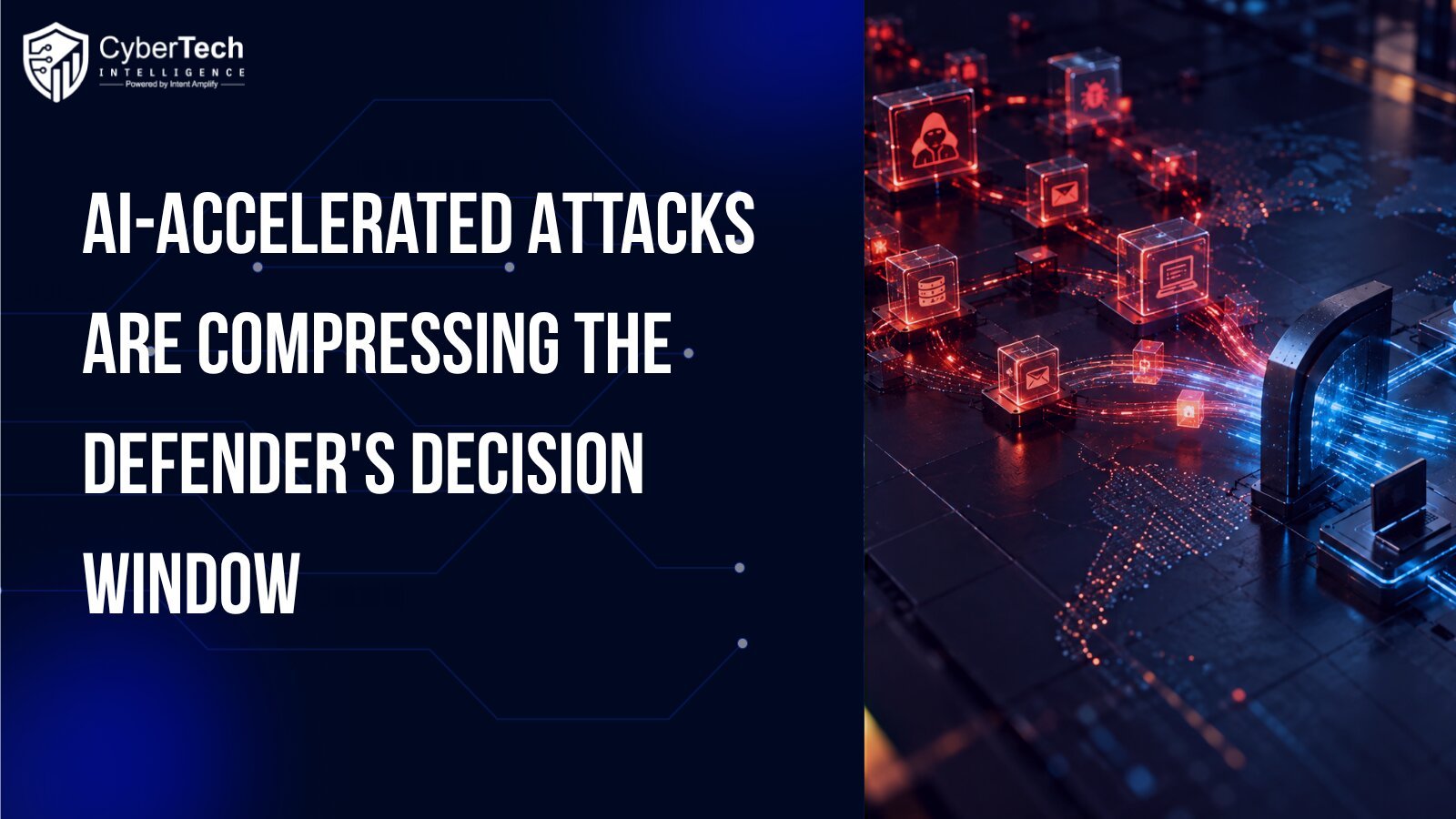
Google Cloud’s M-Trends 2026 notes that some adversary activity can move from minor alert to major compromise through a “hand-off” in less than 30 seconds, while ransomware actors are also targeting backups, identity services, and virtualization layers to deny recovery.⁵ This operational speed matters because it reduces the time available for manual response, especially when attackers are already inside identity systems or management platforms.
Cisco Talos’ research on the Qilin ransomware group also found the use of legitimate tools for credential theft, data exfiltration, lateral movement, evasion, and persistence.⁶ This is important because traditional ransomware defense often focuses on detecting encryption behavior, while today’s extortion campaigns may depend on ordinary administrative utilities, cloud storage access, remote management tools, and endpoint blind spots.
Why Enterprise Leaders Should Treat This as Business Risk
The financial and operational impact of data extortion extends beyond ransom payment. A single incident can trigger regulatory reporting, customer notification, litigation, contract review, cyber insurance scrutiny, forensic investigation, executive communication, and long-term brand damage. In sectors such as healthcare, financial services, manufacturing, public administration, and education, the value of stolen data may exceed the value of disrupted systems.
Cloudflare’s 2026 Cloudflare Threat Report describes a broader threat environment where attackers increasingly use trusted cloud tools, stolen session tokens, bots, and legitimate platforms to hide malicious activity inside normal enterprise traffic.⁷ This has direct relevance for ransomware defense because data theft often depends on blending into trusted systems long enough to identify, collect, and move valuable information.
The board-level issue is no longer only whether systems can be restored. The real question is whether the organization can detect data staging, unusual file access, suspicious identity behavior, abnormal outbound transfers, and misuse of legitimate tools before stolen data becomes an extortion asset.
Why Backups Are Necessary but Not Sufficient
Backups remain important, but they are not a complete ransomware strategy. They protect availability, not confidentiality. When attackers steal customer databases, employee records, source code, merger documents, legal files, or operational data, the business problem continues even if systems are restored quickly.
This is why ransomware defense must shift toward data-centric controls. Organizations need visibility into where sensitive information is stored, who can access it, how it moves, which identities are overprivileged, and whether unusual access patterns appear before encryption occurs.
Effective defenses now include data classification, data loss prevention, identity threat detection, privileged access management, network segmentation, endpoint telemetry, cloud audit logging, SaaS monitoring, and threat hunting for exfiltration behavior. These controls help security teams detect the theft phase, not only the encryption phase.
What CISOs Should Prioritize
CISOs should begin by mapping their most valuable data assets, including customer records, regulated data, intellectual property, executive communications, source code, financial data, and operational documents. The next priority is identity governance because ransomware operators often rely on compromised credentials, overprivileged accounts, remote access abuse, and weak segmentation.
Security teams should also monitor for exfiltration patterns, including unusual archive creation, abnormal cloud downloads, high-volume file access, rare administrative tool usage, suspicious remote sessions, and unexpected outbound transfers. Cisco Talos’ exfiltration-focused research emphasizes that trusted tools can be abused for data theft, which means behavioral telemetry is often more useful than static tool blocking.⁸
Incident response planning should include data extortion scenarios. Organizations need predefined legal, communications, regulatory, customer-notification, and executive decision workflows because ransomware negotiations now often involve stolen data claims rather than only encrypted infrastructure.
Conclusion
Ransomware has become a data extortion business because stolen information creates stronger and longer-lasting pressure than encryption alone. The most damaging ransomware events now affect confidentiality, trust, compliance, legal exposure, and business reputation, not only uptime.
The enterprises best prepared for this shift will not rely on backups alone. They will understand where sensitive data resides, enforce identity discipline, monitor data movement, detect exfiltration behavior, and treat ransomware as a business resilience problem. In the current threat landscape, the decisive question is no longer only how quickly an organization can restore systems, but whether it can prevent its most valuable data from becoming the attacker’s product.
BE READY FOR WHAT’S NEXT
Subscribe to CyberTech Intelligence for research-driven cybersecurity analysis, enterprise security insights, and practical guidance on the technologies reshaping digital trust.
References
- Microsoft, Extortion and Ransomware Drive Over Half of Cyberattacks / Microsoft Digital Defense Report 2025, October 2025
https://blogs.microsoft.com/on-the-issues/2025/10/16/mddr-2025/ - IBM: What Is Ransomware? / 2026 X-Force Threat Intelligence Index, 2026
https://www.ibm.com/think/topics/ransomware - Microsoft, Microsoft Digital Defense Report 2025, 2025
https://www.microsoft.com/en-us/corporate-responsibility/cybersecurity/microsoft-digital-defense-report-2025/ - Cisco Talos, Ransomware in 2025: Blending in Is the Strategy, March 2026
https://blog.talosintelligence.com/ransomware-in-2025-blending-in-is-the-strategy/ - Google Cloud / Mandiant, M-Trends 2026 Report: Executive Edition, 2026
https://cloud.google.com/security/resources/m-trends-executive-edition - Cisco Talos, Uncovering Qilin Attack Methods Exposed Through Multiple Cases, October 2025
https://blog.talosintelligence.com/uncovering-qilin-attack-methods-exposed-through-multiple-cases/ - Cloudflare, Introducing the 2026 Cloudflare Threat Report, March 2026
https://blog.cloudflare.com/2026-threat-report/ - Cisco Talos, Everyday Tools, Extraordinary Crimes: The Ransomware Exfiltration Playbook, March 2026
https://blog.talosintelligence.com/everyday-tools-extraordinary-crimes-the-ransomware-exfiltration-playbook/

Author
CyberTech Intelligence Research Desk
Author