Supply Chain Risk Has Become an Enterprise Trust Problem
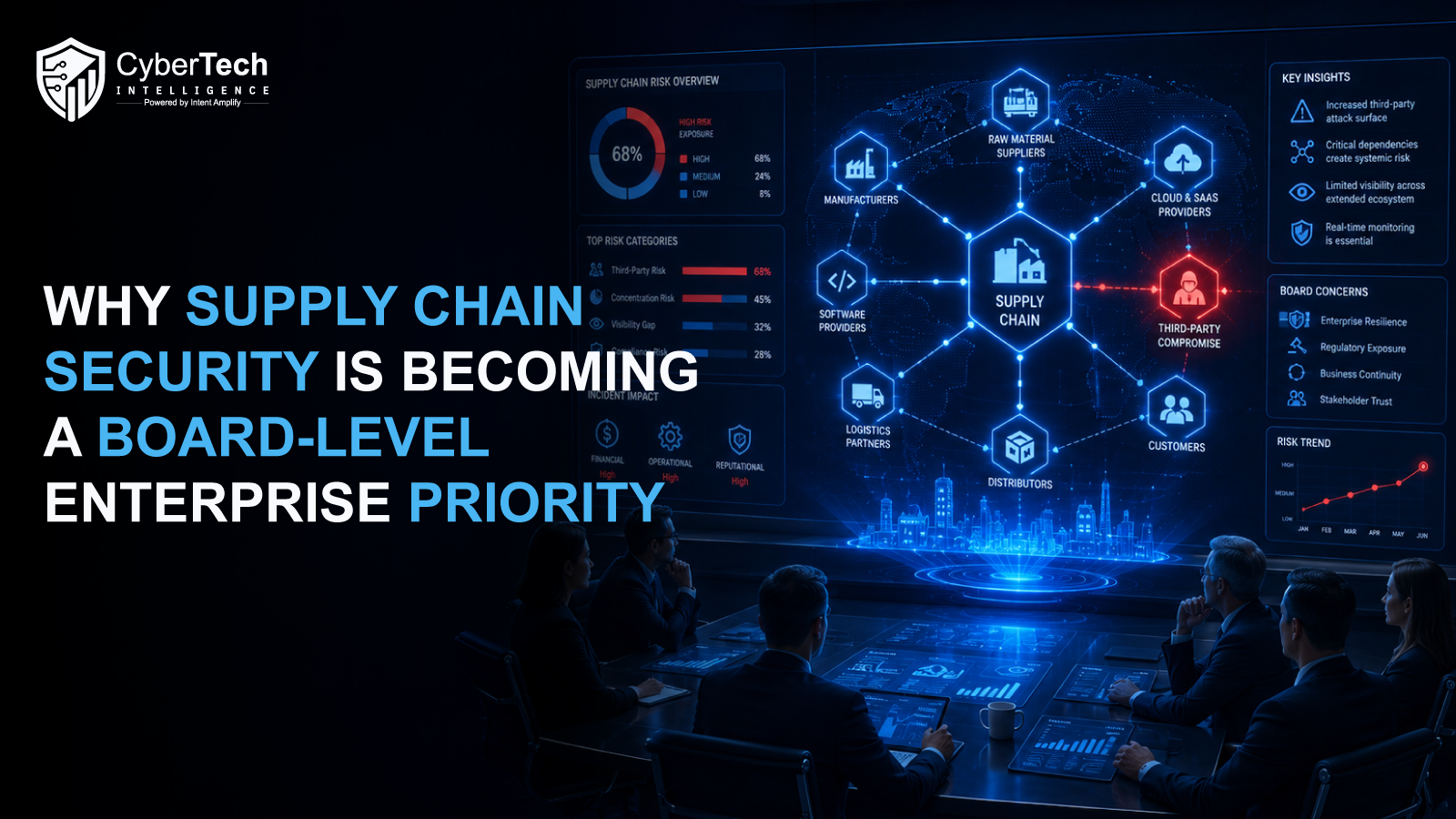
Enterprise breaches increasingly originate beyond organizational boundaries. Trusted vendors, software packages, cloud integrations, developer tools, AI-enabled services, and automation workflows provide attackers with indirect access to business systems. Supply chain security has therefore emerged as an enterprise resilience priority with implications for governance, operational continuity, and business risk.
Attackers increasingly exploit the trust relationships that support enterprise operations. Software dependencies, application programming interfaces, SaaS platforms, CI/CD pipelines, cloud identities, open-source packages, managed service providers, AI-enabled services, and third-party integrations expand the enterprise attack surface and create indirect pathways into critical business environments.
IBM's 2026 X-Force Threat Intelligence Index reported a nearly fourfold increase in major supply chain and third-party compromises since 2020, attributing the growth to attacks targeting trusted relationships, CI/CD automation, SaaS integrations, and software development workflows.1
For executive leaders, that figure points to a structural change in cyber risk. The issue is no longer limited to whether the organization’s own defenses are mature. The issue is whether every trusted connection into the enterprise can be verified, governed, and monitored.
CyberTech Intelligence recommends organizing supply chain security around five connected trust pillars: Third-Party Visibility, Software Provenance, AI Supply Chain Governance, Runtime Assurance, and Executive Trust Governance.
CyberTech Intelligence Perspective
CyberTech Intelligence views supply chain security as an enterprise trust discipline, not only a third-party risk or procurement function. Enterprise resilience increasingly depends on whether organizations can govern the trusted software ecosystems, AI agents, cloud services, SaaS integrations, open-source components, developer workflows, and third-party relationships that now support business operations.
This shift changes the executive question. The issue is no longer limited to whether internal systems are secure. The more important question is whether every trusted connection into the enterprise can be verified, monitored, governed, and revoked when risk changes.
For CISOs, CIOs, CTOs, CROs, enterprise architects, and board risk committees, supply chain security should be managed as a continuous trust-verification program across software, vendors, identities, AI systems, and runtime operations.
Why Attackers Prefer the Supply Chain
Supply chain attacks are attractive because they allow adversaries to scale impact through one compromised point of trust. A single malicious package, exposed vendor credentials, poisoned model, or compromised software update can affect many downstream organizations at once.
This is especially dangerous because trusted activity often looks normal. A vendor account logging in to a cloud portal, a package being pulled into a build pipeline, or an AI agent invoking a tool may not raise immediate suspicion. Attackers exploit this gap between authorized access and intended behavior.
IBM’s Cybersecurity Trends 2026 warns that supply chain and third-party compromises have expanded attacker reach over the past 5 years.² The report also connects this risk to AI-powered coding tools, which can accelerate software creation while sometimes introducing unvetted code.² That creates an uncomfortable enterprise reality: the same tools improving developer productivity can also increase dependency, provenance, and governance risk.
CyberTech Intelligence Research Desk Observation
Attackers increasingly exploit supply chain trust relationships because indirect compromise can provide greater scale, persistence, and legitimacy than direct attacks on internal infrastructure. A compromised vendor account, malicious package, poisoned model, exposed OAuth grant, or trusted automation workflow can give adversaries access through pathways that security teams may initially classify as authorized activity.
The organizations most exposed will not always be those with the weakest perimeter controls. They will often be the organizations that cannot clearly identify which third parties, software artifacts, AI agents, SaaS integrations, developer tools, and machine identities are trusted inside business-critical environments.
AI Is Expanding the Software Supply Chain
AI is changing the boundaries of supply chain security. Enterprise software supply chains used to focus mainly on code, libraries, vendors, and deployment pipelines. Now they also include AI-generated code, model files, prompts, datasets, retrieval systems, plug-ins, Model Context Protocol servers, autonomous agents, and tool permissions.
Microsoft’s Cyber Pulse: An AI Security Report found that more than 80% of the Fortune 500 are deploying active AI agents, while only 47% of organizations report implementing specific generative AI security controls.³
Microsoft also reported that 29% of employees have used unsanctioned AI agents for work tasks.³
These figures show why AI supply chain governance is becoming urgent. Agent adoption is outpacing formal security oversight.
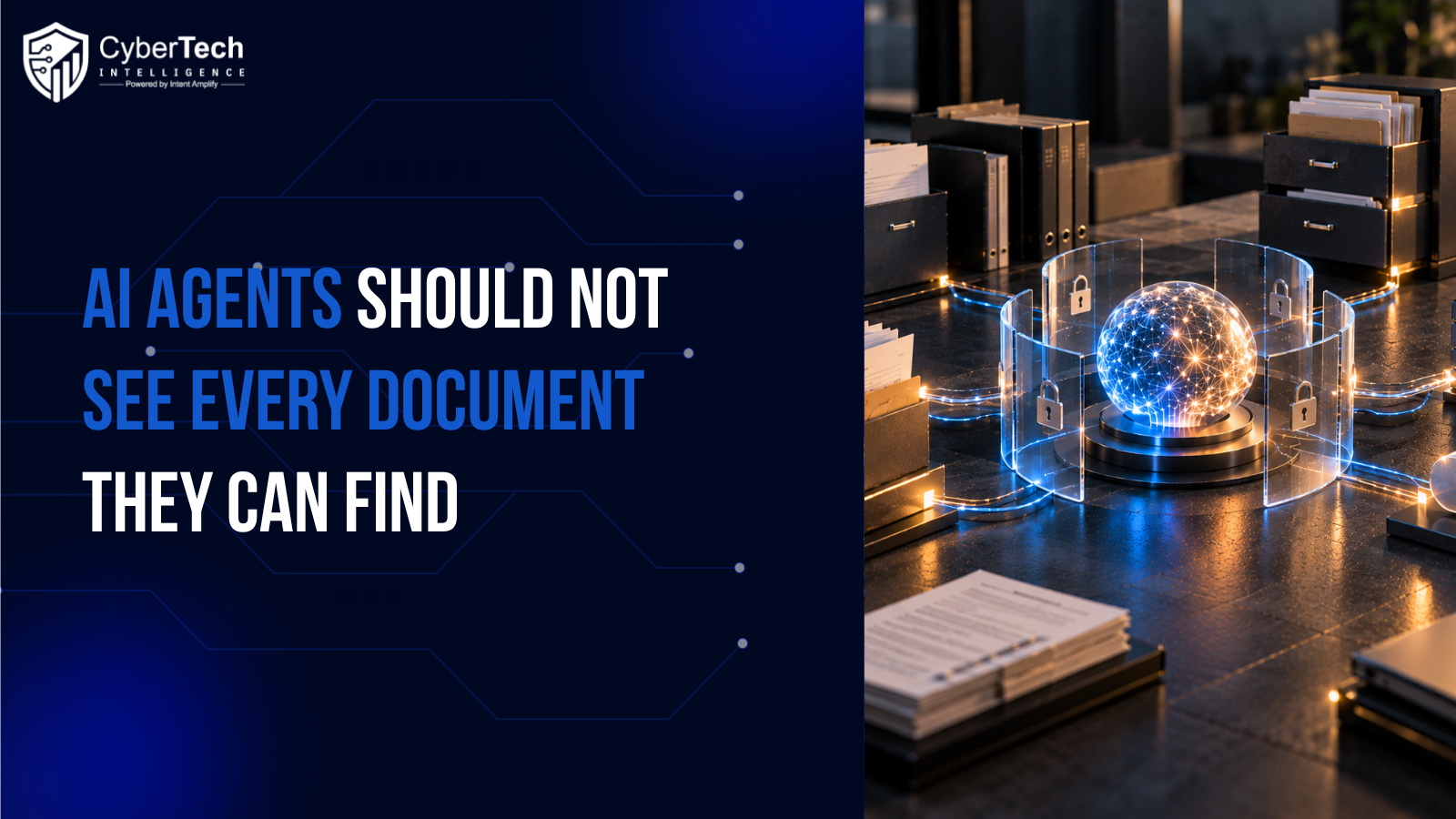
Google Cloud’s Next ’26 security updates introduced AI-BOM capabilities to help secure AI-generated code and reduce shadow AI risk, along with Agent Identities and Agent Gateway protections for the agentic web.⁴
This signals where enterprise controls are heading: organizations will need to know not only what software they use, but also which AI systems created, modified, tested, or deployed it.
Open Source Still Carries Systemic Risk
Open source remains essential to enterprise software development, but it also creates dependency risk at a massive scale. Most modern applications rely on open-source components, container images, development frameworks, AI libraries, and package registries. The problem is not open source itself. The problem is unmanaged intake, weak provenance, abandoned packages, and limited visibility into transitive dependencies.
IBM and Red Hat’s May 2026 announcement of a $5 billion commitment to Project Lightwell, supported by more than 20,000 engineers, shows how strategically important secure open source has become.⁵ The initiative focuses on improving enterprise open-source security from upstream development through production environments.⁵
For boards and CISOs, this is a business continuity issue. A compromised dependency can affect customer applications, financial systems, manufacturing platforms, developer environments, and cloud services. Without accurate component inventories, signed artifacts, trusted registries, and emergency patching workflows, enterprises may not know where exposure exists until after attackers have already exploited it.
SBOMs Are Useful, but They Are Not Enough
Software Bills of Materials (SBOMs) remain a foundational element of software assurance by providing visibility into software components and dependencies. Modern software supply chain risk, however, extends beyond static inventories. AI-enabled development environments evolve continuously, while production environments depend on dynamic agents, external tools, plug-ins, cloud services, and model integrations.
Microsoft's 2026 research on agentic AI security recommends embedding SBOM generation, tool provenance verification, inter-agent authentication, registry scanning, version pinning, and change monitoring into agentic architectures from the outset.⁶ Early integration establishes software trust as part of the engineering lifecycle instead of introducing governance after deployment.
Enterprise software assurance requires continuous operational visibility. SBOMs, AI-BOMs, artifact signing, build provenance, dependency risk scoring, runtime monitoring, and identity governance should operate as integrated engineering capabilities that support software delivery, risk management, and operational resilience.
CyberTech Intelligence Enterprise Supply Chain Trust Framework™
CyberTech Intelligence recommends that enterprise leaders manage supply chain security through a continuous trust framework. The goal is not only to review vendors or generate SBOMs. The goal is to verify third-party access, prove software provenance, govern AI-enabled software creation, monitor runtime activity, and report supply chain resilience as an executive risk metric.
|
Framework Pillar |
Executive Question |
What Leaders Should Measure |
|
Third-Party Visibility |
Do we know which vendors, SaaS platforms, service accounts, API tokens, OAuth grants, and AI agents can access enterprise systems? |
Vendor access, SaaS integrations, managed service providers, service accounts, OAuth grants, API tokens, third-party identities, access ownership, and revocation status. |
|
Software Provenance |
Can the enterprise prove where the software came from and how it was built? |
Signed packages, verified builds, approved registries, tamper-resistant pipelines, artifact integrity, container provenance, and source-to-production traceability. |
|
AI Supply Chain Governance |
Are AI-generated code, models, prompts, datasets, plug-ins, agents, and tools governed as part of software assurance? |
AI-BOM readiness, AI-generated code review, model provenance, dataset lineage, prompt templates, MCP servers, agent permissions, and approved AI development tools. |
|
Runtime Assurance |
Can trusted activity be monitored after deployment? |
Runtime behavior, vendor activity, unusual API calls, data movement, tool invocation, identity anomalies, dependency changes, and production telemetry. |
|
Executive Trust Governance |
Is supply chain risk visible to leadership as a resilience issue? |
Board reporting, supplier risk tiers, dependency exposure, unsigned artifacts, AI governance status, incident readiness, and remediation progress. |
|
Decision Area |
Executive Metric |
|
Third-Party Visibility |
Percentage of vendors, SaaS integrations, service accounts, API tokens, OAuth grants, and AI agents mapped to owners. |
|
Software Provenance |
Percentage of production artifacts signed, percentage of builds verified, and percentage of releases traceable from source to deployment. |
|
SBOM and AI-BOM Readiness |
Percentage of critical applications with operational SBOMs, percentage of AI-generated code captured, and number of AI-BOM workflows implemented. |
|
Open-Source Governance |
Percentage of packages sourced from approved registries, maintainer-risk reviews completed, and high-risk dependencies remediated. |
|
Runtime Assurance |
Percentage of critical applications, vendors, APIs, and AI workflows covered by runtime monitoring and behavioral telemetry. |
|
Identity and Access Governance |
Percentage of third-party identities under least privilege, time-bound access, monitored sessions, and periodic review. |
|
Executive Trust Governance |
Frequency of board reporting, number of high-risk supplier exceptions, remediation cycle time, and supply chain incident readiness score. |
The priority is Third-Party Visibility. Enterprises should map every vendor, SaaS provider, service account, API token, OAuth grant, and AI agent that can access internal systems. Access should be least-privilege, time-bound, monitored, and revoked when no longer required.
The second priority is Software Provenance. Organizations should require signed packages, verified builds, approved registries, and tamper-resistant pipelines. Every production artifact should have a traceable path from source code to deployment.
The third priority is AI Supply Chain Governance. AI-generated code, models, prompts, datasets, tools, and agents should be reviewed as part of software security, not treated as separate experimentation.
Cisco’s State of AI Security 2026 identifies AI supply chain vulnerability, agentic AI risk, and attacker weaponization of AI as major enterprise security challenges.⁷
The fourth priority is Runtime Assurance. Supply chain attacks often abuse trusted access, which means security teams need behavioral analytics, data movement monitoring, identity threat detection, and alerting for unusual vendor or agent activity.
Executive Supply Chain Trust Scorecard
|
Readiness Area |
Early Stage |
Developing |
Mature |
|
Third-Party Visibility |
Vendor access, SaaS integrations, OAuth grants, and service accounts are reviewed manually or during audits. |
Critical vendors and integrations are documented, but indirect access through SaaS, APIs, AI agents, and managed services remains partially visible. |
Third-party access, SaaS integrations, API tokens, OAuth grants, service accounts, and AI agents are continuously discovered, owned, reviewed, and revoked when needed. |
|
Software Provenance |
Build provenance, artifact signing, and trusted registry controls are inconsistent. |
Critical applications use signed artifacts or verified builds, but coverage is incomplete across repositories, containers, and pipelines. |
Source code, packages, containers, infrastructure templates, AI-generated code, and production artifacts are signed, verified, and traceable. |
|
SBOM Maturity |
SBOMs exist for selected applications but are not operationalized. |
SBOMs are generated for high-priority systems and connected to some vulnerability workflows. |
SBOMs are integrated with vulnerability management, dependency governance, procurement, incident response, artifact signing, and release workflows. |
|
AI Governance |
AI-generated code, agents, models, prompts, datasets, and plug-ins are not consistently reviewed. |
AI governance exists for selected tools, but shadow AI, agent workflows, and AI development activity remain partially visible. |
AI-generated code, AI-BOMs, model provenance, datasets, prompts, tools, and agents are governed as part of software supply chain security. |
|
Runtime Monitoring |
Supply chain security focuses mainly on pre-deployment reviews and static inventories. |
Runtime monitoring exists for selected applications, vendors, or cloud services. |
Vendor activity, API behavior, identity use, data movement, dependency changes, and AI agent actions are monitored continuously. |
|
Dependency Governance |
Open-source intake and package approval are handled inconsistently by teams. |
Approved registries and dependency reviews exist for major projects, but transitive dependency visibility remains incomplete. |
Open-source intake, package signing, maintainer-risk review, emergency patching, trusted registries, and dependency risk scoring are operationalized. |
|
Executive Resilience Maturity |
Leadership reporting focuses on vendor counts, audits, or compliance status. |
Some supply chain risk metrics are reported, but they are not connected to operational resilience. |
Executives receive clear reporting on third-party exposure, software provenance, AI governance, dependency risk, runtime assurance, and business continuity. |
This scorecard helps CISOs, CIOs, CTOs, CROs, DevSecOps leaders, platform engineering teams, enterprise architects, and board risk committees evaluate whether supply chain security is being managed as a vendor-review process or as a continuous enterprise trust discipline. Mature organizations will show measurable progress across third-party visibility, software provenance, SBOM maturity, AI governance, runtime monitoring, dependency governance, and executive resilience reporting.
Conclusion
Supply chain security is becoming a growing enterprise priority because business operations now depend on trusted software, vendors, AI systems, cloud platforms, and development pipelines that extend beyond the organization’s direct control. Attackers understand this dependency and increasingly use it as an access strategy.
The enterprises best prepared for 2026 will move beyond basic vendor reviews, static SBOMs, and isolated dependency checks. They will govern third-party access, verify software provenance, secure open-source intake, monitor AI agents, and treat supply chain visibility as part of business resilience. In the AI era, enterprise trust is no longer established through supplier reputation alone. It is built through continuous verification of software provenance, trusted identities, AI governance, runtime assurance, and resilient supply chain operations.
The board-level priority is therefore clear: supply chain security must move from periodic vendor review to continuous trust governance.
Assess Your Enterprise Supply Chain Security Readiness
CyberTech Intelligence helps CISOs, CIOs, CTOs, CROs, DevSecOps leaders, platform engineering teams, and board risk committees move supply chain security from periodic review to continuous trust governance. Through the Enterprise Supply Chain Security Assessment, organizations can evaluate software supply chain governance, third-party cyber risk, AI supply chain maturity, software provenance, dependency governance, runtime assurance, and executive resilience.
CyberTech Intelligence also supports enterprise teams through:
- Third-Party Access and Trust Review
- Software Provenance and Artifact Integrity Assessment
- SBOM, AI-BOM, and Dependency Governance Review
- AI Supply Chain Governance Workshop
- Executive Supply Chain Trust Briefing
Use this blog as the starting point for a structured governance conversation that connects supply chain security, AI governance, software assurance, third-party cyber risk, and enterprise resilience.
References
- IBM, 2026 X-Force Threat Intelligence Index, February 2026
https://uk.newsroom.ibm.com/ibm-2026-x-force-threat-index - IBM, Cybersecurity Trends 2026, March 2026
https://www.ibm.com/think/insights/more-2026-cyberthreat-trends - Microsoft, Cyber Pulse: An AI Security Report, February 2026
https://www.microsoft.com/en-us/security/security-insider/emerging-trends/cyber-pulse-ai-security-report - Google Cloud, Next ’26: Redefining Security for the AI Era with Google Cloud and Wiz, April 2026
https://cloud.google.com/blog/products/identity-security/next26-redefining-security-for-the-ai-era-with-google-cloud-and-wiz - IBM and Red Hat Commit $5 Billion to Redefine the Future of Open Source in the AI Era, May 2026
https://newsroom.ibm.com/2026-05-28-ibm-and-red-hat-commit-5-billion-to-redefine-the-future-of-open-source-in-the-ai-era - Microsoft, Updating the Taxonomy of Failure Modes in Agentic AI Systems: What a Year of Red Teaming Taught Us, June 2026
https://www.microsoft.com/en-us/security/blog/2026/06/04/updating-taxonomy-failure-modes-agentic-ai-systems-year-red-teaming-taught-us/ - Cisco, The State of AI Security 2026, February 2026
https://blogs.cisco.com/ai/cisco-state-of-ai-security-2026-report
Author
CyberTech Intelligence Research Desk
Author