Executive Snapshot
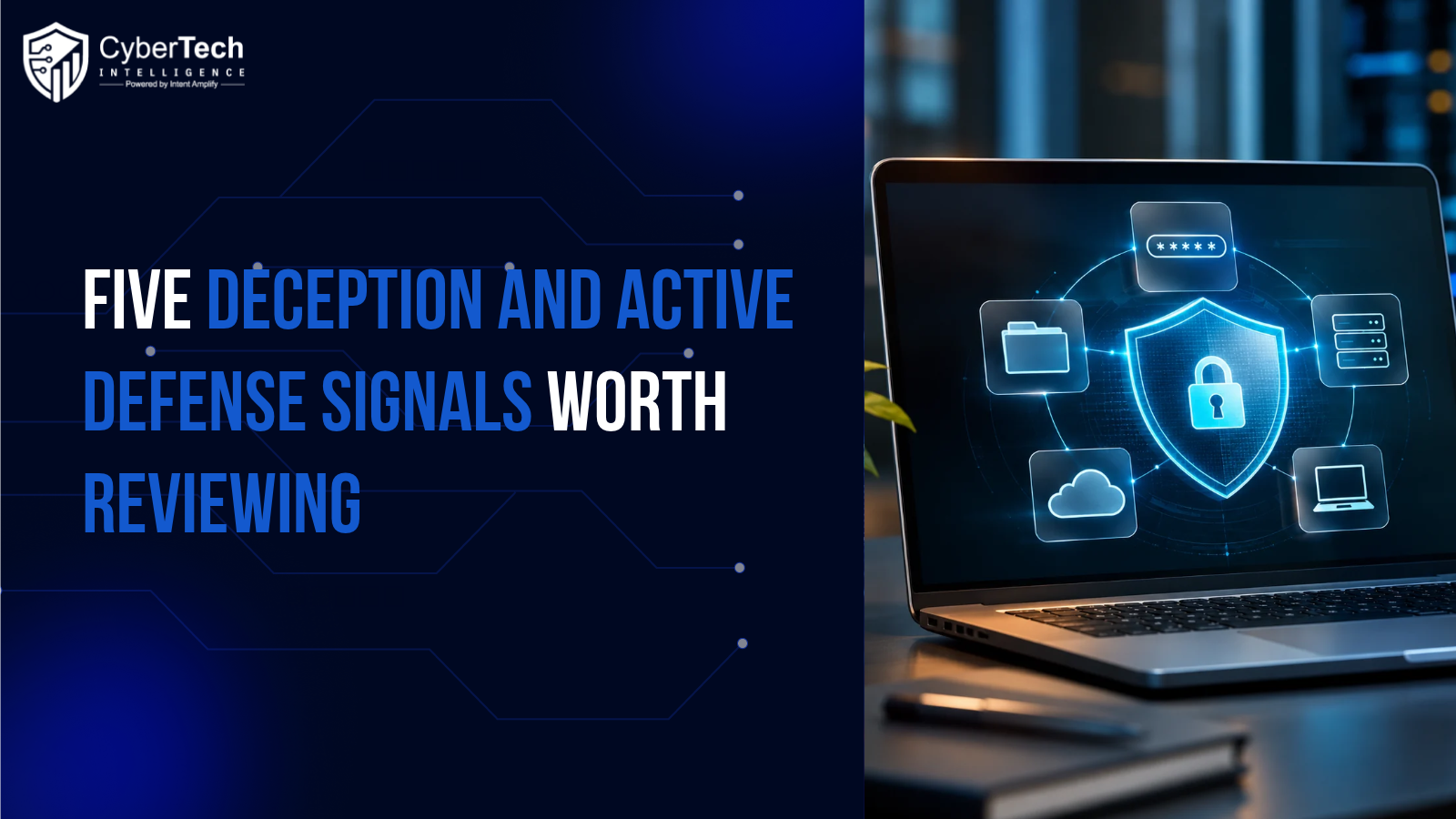
Deception can create controlled opportunities to observe unexpected interaction with a fictional file, credential, service, or host. The leadership value comes from disciplined interpretation: The signal should reveal a question worth investigating, not become an unsupported declaration of compromise. The five reference points below separate established guidance from the local evidence a team still needs.
Engagement Needs an Operational Objective
MITRE Engage describes adversary engagement as a planned operation that can help defenders learn, detect, or influence behavior under defined conditions. [1] The relevant leadership question is whether a proposed decoy has a stated objective and exit rule, rather than simply being switched on because the technology is available.
Ask for: The intended observation, authorized environment, decision owner, and conditions requiring suspension. An objective should be stated as a testable question, such as whether a known decoy access generates an event with sufficient identity and timing detail for a reviewer.
Decoy Credentials Need Careful Interpretation
MITRE D3FEND describes decoy user credentials as deliberately created identities whose attempted use may be monitored. [2] This supports a direct detection hypothesis when such a credential has no legitimate business purpose. It does not identify who obtained the credential or establish how that person reached it.
Ask for: A credential inventory showing where it was placed, the alerts expected from a harmless test, and a reliable method to distinguish approved testing from unplanned use.
Decoy Files Can Produce Context, Not Complete Attribution
A decoy document can be monitored for access and may be placed where an investigator wants to test a specific behavior. MITRE D3FEND discusses decoy files as deliberately deployed resources, not as evidence that all accesses are hostile. [3] Even a clear interaction must be connected to the source process and other records.
Ask for: The file identifier, access path, initiating process where available, and any corresponding endpoint or file-service record.
Existing Control Guidance Still Applies
NIST SP 800-53 includes a control catalog relevant to monitoring, security events, isolation, and the safe use of decoys. [4] The latest available release matters, but an updated standard does not mean a local control has been implemented. A policy statement should be linked to a configuration or completed exercise.
Ask for: The isolation design, reviewer approval, log-retention rule, and change record for each operational decoy class.
Buyer Education Must Not Become Assumed Demand
CyberTech Intelligence describes buyer intelligence and pipeline activation programs that connect account signals, buying-group context, relevant engagement, and measurement. [5] A reader asking about deception may be researching a topic, evaluating controls, or preparing an unrelated report. Only explicit buyer context can distinguish those situations.
Ask for: The question the buyer actually raised, the role involved, and the next step the buyer accepted. A downloaded asset is content engagement until the additional commercial facts have been verified.
Five Questions for the Next Leadership Review
|
Leadership Question |
Evidence to Request |
|---|---|
|
What does this decoy represent? |
Owner and approved purpose |
|
Where can interaction occur? |
Network and identity boundary |
|
What does the alert prove? |
Raw event and monitoring coverage |
|
What supports prioritization? |
Corroborating telemetry and review record |
|
Who changes or stops it? |
Runbook and accountable decision maker |
Compare one current alert with its supporting evidence: Identify the decoy owner, the raw interaction record, corroborating activity, and the documented disposition before expanding the program.
CyberTech Intelligence Perspective
CTI can translate the same subject into different evidence questions for executives, operations teams, and vendor buying committees. Buyer intelligence helps identify which question matters at a target account; managed demand generation gives each role a suitable research format; pipeline activation follows a confirmed business conversation. The objective is clarity and relevance, not inflated lead counts.
Why a Single Alert Is Not a Verdict
An interaction with a monitored object may have few legitimate reasons, but context still determines meaning. A red-team exercise, expired service reference, or validation scan can create activity that resembles a suspicious sequence. A transparent disposition record protects decision quality when leadership asks why an analyst escalated an event or closed it without further action.
For the next review cycle, leadership can request one case that was escalated and another that was closed. Comparing their evidence trails shows whether a team can differentiate corroborated activity from approved tests. Both case types are valuable: One explains how evidence supported action; the other demonstrates that the organization can avoid treating an ambiguous alert as a confirmed incident.
References and Source Boundaries
Numbered references identify the primary publisher support for nearby factual claims. Published technique descriptions, control guidance, and CTI service descriptions do not verify the security condition of a named organization, establish customer-specific product performance, or guarantee campaign outcomes. Source review date: November 2, 2026.
- MITRE Engage. Engage Framework Home. Use in this asset: Planning and discussing adversary engagement operations. URL: https://engage.mitre.org/
- MITRE D3FEND. Decoy User Credential. Use in this asset: Describes controlled detection on deliberate decoy credential use. URL: https://d3fend.mitre.org/technique/d3f:DecoyUserCredential/
- MITRE D3FEND. Decoy File. Use in this asset: Describes monitored use of intentionally placed decoy documents. URL: https://d3fend.mitre.org/technique/d3f:DecoyFile/
- NIST. SP 800-53 Revision 5. Use in this asset: Catalog of security controls, including decoys and audit families. URL: https://csrc.nist.gov/pubs/sp/800/53/r5/upd1/final
- CyberTech Intelligence. Cybersecurity Pipeline Activation. Use in this asset: CTI-stated buyer intelligence and activation service description. URL: https://cybertechintelligence.com/services/pipeline-activation