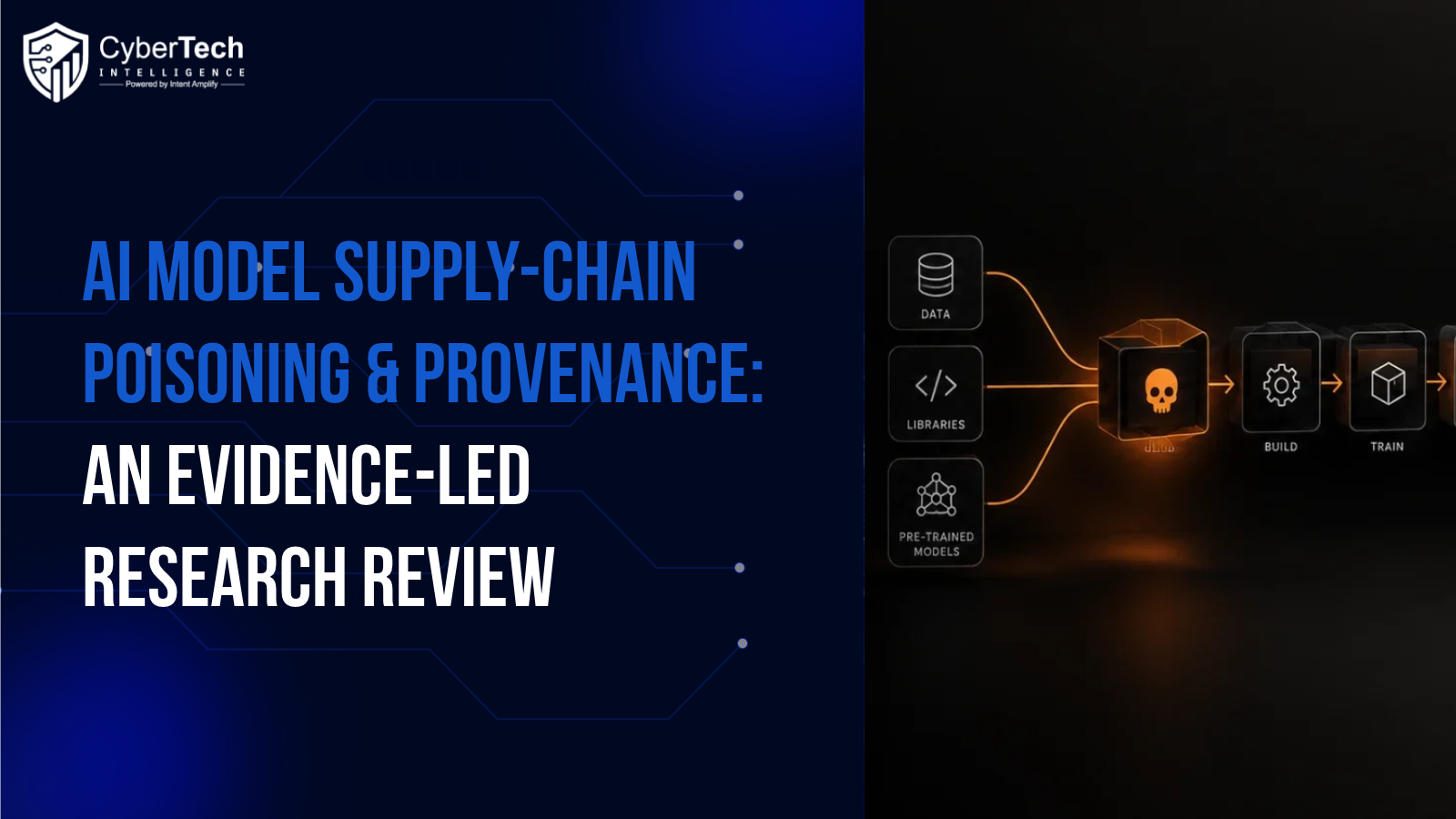

Executive Summary
Passkeys provide a strong method for establishing control of registered public-key credentials, but a real account is more than a single sign-in exchange. Credential registration, fallback methods, recovery contacts, support processes, identity-provider behavior and application sessions can all affect the account’s eventual state. This research reviews those surrounding systems as distinct control questions. It does not claim that passkeys are defective or that any named service has experienced an account recovery attack.
The FIDO Alliance has published guidance explaining how a deployment with passkeys can still face phishing-related exposure if password fallback, enrollment or recovery remains phishable. NIST SP 800-63B-4 establishes requirements and recommendations for authentication assurance and authenticator lifecycle management. [1] The combined management implication is to evaluate the account lifecycle rather than announcing success from enrollment statistics alone.
This report is a secondary-source research synthesis of publicly available standards, technical guidance and supplier-described service categories. It is not a statistically representative incident survey, a customer audit, a penetration test, or a claim that a particular cybersecurity buyer is actively purchasing. The report supplies seven qualitative findings, a proposed eight-decision operating framework, eleven self-assessment domains and a 12-month implementation sequence.
The report separates factual statements from proposed CTI frameworks and illustrative scenarios. An authoritative specification can establish what a protocol says. It cannot by itself establish the state of a production tenant. A vendor-authored implementation guide can establish what the vendor recommends; it cannot prove that all installations have adopted the recommendation. That boundary is essential to credible security communication and credible demand intelligence.
Research Methodology and Source Selection
The research question was framed as follows: which operational decisions may weaken the assurance of passkey-protected accounts during fallback, credential changes, account recovery and session continuation? Direct primary references were prioritized. The evidence base includes NIST’s final July 2025 digital-identity material, the 2026 WebAuthn Recommendation history, OWASP control documentation, FIDO ecosystem guidance and CTI’s published description of its intelligence programs. [1] [3] [4]
Each candidate claim was reviewed for four dimensions: authority of the publisher, date or version, direct relationship to the claim, and what the source cannot establish. When a text describes a possible attack path, the result is a scenario to examine rather than a prevalence estimate. When a text describes a recommended implementation, the result is an assessment criterion rather than an assertion that a vendor’s product meets that criterion.
Source selection was applied through October 23, 2026. Recency did not override authority. A current technical standard remains useful even when a newer article makes a narrower observation. Conversely, the October 2026 FIDO ecosystem announcement is useful for describing activity among its participants but cannot be converted into an all-industry causal estimate or a measured number of recovery-related incidents. [2]
The report does not contain interviews, consumer telemetry supplied by CTI, proprietary breach records, or controlled comparison of commercial identity products. Accordingly, it does not report attack rates, detection efficacy, customer savings, qualified pipeline or return on investment. These require independent evidence collected under an appropriate method. All proposed scorecards and roadmaps are original decision aids rather than industry-certified benchmarks.
Evidence Universe and Assessment Rules
The evidence universe encompasses login methods, registered authenticators, proof for new binding, recovery routes, address and phone changes, one-time recovery materials, support escalation, risk-event reauthentication, session invalidation, federation boundaries and customer communications. The unit of analysis is the path by which a defined account changes from a known authorized state to another authorized state.
Grade A evidence is a reproducible local observation tied to a version, test account or event record. Grade B is a supplier or operator statement with an identifiable author, date and scope. Grade C is a standard, specification or technical guide explaining a risk or control without assessing the examined tenant. Grade D is a planning hypothesis, illustrative scenario or assumption. Grade C does not become Grade A simply because a security dashboard lists the same standard.
Each finding below contains an operating implication and a boundary. For example, a published recommendation to notify account holders after recovery does not establish that a specific organization sends those notices. An unsuccessful test in a development environment does not necessarily establish production exposure. Findings should be used to create an evidence request, not to manufacture a prospect-specific claim.
Evidence Grades and Interpretive Boundaries
|
Grade |
What it can support |
What it cannot establish |
|
A |
Specific tested behavior within stated scope |
Untested conditions or future outcomes |
|
B |
What a named supplier or operator reports |
Independent confirmation of completeness |
|
C |
Security requirement, risk category or guidance |
Live implementation at a named firm |
|
D |
Investigation hypothesis or design scenario |
Measured incident probability or buying intent |
Terminology and Scope
Passkey refers here to a FIDO-based public-key credential used in WebAuthn authentication. A relying party is the application or service that asks a user to authenticate. Recovery means a process for regaining account access when the required authenticator is not available. Binding means associating a new authenticator with an account. Reauthentication checks continued subscriber control during an existing session or before a sensitive change.
Downgrade is an editorial shorthand for a change to an easier-to-phish or otherwise lower-assurance path that may be accepted in place of the stronger method. It is not a name for one universal exploit. Password fallback, newly authorized passkey registration, use of compromised recovery contacts and support-assisted exceptions can have different technical mechanisms and evidence requirements.
Account recovery abuse is a potential misuse of the restoration workflow by a party who is not entitled to take control of the account. A recovered account is not automatically a compromised account. Likewise, a lost device or unanswered supplier question is not proof that an attacker has intervened. The investigation must determine what happened using the applicable event record and identity evidence.
Finding 1. The Fallback Route Defines a Practical Assurance Boundary
A service may present a strong cryptographic sign-in and still allow another method when the credential is unavailable. The business rule for that exception determines whether the strong method is consistently enforced for the account and its most sensitive functions. Reviewers therefore need a complete catalog of alternatives, including password entry, emailed links, texted codes, backup codes, trusted-device methods and human support. The existence of a fallback is not itself a vulnerability. The question is whether it grants access or privilege inconsistent with the account’s defined assurance requirement.
A useful test begins with one account whose owner has already registered a passkey. In a safe test environment, document the identity evidence requested when the passkey is unavailable. Compare the permissions granted through the alternative with those of an ordinary passkey-authenticated session. Record what is conditional on device status, geolocation or account sensitivity. Review the fallback as a transaction with an identifiable policy and owner, not as a user-experience footnote.
The principal evidence requirement is a route-by-route record of which authentication method was used and what authorization state resulted. A diagram can support inquiry, but a dated test is needed to demonstrate actual behavior. The absence of one tested path from the diagram should remain an unknown until confirmed.
Control interpretation: the appropriate conclusion is the narrowest one the available record supports. The source can establish a risk category or recommended process, but only a scoped observation can show how the chosen account currently behaves. Any gap should be phrased as an evidence request with an accountable decision owner.
Finding 2. New Passkey Registration Can Be More Consequential Than Login
The act of adding a new credential changes who will be able to authenticate later. A user who is temporarily signed in through a weaker method could potentially be permitted to register a stronger credential unless the service treats enrollment as a separate high-risk event. The cryptographic strength of the newly registered credential does not reveal whether the person who added it had the right to do so.
The assurance question is therefore about authority at enrollment. What fresh evidence is required? Can support staff create or bind a credential? Are privileged accounts subject to stronger proof? Is the event communicated to an established contact channel, and can the legitimate subscriber object? These are application-policy questions, not properties that a browser standard can independently answer.
A repeatable test should cover registration from a recently authenticated session, from a session recovered using an alternative channel, and from a service-desk exception. Each path should produce an event record and a defined revocation route. This controls future access without conflating user convenience with proof of ownership.
Control interpretation: the appropriate conclusion is the narrowest one the available record supports. The source can establish a risk category or recommended process, but only a scoped observation can show how the chosen account currently behaves. Any gap should be phrased as an evidence request with an accountable decision owner.
Finding 3. Recovery Must Be Distinguished from Routine Password Reset
Changing a forgotten password while another trusted authenticator remains available differs from restoring an account after losing all authenticators. NIST explicitly distinguishes authenticator binding from recovery in its current guidance. [1] A program that counts both as identical “password resets” may fail to examine how the more sensitive recovery case is authorized.
Recovery can rely on prearranged contacts, recovery codes, repeated identity proofing or other documented methods, depending on the service and applicable assurance level. The implementation should show what evidence is accepted, whether a newly changed recovery address can immediately authorize another change, and how an exceptional request is escalated. For systems processing high-impact actions, a pause or temporary limitation may be justified while the rightful user is verified.
A source describing acceptable methods does not tell an external researcher which path a given product uses. The correct external question is which methods are supported and what evidence can be shown. An undocumented answer should not be recast as a confirmed deficiency at the target company.
Control interpretation: the appropriate conclusion is the narrowest one the available record supports. The source can establish a risk category or recommended process, but only a scoped observation can show how the chosen account currently behaves. Any gap should be phrased as an evidence request with an accountable decision owner.
Finding 4. Account Changes and Session Continuity Need a Shared View
Authentication happens at a moment in time; an application session can continue afterward. A recovery event may alter credentials while leaving browser sessions, mobile refresh tokens or federated application sessions in separate states. NIST federation guidance describes the distinct responsibilities of identity providers and relying parties, including authentication assertions and the application sessions established from them. [5]
For incident handling, this means one service may need to send a revocation instruction while another separately checks whether an authenticated application session remains usable. A policy that calls for global logout must be tested across relevant services. A user’s successful password change or passkey registration is not evidence that every old bearer token has been invalidated.
This is also a buyer communication issue. A vendor that manages identity authentication may not control application cookies or every third-party token. Product evidence should separate events observed at the identity service from downstream enforcement actually integrated and exercised.
Control interpretation: the appropriate conclusion is the narrowest one the available record supports. The source can establish a risk category or recommended process, but only a scoped observation can show how the chosen account currently behaves. Any gap should be phrased as an evidence request with an accountable decision owner.
Finding 5. Contact Changes and Notifications Are Security Evidence
An attacker who can control the channel used for recovery may try to use that channel to authorize additional changes. The account holder should be able to recognize when a new method is bound or recovery has been completed. Review established contact addresses, notification delivery records, address-change authorization and the route for disputing an unexpected action.
The audit record should distinguish delivery from acknowledgement. A sent notification may support a control assertion within scope, but it does not prove the rightful person read the message. Likewise, the fact that a user did not dispute an event is not independent proof that the event was authorized. The system must allow proportionate investigation and correction.
Operational review can measure coverage with a defined denominator: in-scope recovery events that generated the required notification divided by all in-scope completed recovery events. Avoid calculating a percentage from a subset without explaining which events were excluded.
Control interpretation: the appropriate conclusion is the narrowest one the available record supports. The source can establish a risk category or recommended process, but only a scoped observation can show how the chosen account currently behaves. Any gap should be phrased as an evidence request with an accountable decision owner.
Finding 6. Support Exceptions Require Named Authorities
Recovery must remain possible for legitimate users who cannot complete the preferred route, including people with accessibility constraints, disrupted devices or unavailable credentials. A human escalation process can be an important continuity control. It also creates a decision boundary: an employee should not have unlimited discretion to waive identity evidence because a request sounds urgent.
Support policy should specify the minimum proof, sensitive facts that must not be collected through an untrusted channel, who may approve an exception, what temporary restrictions apply, and the circumstance that triggers later review. The route should be documented in the service desk system and should not depend on undocumented institutional memory.
A meaningful tabletop test presents a plausible difficult user case and a suspicious caller separately. Review whether both cases receive clear, safe next steps. The target is consistency and accountability rather than an unrealistic promise that every case can be resolved immediately.
Control interpretation: the appropriate conclusion is the narrowest one the available record supports. The source can establish a risk category or recommended process, but only a scoped observation can show how the chosen account currently behaves. Any gap should be phrased as an evidence request with an accountable decision owner.
Finding 7. Evidence-Led Buyer Education Beats Broad Security Claims
Cybersecurity vendors may serve different parts of this problem. An identity provider may supply sign-in and credential-binding records. A security analytics product may detect anomalous account changes. A customer-support security tool may guide authorization workflows. An application platform may enforce session invalidation. No category label alone verifies that a named product covers every layer.
CTI’s research and intelligence formats can help vendors express that difference. [6] Buyer intelligence may distinguish a CISO preparing a risk decision from an Identity Architect validating integration requirements. Managed demand generation can distribute a short leadership brief, a recovery evidence checklist or a technical operating-model review. Pipeline activation should proceed only after the prospective buyer confirms the problem and agrees to a relevant next action.
A sales-qualified conversation should retain the evidence of its qualification: buyer role, expressed use case, current environment, timing, stakeholders and next step. Published industry interest does not establish individual account intent. A topic-relevant company name is a targeting hypothesis, not proof of an active opportunity.
Control interpretation: the appropriate conclusion is the narrowest one the available record supports. The source can establish a risk category or recommended process, but only a scoped observation can show how the chosen account currently behaves. Any gap should be phrased as an evidence request with an accountable decision owner.
CyberTech Intelligence Research Framework: Eight Decisions
The following CTI framework is an editorial synthesis, not a published mandatory standard or a tested commercial product. It places eight decisions in sequence so teams can move from normal sign-in through exceptional recovery without losing ownership of the business consequence. The sequence is intentionally revisitable: a new support policy or identity-provider change may require earlier steps to be examined again.
1. Define account impact: identify users, privileges and consequences. 2. List allowed authentication routes: document passkeys and alternatives. 3. Set recovery proof: state how a person establishes entitlement when credentials are unavailable. 4. Control credential binding: authorize additions and removals. 5. Preserve session assurance: specify reauthentication and invalidation. 6. Govern exceptions: record who can approve a departure and for how long. 7. Notify and respond: enable disputes and safe revocation. 8. Measure with evidence: report tested coverage rather than assumed safety.
At each stage, an exit check links the decision to evidence. A fallback inventory passes only when the in-scope routes are identified. A binding control passes only for the rule and platform actually tested. A governance exception passes when a named authorized person accepted its scope and expiry. This approach allows teams to report progress without suggesting that all remaining exposure has been eliminated.
Eight-Decision Governance Architecture
|
Decision |
Evidence output |
Decision owner |
|
1. Account impact |
Service classification |
Business owner |
|
2. Authentication routes |
In-scope journey map |
Identity engineering |
|
3. Recovery proof |
Approved methods and tests |
Identity assurance |
|
4. Credential binding |
Enrollment change event |
Identity product owner |
|
5. Session assurance |
Revocation and step-up result |
Application security |
|
6. Exceptions |
Scoped approval and review date |
Risk / support leadership |
|
7. Dispute and response |
Notifications and case trail |
Security operations |
|
8. Measurement |
Coverage and test register |
Security governance |
Board-Level Evidence and Decision Metrics
An executive dashboard should avoid fabricated rates of recovery abuse or passkey compromises. It can instead present directly measurable internal process indicators. Start with the share of in-scope sensitive account classes that have an approved recovery policy, the share of tested recovery paths for which the resulting privilege level is documented, and the share of credential additions linked to an authorized user action.
Useful supplementary measures include completed recovery events with the expected notices; account recovery tests where old sessions were invalidated according to policy; exception cases with named approvers and review dates; average time to identify the affected applications after a simulated account dispute; and the percentage of security-product claims mapped to a specific demonstration or contractual scope.
Each indicator needs a numerator, denominator, collection period and exclusions. If a company reports “complete session cleanup,” stakeholders must know which applications were included. Progress in a controlled application does not establish progress across every federated relying party.
Management Metrics
|
Measure |
Definition |
Scope caution |
|
Recovery coverage |
Documented account classes/classes in scope |
Define which applications count |
|
Binding control |
Tested additions with approved proof / tested additions |
Limited to tested methods |
|
Notice completion |
Required notices sent/completed recovery events |
Delivery differs from receipt |
|
Session response |
Expected invalidations observed/tested events |
Federated apps may differ |
|
Exception quality |
Cases with valid approvals/exception cases |
Approval is not zero risk |
Eleven-Domain Readiness Index
As an internal planning instrument, score each of eleven domains from 0 to 4. Zero indicates no owner or record; one indicates informal description; two indicates a documented process; three indicates a current record reviewed by a named owner; four indicates the control was exercised or independently checked in scope. The highest possible total is 44. This is not a certified security rating or a statistical benchmark.
Domains: 1. Account classification; 2. Passkey registration inventory; 3. Fallback methods; 4. Independent recovery evidence; 5. Recovery-contact changes; 6. New credential authorization; 7. Support exceptions; 8. Session invalidation; 9. Risk-event reauthentication; 10. Notification and dispute; 11. Buyer-facing control evidence.
Assign no positive score solely because the relevant standard exists or a supplier promises the feature. Retain one supporting record per score. A narrow service that receives 40 out of 44 cannot be compared fairly with an enterprise-wide survey of different account classes without accounting for scope and evidence quality.
Twelve-Month Implementation Roadmap
Months 1–3: define the account universe, ownership and approved sign-in alternatives for one high-impact application. Map recovery flows and begin collecting event evidence. Select an initial user segment and execute a controlled lost-device walkthrough. Establish a decision register for unknowns rather than describing the current posture as complete.
Months 4–6: refine registration and recovery proof. Test ordinary lost-device cases, suspicious credential additions and reauthentication after contact changes. Validate that customer support can handle legitimate exceptions with a named reviewer and documented limits. Identify any platform integration required to terminate sessions after account recovery.
Months 7–9: extend tested controls to relevant mobile clients, identity providers and federated applications. Exercise notification and dispute handling, using non-sensitive test accounts. Incorporate user-experience findings so risk reduction does not create unmanageable lockout or accessibility burdens. Validate that metrics use stable denominators.
Months 10–12: perform an executive review using actual tested examples, not scores alone. Confirm which controls are owned by third parties, refresh approved exceptions, and revise product or vendor claims to match observed coverage. Publish a scoped buyer evidence narrative and repeat the assessment after material application changes.
Twelve-Month Sequence
|
Period |
Priority |
Proof of progress |
|
Q1 |
Map sign-in and recovery decision rights |
Journey map and owner register |
|
Q2 |
Test registration, recovery and session controls |
Reproducible safe test results |
|
Q3 |
Extend coverage and exercise disputes |
Cross-platform response records |
|
Q4 |
Review evidence and buyer-facing claims |
Executive decision and current scope |
Governance and Decision Rights
Identity Engineering owns observed authenticator behavior and the binding policy. Application Engineering owns service-specific session treatment. Customer Support owns documented recovery workflow execution. Security and Fraud Operations own investigation and escalation. A Business Owner accepts the consequences of restricted or temporarily unavailable access. Procurement and Product Marketing have distinct roles in requesting and explaining supplier evidence.
A governance forum can reconcile disagreements but must not substitute for operational authority. Every high-impact exception should identify who can approve it, what it permits, and how it expires. A risk notice should reach those authorized to contain the event. When the outcome is uncertain, communication must distinguish an attempted recovery, a disputed event and a confirmed compromise.
Implications for Cybersecurity Vendors and Buyer Intelligence
CTI recommends organizing buyer education around decision rights rather than generic security labels. Chief Information Security Officers may ask which failures are material. Identity Architects may ask which changes are recorded and enforced. Customer Operations may prioritize continuity for legitimate users. Risk and Procurement leaders may need evidence of supplier scope and contract responsibilities.
Buyer intelligence programs can help cybersecurity vendors map those roles within target accounts and collect evidence of actual problem awareness. Managed demand generation can present an accessible newsletter, a recovery worksheet and a deeper system-design briefing according to declared interest. Pipeline activation should then document who asked for help, which operational concern was expressed and whether a mutual next step has been agreed. None of these steps guarantees revenue or demonstrates that every interested reader is in an active buying cycle.
A suitable campaign measure is the count of verified account-level conversations about a specific recovery problem. Another is the number of buyers requesting a scoped product demonstration. Both can be defined before launch and assessed from logged events later. They should not be forecast as facts in an editorial research report.
Research Limitations
This research does not provide a measured incident dataset, technical test result for a named cybersecurity provider, statistically representative user survey, vendor market share analysis or verified account-level purchase intent. Public specifications and public service descriptions support discussion of possible designs and market education, not certification of individual deployments.
The 2026 FIDO ecosystem announcement reports adoption signals among participating services; it is not evidence that the prevalence of recovery abuse has increased or decreased. [2] W3C’s specification chronology identifies standard maturity rather than the operational state of any relying party. [3] OWASP guidance describes how recovery and multifactor authentication should be handled; it does not provide an audit of companies on a target account list. [4]
The CTI decision framework, readiness scale and roadmap are explicitly proposed tools for applied review. Management should validate them within an actual environment and adapt them to sector, regulation, user population and service impact before treating them as local operating policy.
Benchmark one account class against the eight-decision framework and eleven evidence domains. Bring one dated recovery record and one session test to an internal assurance review, then record the improvement decision the evidence supports.
References and Source Boundaries
Numbered citations identify the primary source for the surrounding statement. Standards and industry guidance describe risks and practices; they do not prove that a named customer has experienced an attack, that a particular vendor product has passed a test, or that a campaign has generated revenue. Source review date: October 23, 2026.
- NIST. SP 800-63B-4 Final Publication, July 2025. Use in this asset: Final authentication and authenticator management publication. URL: https://csrc.nist.gov/pubs/sp/800/63/b/4/final
- FIDO Alliance. 7 Billion Passkeys and Counting, October 15, 2026. Use in this asset: Descriptive vendor-reported ecosystem announcement; not a breach-rate benchmark. URL: https://fidoalliance.org/7-billion-passkeys-and-counting-the-next-chapter-of-passwordless-authentication/
- W3C. W3C WebAuthn Specification Series. Use in this asset: Recommendation version chronology. URL: https://www.w3.org/TR/webauthn/all/
- OWASP. Multifactor Authentication Cheat Sheet, project repository. Use in this asset: MFA recovery control categories, not evidence of implementation. URL: https://github.com/OWASP/CheatSheetSeries/blob/master/cheatsheets/Multifactor_Authentication_Cheat_Sheet.md
- NIST. SP 800-63C-4: Federation Common Requirements. Use in this asset: Session and assertion responsibilities in federated systems. URL: https://pages.nist.gov/800-63-4/sp800-63c/Federation/
- CyberTech Intelligence. Cybersecurity Intelligence and Research. Use in this asset: CTI-described editorial and intelligence formats. URL: https://cybertechintelligence.com/insights