
The Strategic Constraint Is Not Access to AI
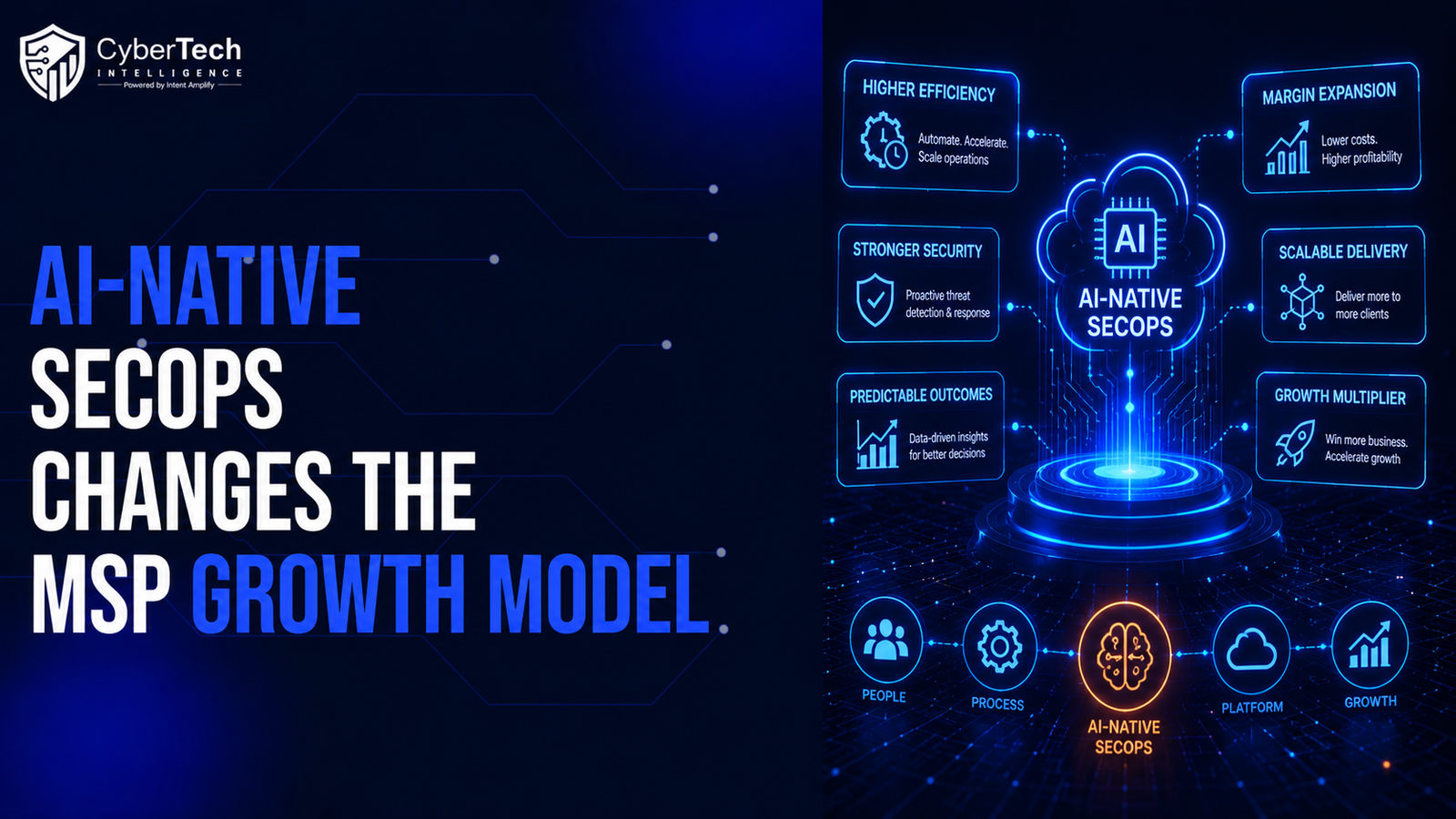
The market no longer lacks AI language. The harder problem is turning AI-enabled security capability into a repeatable operating model that a partner can explain, deliver, govern, and measure. NIST’s Cyber AI Profile work explicitly separates cybersecurity of AI, AI-enabled cyber defense, and resilience against AI-enabled attacks. [1] That separation is useful for GTM because it prevents one “AI security” label from hiding three different buyer problems.
Security Operations Is Moving Toward Human-Supervised Automation
Microsoft describes an agentic SOC model in which generative AI assembles context, specialized agents can automate defined tasks, and people move into supervisory roles as trust grows. Google, CrowdStrike, and Splunk publish similar examples of agents supporting threat hunting, detection engineering, triage, investigation, response, and orchestration. [2] [3] [4] [5] These sources do not establish a universal maturity level or business outcome. They do show that the product conversation is shifting from “AI feature” to “AI-supported operating workflow.”
The MSP Route Makes Governance Commercially Visible
An MSP or service-provider relationship sits between product capability and customer experience. That makes questions about data access, permissions, response authority, audit evidence, escalation, and support visible in a way that a direct product demo may not. A partner cannot responsibly sell an AI-supported security service on product language alone; it needs an operating answer for what the service does, who decides, and what happens when the workflow reaches a boundary.
The Installed Base Is an Expansion Hypothesis, Not a Forecast
A vendor may have hundreds or thousands of existing customer or partner relationships, but the size of that base does not reveal how many are eligible for a particular SecOps offer. Eligibility depends on the route, customer environment, service model, product fit, data availability, contractual scope, buyer priority, and partner capacity. Treating the base as a forecast invites unsupported pipeline claims. Treating it as a segmentation universe creates a disciplined test.
AI Governance and GTM Governance Are Converging
When AI is part of the offer, claim governance, access governance, and funnel governance start to touch the same workflow. Product Marketing must describe the capability accurately. Security and Product teams must define controls. Channel teams must know where the offer fits. SDRs must qualify rather than assume. Revenue Operations must separate targets from actuals. This is why a credible AI-native SecOps campaign is as much an operating-model design problem as a copywriting exercise.
CyberTech Intelligence Perspective
Design the motion backward from a qualified customer conversation. Ask what evidence must be true before outreach, what the partner should say, what the AI-supported workflow actually does, what a human still owns, and what CRM evidence would prove a meaningful next step. Then scale the installed-base motion only after the operating model survives contact with real accounts.
Strategic Recommendations
Treat “AI-native SecOps” as a campaign thesis, not a license to generalize across products or target accounts.
Confirm relationship evidence before installed-base personalization is approved.
Map one security outcome to one bounded segment rather than building a broad feature-led campaign.
Describe AI through documented tasks, data, permissions, and human decision points.
Give MSP and channel teams clear service responsibilities and escalation rules before activation.
Use actual qualification and CRM evidence to judge commercial traction; keep projections internal and explicitly labeled as assumptions.
Scale only after Product, Channel, Services, Sales, and Revenue Operations are using the same definitions.
Standards and Evidence Mapping
The evidence set for this asset is deliberately bounded. Government and NIST material is used for risk-management or governance context. Vendor material is used only to describe the publisher’s own documented security-operations direction or capabilities. No source is used to infer a target account’s installed base, buying intent, local security weakness, AI maturity, or expected commercial outcome. [1] [2] [3] [4] [5]
Visual Decision Architecture
The following models convert the campaign thesis into a repeatable sequence for relationship validation, offer design, AI governance, partner activation, qualification, measurement, and executive review. They are CyberTech Intelligence synthesis tools, not claims that every vendor, MSP, or customer follows the same path.
Installed Base to Cybersecurity Pipeline Path
Figure 1. Installed Base to Cybersecurity Pipeline Path - From Confirmed Relationship to Measured Next Step
|
Stage |
Operating Meaning |
|---|---|
|
1. Confirm the route |
Verify the MSP, channel, service-provider, or customer relationship before using installed-base language. |
|
2. Define the outcome |
Choose one customer security outcome the relationship can credibly address. |
|
3. Map the offer |
Use only approved capabilities; separate product facts from campaign goals. |
|
4. Set the AI boundary |
Name the AI-supported task and where human review is required. |
|
5. Activate and qualify |
Use one message, CTA, qualification path, and handoff. |
|
6. Measure and scale |
Use actual funnel and delivery evidence to decide what expands. |
AI-Native SecOps Expansion Decision Workflow
Figure 2. AI-Native SecOps Expansion Decision Workflow
|
Decision Step |
Required Outcome |
|---|---|
|
1. Confirm relationship and owner |
Record the route, owner, scope, and evidence that installed-base language is appropriate. |
|
2. Choose a bounded segment |
Define the eligible group and business outcome. |
|
3. Validate offer and delivery |
Confirm approved capabilities, data, integrations, service responsibilities, and constraints. |
|
4. Define AI and human controls |
Name AI tasks, approvals, permissions, audit evidence, escalation, and stop conditions. |
|
5. Activate and qualify |
Launch the approved message and qualify whether a real priority and next step exist. |
|
6. Review and scale |
Compare actual evidence with the hypothesis; scale, refine, or stop. |
AI-Native SecOps Expansion Maturity Model
Figure 3. AI-Native SecOps Expansion Maturity Model
|
Maturity |
Operating Pattern |
Leadership Priority |
|---|---|---|
|
Reactive |
Relationship assumptions and product pushes vary by account. |
Verify routes and stop unsupported personalization. |
|
Defined |
Relationships, segments, offer rules, and handoffs are documented. |
Standardize messaging, qualification, and AI boundaries. |
|
Connected |
Channel, Product, Services, Sales, and Marketing share evidence. |
Run one operating model through handoff. |
|
Measured |
Funnel, delivery, exceptions, and CRM outcomes are measured by segment. |
Invest using actual evidence. |
|
Adaptive |
The motion changes with partner, customer, product, and governance evidence. |
Scale only repeatable patterns. |
Governance and Decision Rights
Figure 4. AI-Native SecOps Expansion Governance Framework
|
Decision Stage |
Accountable Owner |
Required Evidence |
Exit Criteria |
|---|---|---|---|
|
Relationship Scope |
Channel / BD / Account Owner |
Named relationship, route, owner, scope, and approved message context. |
Relationship confirmed. |
|
Offer and Segment Fit |
Product Marketing / Product |
Target segment, outcome, approved capabilities, and exclusions. |
Bounded offer approved. |
|
Service and AI Controls |
Security / Delivery / Product |
Data, integrations, permissions, AI tasks, approvals, audit, escalation, and stop conditions. |
Control model documented. |
|
GTM Activation |
Marketing / SDR / Channel |
Message, CTA, qualification, SLA, handoff, and claim rules. |
Launch package executable. |
|
Measurement and Scale |
Revenue Operations / Leadership |
Campaign actuals, CRM opportunities, delivery evidence, feedback, and exceptions. |
Scale decision evidence-based. |
CyberTech Intelligence AI-Native SecOps Expansion Framework™
Eight operating layers connect relationship evidence to a business-first offer, data and service readiness, bounded AI use, human accountability, partner activation, qualification, and evidence-led scale.
Figure 5. CyberTech Intelligence AI-Native SecOps Expansion Framework™ - Eight-Layer Architecture
|
Layer |
Name |
Operating Requirement |
|---|---|---|
|
01 |
Confirm Relationship |
Use installed-base language only when the route and owner are known. |
|
02 |
Prioritize Segment |
Choose the group where the security conversation has a clear reason. |
|
03 |
Package Outcome |
Lead with a business outcome and approved capability language. |
|
04 |
Prepare Data |
Confirm data, integrations, permissions, and service responsibilities. |
|
05 |
Apply AI Carefully |
Use AI for named tasks, not broad autonomy or performance promises. |
|
06 |
Keep Human Control |
Define approvals, escalation, audit, stop conditions, and accountability. |
|
07 |
Activate the Motion |
Use one message, CTA, qualification model, and handoff. |
|
08 |
Measure and Govern |
Scale from actual funnel, delivery, customer, and risk evidence. |
AI-Native SecOps Expansion Readiness Score™
Table. CyberTech Intelligence AI-Native SecOps Expansion Readiness Score™
|
Domain |
Executive Assessment Question |
Ready-State Evidence |
|---|---|---|
|
Relationship Evidence |
Is the MSP, channel, service-provider, or customer route confirmed? |
Named relationship, owner, scope, and current evidence. |
|
Segment Fit |
Is the eligible segment narrow and explainable? |
Inclusion rules, exclusions, outcome, and owner. |
|
Offer Fit |
Is an approved security capability mapped to the outcome? |
Capability map, exclusions, and product owner. |
|
Data and Integration |
Are required data, integrations, permissions, and responsibilities known? |
Data sources, access model, integration plan, and constraints. |
|
AI Workflow |
Is AI limited to named, explainable tasks? |
Workflow, input/output boundary, source documentation, and owner. |
|
Human Oversight |
Are approval, escalation, override, and stop conditions defined? |
Decision rights, audit trail, rollback, and exceptions. |
|
Service Delivery |
Can the service path support and escalate the workflow? |
Service owner, procedure, coverage, handoff, and escalation. |
|
Partner Enablement |
Does the team have a simple message, CTA, qualification, and handoff? |
Approved copy, brief, CTA, questions, and SLA. |
|
Customer Trust |
Are claims, responsibilities, data use, and audit expectations clear? |
Claim rules, responsibility matrix, data terms, and review owner. |
|
Pipeline and CRM |
Are funnel gates explicit and consistently recorded? |
Stage definitions, acceptance criteria, CRM fields, and owners. |
|
Measurement and Expansion |
Will the team measure real outcomes before scale? |
Actual funnel, delivery, feedback, and scale decision. |
How to Calculate the Score
Rate each domain from 0 to 4: 0 = absent; 1 = informal; 2 = documented; 3 = implemented and tested; 4 = measured and continuously improved. The maximum is 44 points. Divide the total by 44 and multiply by 100. Suggested bands are Critical (0-24%), Developing (25-49%), Defined (50-69%), Managed (70-84%), and Adaptive (85-100%). The score is an internal readiness aid. It is not a certification, a revenue forecast, a statement of product performance, or a prediction of customer conversion.
Continue the AI-Native SecOps Expansion Journey
Use this asset to review one confirmed MSP, MSSP, channel, service-provider, or customer route end to end. Validate the relationship, eligible segment, business outcome, approved capability, data and service conditions, AI-supported workflow, human decision rights, qualification path, and the actual evidence required before scale.
Bring the Expansion Question Into the Leadership Review
Use the CyberTech Intelligence executive discussion guide to align Product, Channel, Services, Sales, Marketing, and Revenue Operations on the same expansion evidence and decision rights.
About CyberTech Intelligence
CyberTech Intelligence provides research-led cybersecurity intelligence, executive content, and market engagement programs. This publication is vendor-neutral and intended for education, decision support, and claim-safe GTM planning.
Research and Citation Governance
This asset uses public sources current through August 25, 2026. Government and NIST sources are used within their stated scope; vendor sources describe only the publisher's own product, research, or operating-model statements and are not independent performance proof. CyberTech Intelligence does not infer account-level installed base, buying intent, exposure, product capability, AI maturity, or commercial outcomes. Framework and scorecard content are decision aids, not certifications, forecasts, incident predictions, or guarantees.
References
[1] National Institute of Standards and Technology, “Cybersecurity Framework Profile for Artificial Intelligence (Cyber AI Profile): NIST Community Profile,” December 16, 2025; planning note April 21, 2026. https://csrc.nist.gov/pubs/ir/8596/iprd Accessed August 25, 2026. Relevance: Organizes AI-related cybersecurity around securing AI, AI-enabled cyber defense, and resilience to AI-enabled attacks.
[2] Microsoft Security, “The agentic SOC—Rethinking SecOps for the next decade,” April 9, 2026. https://www.microsoft.com/en-us/security/blog/2026/04/09/the-agentic-soc-rethinking-secops-for-the-next-decade/ Accessed August 25, 2026. Relevance: Vendor-published operating-model view of generative AI, task agents, agentic automation, and human supervisory roles.
[3] Google Cloud, “Next ’26: Redefining security for the AI era with Google Cloud and Wiz,” April 22, 2026. https://cloud.google.com/blog/products/identity-security/next26-redefining-security-for-the-ai-era-with-google-cloud-and-wiz Accessed August 25, 2026. Relevance: Vendor-published examples of threat-hunting, detection-engineering, and third-party context agents in security operations.
[4] CrowdStrike, “How Charlotte AI AgentWorks Fuels Security's Agentic Ecosystem,” March 25, 2026. https://www.crowdstrike.com/en-us/blog/how-charlotte-ai-agentworks-fuels-securitys-agentic-ecosystem/ Accessed August 25, 2026. Relevance: Vendor-published view of agentic security operations and partner/service-provider opportunities around an agent platform.
[5] Splunk, “Defending at Machine Speed: Splunk Advances the Agentic SOC,” June 2, 2026. https://www.splunk.com/en_us/blog/security/splunk-advances-the-agentic-soc.html Accessed August 25, 2026. Relevance: Vendor-published description of purpose-built agents for detection, triage, malware analysis, response, and human governance.