
Executive Summary
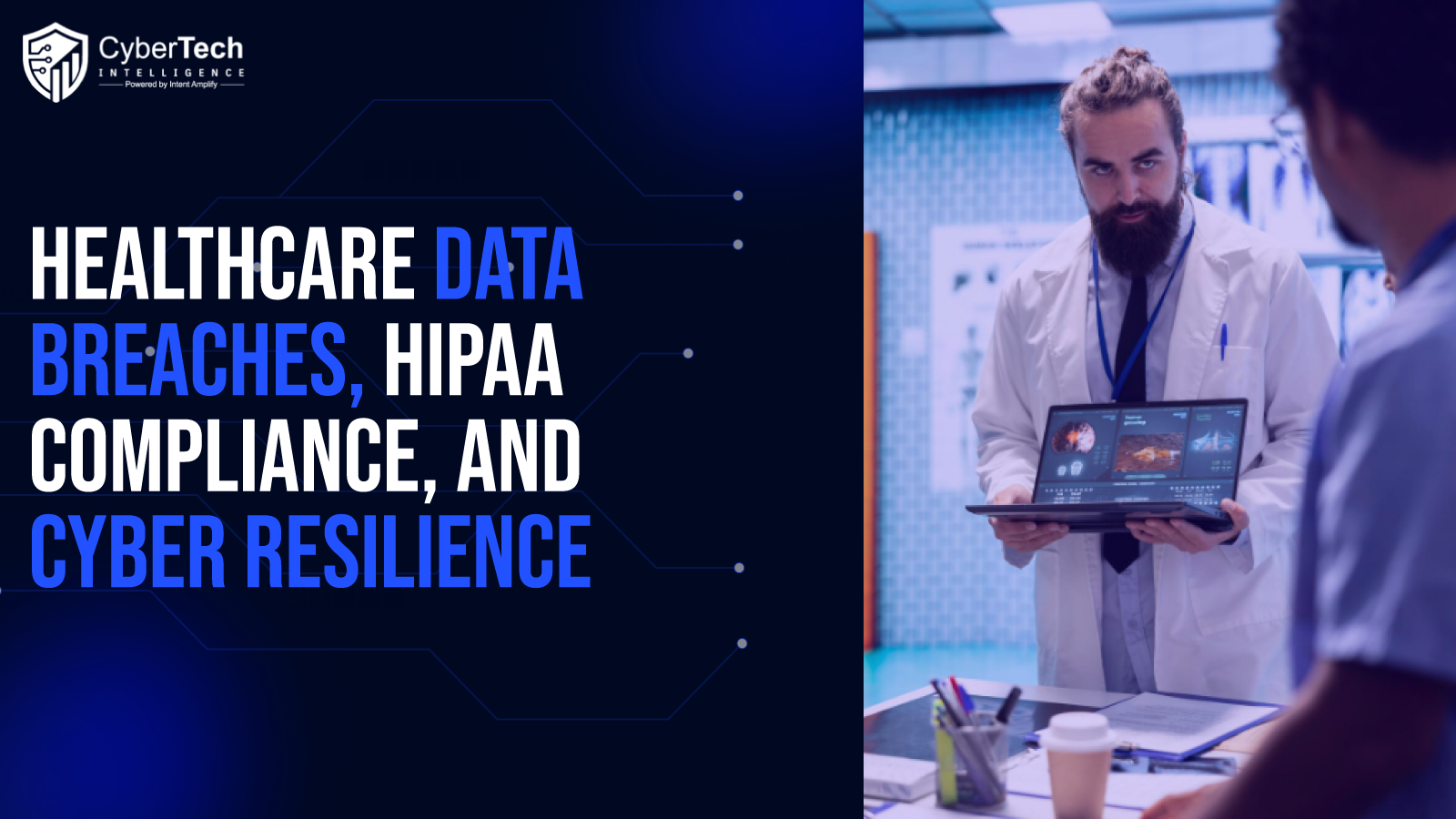
A healthcare data breach is no longer only a privacy event. It is a potential interruption to patient care. Compromise can delay medication administration, diagnostics, insurance verification, claims processing, and clinical documentation while security teams are still determining what happened.
The FBI’s 2025 Internet Crime Report recorded 642 reported cyber incidents affecting the U.S. healthcare and public health sector, including 460 ransomware incidents and 182 data breaches. Healthcare reported more ransomware incidents than any other critical infrastructure sector. Because these are reported complaints rather than every compromise, they are a minimum indicator of exposure. [1]
The financial burden remains exceptional. IBM calculated that the average healthcare data breach cost $7.42 million in 2025, the highest industry average in its study for the twelfth consecutive year. Although this declined from $9.77 million in 2024, healthcare organizations still absorbed substantial investigation, restoration, notification, legal, and lost-business costs. The decline suggests some improvement in containment and response; it does not indicate that breach consequences are under control. [2]
HIPAA compliance, threat detection, ransomware recovery, and business continuity cannot operate as parallel programs. They must converge around the healthcare service at risk. For CISOs and CIOs, the question is whether the organization can identify exposure, authorize clinically safe containment, preserve evidence for HIPAA assessment, and restore trusted workflows.
Why Healthcare Breach Risk Is Becoming More Concentrated
Healthcare environments combine valuable protected health information (PHI) with limited tolerance for downtime. Electronic health records, imaging, laboratory systems, pharmacy interfaces, medical devices, cloud services, payer connections, and revenue-cycle applications operate as interdependent services. Control of one privileged identity, central application, or trusted integration may affect multiple hospitals and thousands of patients.
The Change Healthcare incident demonstrated this concentration risk. Updated disclosures indicated that information relating to approximately 190 million individuals was affected. The incident also disrupted claims processing, pharmacy transactions, eligibility checks, and provider cash flow across organizations that were not themselves directly compromised. [3]
This was not simply PHI theft at scale. It showed how a compromise at an interconnected provider can become a sect or-wide event. The practical control question is whether a healthcare organization can continue claims, pharmacy, eligibility, and payment operations when that supplier is unavailable.
For senior leaders, the implication is uncomfortable but useful: the legal boundary of the enterprise is no longer a reliable boundary for operational risk. Healthcare third-party risk must be assessed according to retained authority, reachable services, data access, and continuity dependence.
Ransomware Is Exploiting Healthcare’s Downtime Constraint
Modern ransomware operations frequently combine credential theft, vulnerability exploitation, privilege escalation, data exfiltration, encryption, and extortion. The attacker’s leverage comes from knowing that a hospital cannot indefinitely suspend emergency care, medication workflows, diagnostic services, or patient communications.
Verizon analyzed 22,052 security incidents and 12,195 confirmed breaches for its 2025 Data Breach Investigations Report. Ransomware appeared in 44% of breaches, following a 37% year-over-year increase. These are cross-industry findings, but they describe the threat environment in which U.S. healthcare organizations operate. [4]
Ransomware recovery should be judged by operational endurance, not backup availability. A hospital may restore a database while remaining unable to validate integrity, reconnect interfaces, restore authentication dependencies, or clear manual-workflow backlogs.
Technical restoration ends when systems are available. Healthcare recovery ends when safe clinical and business workflows are functioning again.
Vulnerability Exploitation Is Compressing the Decision Window
Hospitals often operate internet-facing appliances, virtual private networks, clinical platforms, and vendor-managed technologies that cannot be patched immediately. Validation requirements, maintenance windows, unsupported software, and device availability can delay remediation.
Verizon reported that exploitation of vulnerabilities as an initial access vector increased by 34% and accounted for 20% of breaches in its 2025 dataset. The operating implication is not simply “patch faster.” Security teams must determine which weaknesses create reachable paths to PHI, privileged identities, core clinical applications, or recovery infrastructure. [4]
Prioritization should combine exploitability and reachability, identity privilege, PHI and clinical-service exposure, compensating controls, remediation risk, and recovery difficulty. A critical vulnerability in an isolated administrative tool does not present the same enterprise risk as an exploitable perimeter device connected to identity services or clinical systems.
A decision-useful risk assessment identifies exposures that could produce material patient-care or regulatory consequences, then guides patching, segmentation, monitoring, and contingency planning.
Third-Party Access Requires Operational Control, Not Documentary Assurance
Healthcare delivery depends on vendors, clearinghouses, cloud providers, laboratories, billing companies, and device manufacturers. Each relationship may introduce remote access, integration credentials, APIs, or dependencies that the covered entity does not fully control.
Third parties were involved in 30% of breaches analyzed by Verizon in 2025, double the 15% reported in the preceding study. Annual questionnaires and contractual assurances cannot establish whether supplier accounts are monitored, integration tokens are excessive, or access can be revoked without disrupting care.[4]
Critical suppliers should be evaluated through four operational questions: What can the supplier reach? Which signals would indicate misuse? How quickly can access be constrained? What workflow replaces the service if it becomes unavailable?
Supplier assurance should increase with retained authority. A vendor that can alter claims workflows, access PHI, administer devices, or manage clinical infrastructure requires stronger monitoring and continuity controls than a provider with passive, tightly restricted data access.
HIPAA Compliance Must Begin During Incident Response
The HIPAA Breach Notification Rule requires covered entities to assess breaches of unsecured PHI and notify affected individuals, the U.S. Department of Health and Human Services, and, in certain cases, the media. Breaches affecting 500 or more individuals must be reported to the Secretary without unreasonable delay; smaller breaches may be reported through the annual process. Notifications generally must occur no later than 60 calendar days after discovery. [5]
The 60-day requirement is an outer limit, not an operating target. HIPAA assessment should begin when credible evidence suggests unsecured PHI may have been accessed, acquired, used, or disclosed, not after recovery. Delayed privacy and legal involvement can leave insufficient evidence to identify the affected population and document the decision.
Table 1. CyberTech Intelligence HIPAA Response Ownership Model
|
Response function |
Primary owner |
Required output |
|
Discovery determination |
Privacy, legal, incident command |
Documented discovery date and rationale |
|
PHI evidence preservation |
Security operations, forensics, application owners |
Evidence of access, acquisition, use, or disclosure |
|
Population identification |
Privacy, data, application owners |
Validated affected-individual list |
|
Notification decision |
Privacy, legal, executive sponsor |
Defensible decision record |
|
Business-associate coordination |
Vendor risk, legal, privacy |
Timely exchange of incident evidence |
|
OCR tracking |
Compliance, privacy |
Confirmed submission and supplemental-reporting record |
This model prevents technical, privacy, and executive teams from receiving an incomplete fact set too late for a confident reporting decision.
Identity Is the Practical Control Plane for Healthcare
Healthcare identity environments are varied. Clinicians move across facilities, service accounts support sensitive interfaces, vendors retain remote connections, and emergency accounts may bypass normal controls.
A workable identity security model should distinguish five categories. Workforce identities require role accuracy and rapid deprovisioning. Privileged identities require session control and strong authentication. Vendor identities require expiration, monitoring, and sponsor ownership. Service accounts require named owners, constrained privileges, and credential rotation. Machine identities require certificate and key inventories across devices, interfaces, and automation.
Emergency identities need separate treatment. They may be necessary during an outage, but every use should be logged, reviewed, and reconciled after normal operations resume.
Zero trust access controls in healthcare should therefore evaluate identity, device state, application sensitivity, behavior, and clinical context rather than relying on network location. The decision test is direct: If one credential is compromised, what can the threat actor reach before another control intervenes? The answer should be tested separately for workforce, privileged, vendor, service, and machine identities.
Detection Must Carry Clinical and PHI Context
A security information and event management platform can aggregate logs, but a healthcare SOC needs more than event volume. Analysts must know whether an identity is clinical or administrative, whether an endpoint supports patient care, whether an application contains PHI, and whether vendor activity is expected.
Priority detection scenarios include abnormal access to PHI at scale; privileged-account creation or escalation; suspicious token, mailbox, or session behavior; unusual exports from clinical or billing systems; lateral movement toward identity, backup, or core clinical services; vendor access outside approved workflows; dormant or unmanaged identities; and security-control disablement.
The objective is to reduce the interval between a credible signal and an informed response decision. Without service and data context, accurate alerts may still lack enough meaning for safe containment.
CyberTech Intelligence Perspective: Measure Healthcare Decision Latency
Mean time to detect and mean time to contain remain useful, but they can conceal the delay that matters most in a clinically sensitive incident: the time required to authorize a safe action.
A security team may identify malicious behavior within minutes yet spend hours determining whether it can disable a clinician account, isolate an imaging system, suspend a laboratory interface, or terminate a vendor connection. During that interval, PHI theft and lateral movement may continue.
Healthcare decision latency should be measured across five stages.
Table 2. Healthcare Decision Latency Test
|
Stage |
Executive test |
|
Signal validation |
Can teams act on credible evidence without waiting for complete certainty? |
|
Service context |
Can affected clinical, patient, financial, and PHI workflows be identified quickly? |
|
Decision ownership |
Is the person authorized to isolate, suspend, or continue the service immediately available? |
|
Regulatory judgment |
Can privacy and legal teams assemble a preliminary HIPAA fact set during the investigation? |
|
Safe action |
Can containment reduce attacker access without creating unacceptable patient-care risk? |
Executives should track time from credible signal to affected-service identification, authorized-owner confirmation, preliminary PHI determination, selection of a clinically safe containment action, continuity activation, and production of the initial breach-assessment fact set.
The measure exposes a gap technology dashboards miss: controls may exist without the execution architecture required to use them under pressure.
A Recoverable Database Is Not a Recoverable Clinical Service
Backups are central to ransomware recovery, but backup availability does not prove service recoverability. Restoration may fail because credentials are compromised, interfaces are undocumented, replicas are corrupted, encryption keys are unavailable, or dependencies must be rebuilt in a precise sequence.
Recovery evidence should be defined by the service. Medication administration requires working orders, identities, pharmacy interfaces, and administration records. Laboratory recovery requires order entry, specimen tracking, analyzer interfaces, and validated result delivery. Imaging requires scheduling, modalities, picture archiving, interpretation, and reporting. Claims recovery requires eligibility, coding, clearinghouse, payer, and payment dependencies.
Service-level exercises should answer three questions: Can the workflow operate safely? Can data integrity be demonstrated? Can accumulated manual records and backlogs be reconciled?
This is a more demanding test than restoring infrastructure, but it reflects the actual business and patient-care outcome.
Table 3. Healthcare Cyber Resilience Executive Scorecard
|
Domain |
Foundational |
Developing |
Operational |
Resilient |
|
Risk assessment |
Compliance and asset inventories dominate |
PHI and critical systems are categorized |
Attack paths are mapped to healthcare services |
Exposure is continuously evaluated against patient and business impact |
|
Identity security |
MFA is selective |
Privileged access is governed |
Human and machine identities are monitored |
Identity attack paths are tested and constrained |
|
Threat detection |
General enterprise alerts dominate |
Healthcare use cases are developing |
PHI, identity, clinical, and vendor context inform triage |
Scenario testing validates detection effectiveness |
|
Incident response |
Security owns a technical plan |
Cross-functional contacts are documented |
Clinical, privacy, legal, and security teams exercise together |
Decision latency and safe containment are measured |
|
Third-party risk |
Reviews depend on questionnaires |
Suppliers are tiered by criticality |
Access and dependencies are monitored |
Joint containment and recovery exercises are conducted |
|
HIPAA response |
Assessment begins after containment |
Templates and procedures exist |
Evidence collection is integrated into the response |
Reporting decisions are tested through executive exercises |
|
Service recovery |
Backups and technical plans exist |
Selected applications are restored |
End-to-end services are exercised |
Recovery, integrity, and alternative workflows are validated |
Score each domain according to the weakest critical healthcare service, not the enterprise average. Strong maturity in administrative systems does not compensate for weak response or recovery around emergency care, medication, imaging, laboratory, identity, or claims services.
Executive Priorities for 2026
Healthcare leaders should focus on five completion tests. First, critical services must be mapped to applications, identities, data, devices, and suppliers. Second, incident exercises must produce a preliminary PHI and notification assessment. Third, critical supplier access must be constrained without unmanaged care disruption. Fourth, priority attack scenarios must be detected with sufficient service and PHI context. Fifth, end-to-end clinical and business workflows must be restored and validated under realistic conditions.
Ownership should be explicit. The CISO, CIO, clinical operations, privacy, legal, enterprise architecture, vendor risk, identity, SOC, business continuity, and application teams each own part of the control environment. No single function owns the outcome alone.
Move From Healthcare Cyber Risk to a Structured Action Plan
Understanding why healthcare data breaches, ransomware, identity compromise, third-party exposure, and HIPAA response failures occur is only the first step. The greater challenge is organizing these interconnected risks into an execution model that helps security, privacy, IT, clinical operations, and executive leadership make consistent investment and governance decisions.
The campaign ebook expands on the concepts discussed throughout this report by introducing a practical Healthcare Cyber Resilience Framework that helps organizations connect breach risks with operational priorities, align security controls with critical healthcare services, and translate technical findings into a structured roadmap for improving cyber resilience, regulatory readiness, and patient care continuity.
Access the Healthcare Cyber Resilience Framework in the Campaign eBook
CyberTech Intelligence Research Desk Observation
Healthcare cybersecurity programs are moving toward a difficult but necessary conclusion: control ownership must follow service risk. The team that operates a control may remain technical, legal, clinical, or operational. The decision architecture must still converge around the healthcare service at risk.
The strongest programs will know which services matter most, how threat actors could reach them, what evidence triggers action, who can decide, and how care continues during restoration.
Assess Healthcare Decision and Recovery Readiness
Evaluate whether your organization can identify material exposure, authorize clinically safe containment, support a defensible HIPAA assessment, and restore critical healthcare services with verified integrity.
CyberTech Intelligence helps healthcare leaders assess decision latency, PHI evidence readiness, identity attack paths, third-party containment, SOC context, and service-level recovery capability.
Request a Healthcare Cyber Resilience and Incident Readiness Assessment
Strategic Takeaway for Healthcare Security Leaders
Healthcare data security cannot be reduced to breach prevention or HIPAA compliance because PHI protection and care continuity fail together when the underlying service becomes unavailable or untrustworthy.
Ransomware, third-party compromise, identity misuse, and vulnerability exploitation are converging around highly interconnected healthcare environments. For CISOs and CIOs, the priority is an integrated execution architecture: risk assessment tied to service criticality, identity controls tied to attack paths, detection tied to clinical context, incident response tied to regulatory judgment, and recovery tied to patient care.
That is the practical foundation of healthcare cyber resilience.
References
- Federal Bureau of Investigation (2026) 2025 Internet Crime Report. Available at: https://www.fbi.gov/file-repository/2025_ic3report.pdf
- IBM (2025) Cost of a Data Breach Report 2025. Available at: https://www-api.ibm.com/adobe/assets/urn:aaid:aem:607b9590-38e0-4c91-b433-aa8a17f5b5e8/original/as/cost-of-a-data-breach-2025-full-report.pdf
- American Hospital Association (2025) Reports: Change Healthcare Cyberattack Exposed Data of 190 Million People. Available at: https://www.aha.org/news/headline/2025-01-27-reports-change-healthcare-cyberattack-exposed-data-190-million-people
- Verizon (2025) 2025 Data Breach Investigations Report. Available at: https://www.verizon.com/business/resources/reports/2025-dbir-data-breach-investigations-report.pdf
- U.S. Department of Health and Human Services (2026) Breach Notification Rule. Available at: https://www.hhs.gov/hipaa/for-professionals/breach-notification/index.html
- U.S. Department of Health and Human Services (2026) Submitting Notice of a Breach to the Secretary. Available at: https://www.hhs.gov/hipaa/for-professionals/breach-notification/breach-reporting/index.html