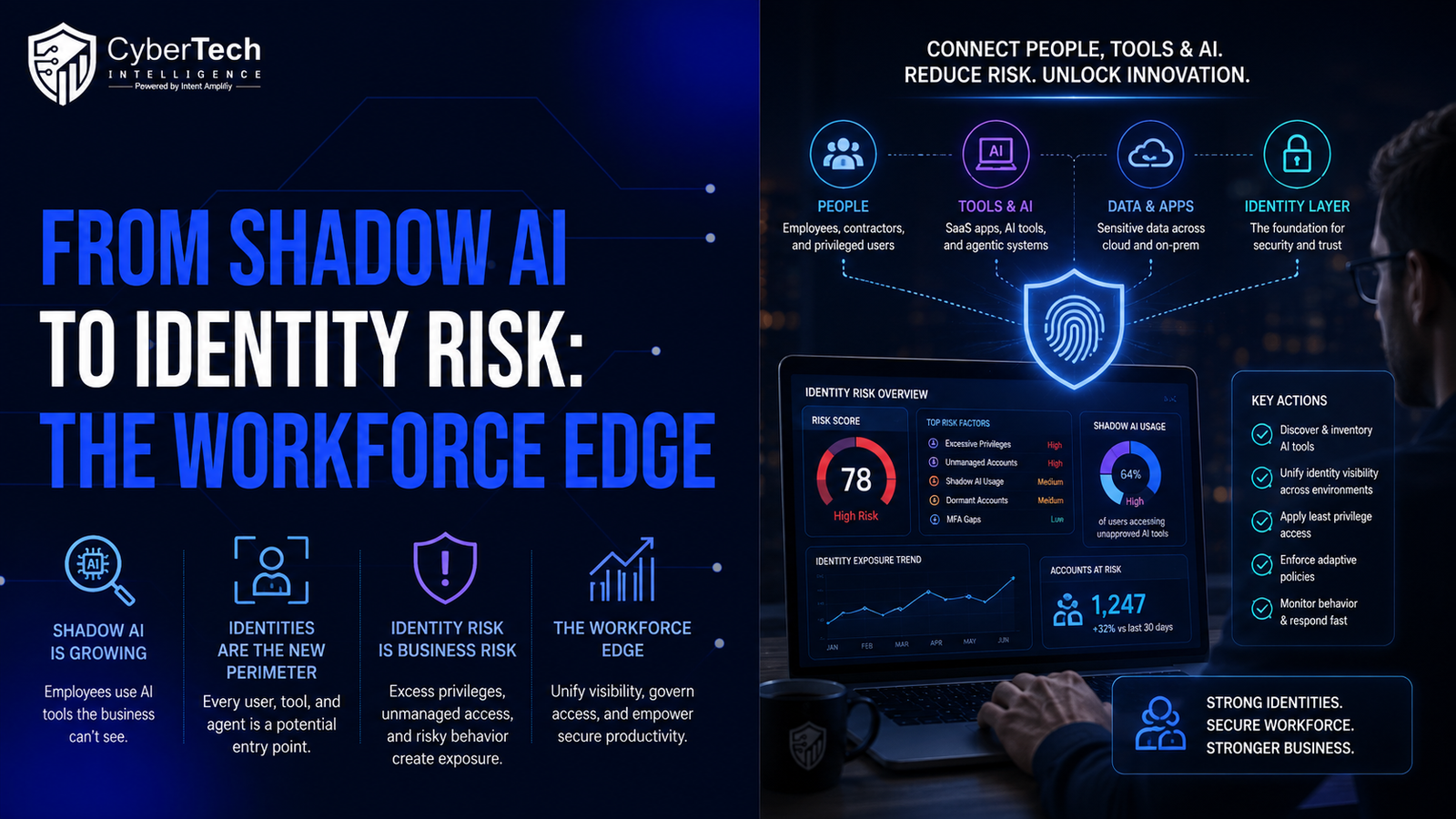

Executive Summary
Organizations can use outside providers to supplement cybersecurity work, and MSPs can occupy privileged positions in customer environments. NIST’s current small-business resources provide context for external expertise, while ConnectWise and WatchGuard keep MSP security operations and customer expectations current in 2026. [1] [2] [3] [4] IBM, Sophos, and Acronis add breach and threat context within their own datasets. [5] [6] [7] This report does not assume a target MSP has a specific need, service gap, product fit, or budget.
Research Methodology and Source Selection
This report is a secondary-research synthesis and CyberTech Intelligence operating-model analysis. Eight public sources were selected for small-business support, MSP customer expectations, managed-service risk, breach and ransomware observations, and readiness guidance. Government sources are used within their guidance scope; vendor research only for the publisher’s stated survey, telemetry, or incident observations.
Evidence Universe and Sample Assumptions
No source infers a target account’s MSP relationship, exposure, service catalog, intent, budget, product capability, or likelihood to convert. Quantitative statements stay within the source’s defined population or method. Market evidence supports a segment test; qualification and CRM data establish progression.
Evidence Grading
Table 1. Evidence Grading and Permitted Use
|
Grade |
Source Standard |
Permitted Use |
|---|---|---|
|
A - Authoritative |
Government publication, regulator, standards body, or official cybersecurity guidance. |
Risk context, operating guidance, control outcomes, and workforce/procurement considerations within the stated source boundary. |
|
B - Primary industry research |
Official vendor or industry research with stated survey, telemetry, incident, or benchmarking method. |
Scoped observations, respondent findings, and threat patterns; not universal prevalence or account-level probability. |
|
C - Primary partner-program / operating publication |
Official vendor publication describing its own partner program, service model, or strategy. |
Description of that publisher’s channel approach; not independent proof that the model works elsewhere. |
|
D - CyberTech Intelligence synthesis |
Analytical framework created from cited evidence and GTM operating requirements. |
Decision support, readiness questions, governance, and implementation design; not an external proof point. |
Research Limitations
Public guidance cannot establish how a specific MSP or customer environment is configured. Vendor surveys reflect their samples and question design; threat research describes observed activity, not target-account probability; partner publications describe the publisher’s own strategy. Because “MSP security demand” can mean customer outsourcing, partner service expansion, or campaign engagement, this report keeps those signals separate.
Research Framework
Findings use the CyberTech Intelligence MSP Security Demand Monetization Framework™: Verify Demand, Prioritize Segment, Package Outcome, Validate Economics, Prepare Delivery, Enable Partner, Activate & Qualify, and Measure & Govern. The framework tests whether a market or partner hypothesis can become an executable and measurable GTM motion.
Executive Findings
- External cybersecurity expertise is a legitimate operating option, but the work and provider still require local selection and governance. [1] [2]
- MSP demand must be separated into customer need, partner service appetite, and vendor campaign engagement; those signals are related but not interchangeable. [4]
- Identity, trusted tooling, remote access, and software supply chains remain relevant operating considerations in ConnectWise’s 2026 MSP research. [3]
- Breach and ransomware studies provide business-risk context within defined samples; they are not account-level probability statements. [5] [6]
- Current threat updates are most useful for improving discovery questions and enablement rather than personalized fear messaging. [7]
- NIST’s current ransomware profile provides a neutral readiness lens spanning Govern, Identify, Protect, Detect, Respond, and Recover. [8]
- Partner monetization depends on offer simplicity, economics, delivery, trust, enablement, and qualification as much as on product relevance.
- Pipeline exists only when qualification, CRM, delivery, and financial evidence show a real next step and realized value.
Outsourcing Is a Valid Cybersecurity Delivery Option
NIST’s current small-business resources describe external vendor or community support as one option for building cybersecurity capability, while its contractor-support page points organizations toward managed-service ecosystems. [1] [2] The bounded implication is that outside expertise is legitimate; the specific work, provider, customer, and budget still require qualification.
MSP Security Demand Has Multiple Buyers
The customer buying security support, the MSP building a service, and the vendor enabling it can have different objectives. WatchGuard’s June 2026 customer webinar describes increased interest in MSP-led security models within its survey narrative. [4] That supports testing customer-outcome messaging, but vendors must separately validate whether the MSP sees a profitable, supportable service opportunity.
Identity, Trust, and Remote Administration Affect the Offer
ConnectWise’s 2026 threat-report release emphasizes identity abuse, legitimate tools, remote access, and software supply chains within its research. [3] The GTM lesson is not fear. It is to ensure the managed-service offer explains access, privilege, monitoring, responsibility, and escalation because those are part of the operating trust model.
Breach Economics Support Business-Level Security Conversations
IBM’s 2026 breach study reports a $4.99 million global average breach cost within its 602-organization sample. [5] This number should not be personalized to an MSP prospect. It supports discussing cybersecurity as a business-risk and resilience issue rather than only a technical category.
Ransomware Readiness Remains an Outcome Lens
Sophos’ 2026 ransomware survey of 2,158 organizations reports attack, recovery, and identity findings within organizations that experienced ransomware. [6] NIST’s June 2026 guidance provides a CSF 2.0-aligned readiness and playbook lens. [8] Together they support neutral readiness conversations without implying a prospect is experiencing ransomware.
Current Threat Research Should Shape Questions, Not Claims
Acronis maintains current threat updates based on its telemetry and research. [7] Such data is useful for keeping enablement timely and for selecting discovery questions. It is not evidence that a named customer has the same exposure. Research should therefore improve the quality of qualification rather than increase the aggressiveness of fear messaging.
Demand Monetization Depends on Partner Operating Fit
A vendor can identify a credible customer problem and still fail to create MSP pipeline if the service is hard to package, creates support burden, requires unsupported integrations, or has weak partner economics. The model must test offer simplicity, partner role, delivery coverage, trust, enablement, and economic logic before scale.
Research Desk Observation: Monetization Risk Concentrates at Handoffs
The motion crosses Research, Product Marketing, Channel, MSP sales, customer teams, SDR, Sales, Services, CRM, and Finance. Each handoff can turn an assumption into an apparent fact. Require evidence at each transition: demand evidence before targeting, offer evidence before enablement, qualification evidence before SQL acceptance, CRM evidence before pipeline claims, and realized financial evidence before revenue conclusions.
Board-Level Evidence and Decision Metrics
- Percentage of target segments with a current, documented demand source and explicit claim boundary.
- Percentage of priority MSP segments with a defined customer outcome, approved offer, and partner-economic model.
- Partner enablement adoption and completion across the active segment.
- Percentage of opportunities where service, trust, access, and escalation conditions are documented before commercial handoff.
- MQL-to-SAL, SAL-to-SQL, SQL-to-meeting, and meeting-to-CRM-opportunity progression using actual campaign data.
- Partner-sourced and partner-influenced pipeline, realized revenue, and gross contribution measured separately from targets.
- Age and severity of unresolved offer, service, trust, pricing, integration, or handoff exceptions.
- Percentage of scale decisions supported by campaign, partner, customer, delivery, CRM, and financial evidence.
Twelve-Month Implementation Roadmap
0-90 days: verify demand sources, segments, claims, outcomes, offer, economics, and partner roles. 3-6 months: standardize trust, service, enablement, qualification, handoff, and CRM evidence. 6-9 months: run segment tests, compare partner adoption and funnel progression, and close recurring exceptions. 9-12 months: scale patterns supported by customer response, delivery quality, CRM progression, and revenue evidence; retire low-evidence motions.
Strategic Takeaway: Make the Demand Auditable
MSP security demand is commercially useful when it can be traced from evidence to a customer problem, then to an executable partner offer, a qualified conversation, and CRM and financial outcomes. The advantage does not come from claiming a large market. It comes from knowing which signal is valid, which segment can act on it, and which measured evidence justifies the next investment.
Standards and Evidence Mapping
The evidence set for this asset is deliberately bounded. Government and NIST material is used for risk-management, workforce, procurement, or control context. Vendor research is used only for the publisher’s stated survey, telemetry, incident, product, partner-program, or operating-model observations. No source is used to infer a named target account’s MSP relationship, buying intent, local security weakness, budget, product need, or expected commercial outcome.
Visual Decision Architecture
The following models convert the campaign thesis into a repeatable sequence for evidence validation, offer design, partner economics, service readiness, enablement, qualification, measurement, and executive review. They are CyberTech Intelligence synthesis tools, not claims that every vendor, MSP, or customer follows the same path.
MSP Security Demand to Pipeline Path
Figure 1. MSP Security Demand to Pipeline Path - From Verified Signal to Measured Next Step
|
Stage |
Operating Meaning |
|---|---|
|
1. Validate the demand signal |
Use research, partner/customer input, or campaign behavior that is actually documented. Do not turn account-list inclusion into a claim of active demand. |
|
2. Define the buyer outcome |
Choose one security outcome the MSP can explain in business terms and that the vendor can support with approved capabilities. |
|
3. Package the offer |
Define scope, prerequisites, commercial logic, service responsibilities, and exclusions before activation. |
|
4. Equip the MSP |
Give partner-facing teams a clear message, enablement material, trust evidence, qualification questions, and a handoff path. |
|
5. Activate and qualify |
Use campaign engagement to test relevance; qualify need, ownership, timing, and willingness to take a next step. |
|
6. Measure and scale |
Use actual funnel, partner adoption, delivery, CRM, and revenue evidence to decide what expands. |
MSP Security Demand Monetization Decision Workflow
Figure 2. MSP Security Demand Monetization Decision Workflow
|
Decision Step |
Required Outcome |
|---|---|
|
1. Confirm audience and signal |
Record the MSP segment, source of the demand hypothesis, accountable owner, and claim boundary. |
|
2. Choose a bounded outcome |
Define the customer problem, eligible segment, and the business result the offer is intended to support. |
|
3. Validate offer and economics |
Confirm approved capabilities, delivery prerequisites, partner role, commercial model, and exclusions. |
|
4. Confirm trust and service conditions |
Document security responsibilities, access, support, escalation, evidence, and customer-facing expectations. |
|
5. Activate and qualify |
Launch approved messaging and determine whether a real priority, owner, and next step exist. |
|
6. Review and scale |
Compare actual evidence with the hypothesis; scale, refine, reposition, or stop the motion. |
MSP Security Demand Monetization Maturity Model
Figure 3. MSP Security Demand Monetization Maturity Model
|
Maturity |
Operating Pattern |
Leadership Priority |
|---|---|---|
|
Reactive |
Security products are pushed broadly to MSPs without a clear demand signal, outcome, or shared qualification model. |
Stop unsupported demand claims and define a bounded starting segment. |
|
Defined |
Segments, outcomes, offer rules, partner roles, and handoffs are documented. |
Standardize messaging, commercial logic, and qualification. |
|
Connected |
Product, Channel, Services, Sales, Marketing, and SDR teams share the same evidence and definitions. |
Run one operating model through activation and handoff. |
|
Measured |
Partner adoption, funnel progression, delivery evidence, CRM outcomes, and revenue are measured by segment. |
Invest using actual evidence, not campaign assumptions. |
|
Adaptive |
Offer, enablement, and activation change based on partner, buyer, delivery, and commercial evidence. |
Scale only repeatable patterns with clear economics. |
Governance and Decision Rights
Figure 4. MSP Security Demand Monetization Governance Framework
|
Decision Stage |
Accountable Owner |
Required Evidence |
Exit Criteria |
|---|---|---|---|
|
Demand Scope |
GTM / Research |
Named segment, demand source, claim boundary, owner, and approved message context. |
Demand hypothesis is evidence-based. |
|
Offer and Economics |
Product Marketing / Channel |
Buyer outcome, approved capabilities, prerequisites, partner role, pricing logic, and exclusions. |
Bounded offer is executable. |
|
Security and Delivery |
Security / Delivery / Product |
Access model, responsibilities, service coverage, escalation, evidence, and support conditions. |
Service and trust model documented. |
|
GTM Activation |
Marketing / SDR / Channel |
Message, CTA, enablement, qualification questions, SLA, handoff, and claim rules. |
Launch package executable. |
|
Measurement and Scale |
Revenue Operations / Leadership |
Campaign actuals, partner adoption, CRM opportunities, revenue evidence, delivery feedback, and exceptions. |
Scale decision is evidence-based. |
CyberTech Intelligence MSP Security Demand Monetization Framework™
Eight operating layers connect demand evidence to a business-first outcome, partner economics, service readiness, enablement, qualification, and evidence-led scale.
Figure 5. CyberTech Intelligence MSP Security Demand Monetization Framework™ - Eight-Layer Architecture
|
Layer |
Name |
Operating Requirement |
|---|---|---|
|
01 |
Verify Demand |
Use only documented market, partner, customer, or engagement evidence; do not infer active need at a named account. |
|
02 |
Prioritize Segment |
Choose the MSP group where the same buyer problem, route, and qualification questions are relevant. |
|
03 |
Package Outcome |
Lead with a customer outcome and map only approved product and service capabilities. |
|
04 |
Validate Economics |
Clarify who sells, who delivers, what the partner gains, what the customer buys, and how value will be measured. |
|
05 |
Prepare Delivery |
Confirm prerequisites, security responsibilities, service coverage, escalation, and customer expectations. |
|
06 |
Enable Partner |
Provide simple messaging, proof boundaries, training, objection handling, and a usable handoff. |
|
07 |
Activate and Qualify |
Use coordinated marketing and SDR execution to validate interest, problem, owner, timing, and next step. |
|
08 |
Measure and Govern |
Scale from actual partner adoption, funnel, delivery, CRM, and revenue evidence. |
MSP Security Demand Monetization Readiness Score™
Table. CyberTech Intelligence MSP Security Demand Monetization Readiness Score™
|
Domain |
Executive Assessment Question |
Ready-State Evidence |
|---|---|---|
|
Demand Evidence |
Is the MSP security-demand hypothesis supported by a current, named source? |
Source, date, scope, owner, and claim boundary. |
|
Segment Fit |
Is the eligible MSP segment narrow and explainable? |
Inclusion rules, exclusions, route, buyer, and owner. |
|
Buyer Outcome |
Is there one customer outcome the partner can explain without jargon? |
Outcome statement, business context, and buyer relevance. |
|
Offer Fit |
Is an approved security capability mapped to the outcome? |
Capability map, prerequisites, exclusions, and product owner. |
|
Partner Economics |
Is the role and commercial logic clear to the MSP? |
Revenue model, margin/rebate logic where applicable, sales role, and delivery role. |
|
Delivery Readiness |
Can the service path support the offer consistently? |
Service owner, coverage, procedure, dependencies, and escalation. |
|
Trust and Security |
Are access, responsibility, evidence, and customer expectations clear? |
Responsibility matrix, access model, security terms, and review owner. |
|
Partner Enablement |
Can the MSP explain, position, and qualify the offer? |
Approved brief, training, CTA, questions, objection handling, and SLA. |
|
Qualification and Handoff |
Are MQL, SAL, SQL, meeting, and handoff rules explicit? |
Stage definitions, acceptance criteria, owners, and follow-up SLA. |
|
Pipeline and CRM |
Is every meaningful next step captured consistently? |
CRM fields, source, stage, partner route, opportunity evidence, and owner. |
|
Measurement and Expansion |
Will the team measure actual outcomes before scaling? |
Funnel actuals, partner adoption, delivery feedback, revenue evidence, and scale decision. |
How to Calculate the Score
Rate each domain from 0 to 4: 0 = absent; 1 = informal; 2 = documented; 3 = implemented and tested; 4 = measured and continuously improved. The maximum is 44 points. Divide the total by 44 and multiply by 100. Suggested bands are Critical (0-24%), Developing (25-49%), Defined (50-69%), Managed (70-84%), and Adaptive (85-100%). The score is an internal readiness aid. It is not a certification, a revenue forecast, a statement of product performance, or a prediction of customer conversion.
Continue the MSP Security Demand Monetization Journey
Use this asset to review one MSP security-demand route end to end. Validate the source and claim boundary, eligible segment, buyer outcome, approved offer, partner economics, service and trust conditions, enablement, qualification path, CRM evidence, and the actual commercial proof required before scale.
Benchmark the MSP Security Demand Monetization Model
Use the CyberTech Intelligence MSP Security Demand Monetization Assessment to compare demand evidence, segment fit, offer readiness, partner economics, service trust, enablement, qualification, and measurement before scaling the motion.
About CyberTech Intelligence
CyberTech Intelligence provides research-led cybersecurity intelligence, executive content, and market engagement programs. This publication is vendor-neutral and intended for education, decision support, and claim-safe GTM planning.
Research and Citation Governance
This asset uses public sources current through August 25, 2026. Government and NIST sources are used within their stated guidance and risk-management scope. Vendor surveys, threat research, and partner-program publications are used only for the publisher’s own stated sample, telemetry, capabilities, or operating-model observations; they are not treated as independent proof of market-wide performance. CyberTech Intelligence does not infer that a named target account has an MSP relationship, active buying intent, a security gap, a current incident, budget, a specific product need, or a guaranteed commercial outcome. Framework, maturity, and scorecard content are CyberTech Intelligence analysis and are presented as decision aids rather than certification, financial forecast, incident prediction, or revenue guarantee.
References
[1] National Institute of Standards and Technology, “Government Contractor Resources,” Updated May 29, 2026. https://www.nist.gov/itl/smallbusinesscyber/guidance-topic/government-contractor-resources Accessed August 25, 2026. Relevance: Current NIST resource page that includes directories and support resources relevant to organizations seeking managed-service and CMMC-aligned support.
[2] National Institute of Standards and Technology, “Cybersecurity Basics,” Updated June 16, 2026. https://www.nist.gov/itl/smallbusinesscyber/cybersecurity-basics Accessed August 25, 2026. Relevance: Current small-business cybersecurity resource hub used for baseline risk-management and resilience context.
[3] ConnectWise, “ConnectWise 2026 MSP Threat Report Spotlights How Identity Abuse is Redefining MSP Risk,” March 5, 2026. https://www.connectwise.com/company/press/releases/connectwise-2026-msp-threat-report Accessed August 25, 2026. Relevance: Release summarizing ConnectWise CRU’s 2026 findings from incident response, customer telemetry, ransomware monitoring, and infrastructure tracking.
[4] WatchGuard Technologies, “Inside the Data: What SMBs Want from Their MSPs in 2026,” June 16, 2026. https://secure.watchguard.com/WB-Global-06162026-What-SMBs-Want-from-MSPs_LP.html Accessed August 25, 2026. Relevance: WatchGuard webinar based on its global customer research, used only for the publisher’s stated themes on SMB priorities, 24/7 monitoring, and MSP-led security models.
[5] IBM, “IBM Study: One in Four Malicious Breaches are AI-Enabled, Costing Companies $6 Million on Average,” July 29, 2026. https://newsroom.ibm.com/2026-07-29-ibm-study-one-in-four-malicious-breaches-are-ai-enabled%2C-costing-companies-6-million-on-average?lnk=hpln1id Accessed August 25, 2026. Relevance: IBM release summarizing its 2026 breach study; used only for the study’s defined population and reported economics.
[6] Sophos, “79 Percent of Ransomware Attacks Originate from Compromised Identities,” July 2026. https://www.sophos.com/en-us/press/press-releases/2026/07/79-percent-ransomware-attacks-originate-from-compromised-identities Accessed August 25, 2026. Relevance: Press release for Sophos’ 2026 ransomware survey; used only within its stated 2,158-respondent sample and methodology.
[7] Acronis Threat Research Unit, “TRU Security by Acronis,” Updated through August 2026. https://www.acronis.com/en/tru/posts/ Accessed August 25, 2026. Relevance: Current threat-research index used only for Acronis-authored telemetry updates and MSP/SMB security observations.
[8] National Institute of Standards and Technology, “Practical Guidelines for Preventing and Mitigating Ransomware | CSF 2.0 Community Profile,” June 11, 2026. https://csrc.nist.gov/news/2026/ransomware-risk-management-ir-8374r1 Accessed August 25, 2026. Relevance: NIST announcement summarizing the current ransomware profile and its use for readiness evaluation and countermeasure planning.