Executive Overview
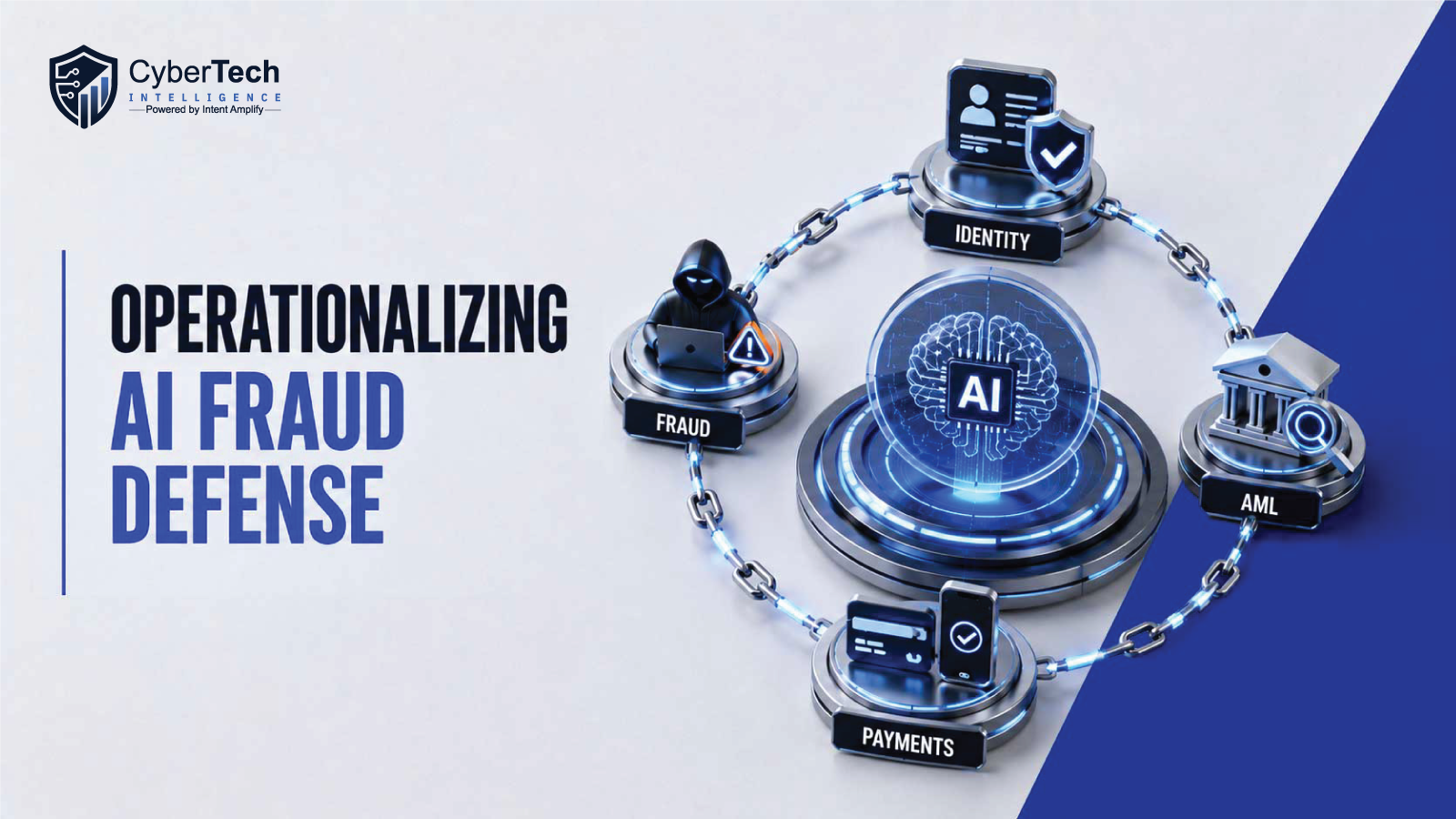
AI-driven fraud is now an operating-model issue for banks. Attackers can fabricate identity evidence, manipulate interaction channels, impersonate executives or customers, and create payment narratives that look credible enough to pass isolated checks.
A stronger KYC control or a standalone deepfake-detection tool is not enough. Banks need an operating model that connects identity, fraud, cybersecurity, AML, payments, and contact-center evidence before funds move or account authority changes.
At a Glance
AI fraud defense should cover onboarding, account access, account changes, beneficiary management, contact-center authentication, payment approval, AML review, and interdiction.
Deepfake detection should be routed into fraud and payment decisioning, not left as an isolated media alert.
High-consequence actions need deliberate friction, including callback, dual authorization, cooling-off periods, recipient validation, holds, and recall procedures.
Readiness evidence should include time to detect, time to hold, time to revoke, time to recall, prevented-loss value, and customer-friction impact.
Program Principle 1: Define the Trust Chain
The bank should define the fraud trust chain across four decisions: identity, interaction, intent, and interdiction.
Identity asks whether a real, authorized person or entity is present at onboarding and critical account changes.
Interaction asks whether the document, device, capture path, voice, video, and session can be trusted.
Intent asks whether the action fits known behavior, purpose, amount, timing, beneficiary, and account history.
Interdiction asks whether teams can pause, step up, revoke, recall, investigate, and preserve evidence quickly.
CyberTech Intelligence Perspective
AI fraud governance begins when teams stop treating suspicious media, unusual device activity, beneficiary changes, and payment anomalies as separate issues. The same transaction story should be visible across all relevant teams.
Program Principle 2: Build Shared Evidence Across Functions
A deepfake selfie may first appear in identity verification. A cloned voice may appear in the contact center. A risky session may appear in cybersecurity tooling. A new beneficiary may appear in payment operations. A suspicious flow of funds may appear in AML monitoring.
The operating requirement is a shared case model. Each function should contribute evidence to one fraud decision instead of generating separate alerts with separate owners.
Required evidence should include identity proofing outcome, liveness risk, device provenance, session behavior, account history, contact-channel history, beneficiary profile, payment velocity, stated purpose, and AML indicators.
Program Principle 3: Concentrate Friction Around Irreversible Actions
Customer friction should not be uniform. It should increase when the consequence of error increases.
Higher-friction controls should apply to first-time beneficiaries, unusual payment amounts, urgent narratives, changed contact details, executive impersonation risk, synthetic-media risk, high-risk devices, account recovery, and high-value transfers.
Controls may include independent callback, dual authorization, recipient validation, cooling-off periods, risk-based holds, step-up authentication, and manual review.
Program Principle 4: Create Interdiction Playbooks
Detection without interdiction does not reduce loss. Teams need specific authority and steps for pausing account changes, holding payments, revoking sessions, disabling access, recalling transfers, preserving evidence, and escalating to investigation.
Each playbook should define owner, trigger, required evidence, customer communication path, legal/compliance involvement, SLA, escalation path, and closure criteria.
Program Principle 5: Test Synthetic Adversary Scenarios
Banks should test AI-generated documents, deepfake voice calls, video injection, executive impersonation, BEC narratives, synthetic identity onboarding, account takeover, and fraudulent account laundering scenarios.
Tests should measure not only detection, but also routing, decision quality, hold readiness, recall readiness, evidence preservation, and customer impact.
Operational Readiness Model
Control Area: Identity assurance. Required evidence: KYC outcomes, liveness risk, document integrity, identity graph, recovery exceptions, and account-change history.
Control Area: Interaction integrity. Required evidence: device provenance, capture-path integrity, session risk, voice and video signals, and channel history.
Control Area: Transaction coherence. Required evidence: beneficiary history, payment velocity, amount, purpose, customer behavior, and relationship context.
Control Area: Interdiction. Required evidence: hold authority, step-up results, callback outcome, recall workflow, revocation actions, and case chronology.
Control Area: Executive reporting. Required evidence: prevented loss, false positives, customer friction, time to hold, time to revoke, time to recall, and exception register.
Implementation Roadmap
Phase 1: Map the journey. Document how fraud can move from onboarding to account access, contact center, beneficiary change, payment approval, and laundering.
Phase 2: Connect evidence. Define which signals must be shared across identity, fraud, cyber, AML, payments, and contact centers.
Phase 3: Define authority. Specify who can hold, step up, revoke, recall, escalate, and release transactions.
Phase 4: Automate routing. Route suspicious media and high-risk identity events into fraud and payment decisioning.
Phase 5: Measure readiness. Report time to hold, time to revoke, time to recall, prevented-loss value, and customer-friction impact.
Conclusion
AI fraud defense is not a single product decision. It is a coordinated assurance and response discipline. Banks need to validate the identity, verify the interaction, test the intent, scrutinize the recipient, and retain the ability to stop loss before settlement.
About CyberTech Intelligence
CyberTech Intelligence is an enterprise cybersecurity intelligence platform that helps security leaders, technology decision-makers, and go-to-market teams navigate emerging risks through executive-ready research and strategic market insight.
Request an AI Fraud and Deepfake Readiness Assessment: Contact Us Today
References
FinCEN. Alert on Fraud Schemes Involving Deepfake Media Targeting Financial Institutions. 2024. https://www.fincen.gov/system/files/shared/FinCEN-Alert-DeepFakes-Alert508FINAL.pdf
U.S. Treasury. 2026 National Money Laundering Risk Assessment. 2026. https://home.treasury.gov/system/files/246/2026-NMLRA.pdf
NIST. Reducing Risks Posed by Synthetic Content. 2024. https://nvlpubs.nist.gov/nistpubs/ai/NIST.AI.100-4.pdf
Federal Reserve Board. Deepfakes and the AI Arms Race in Bank Cybersecurity. 2025. https://www.federalreserve.gov/newsevents/speech/barr20250417a.htm