
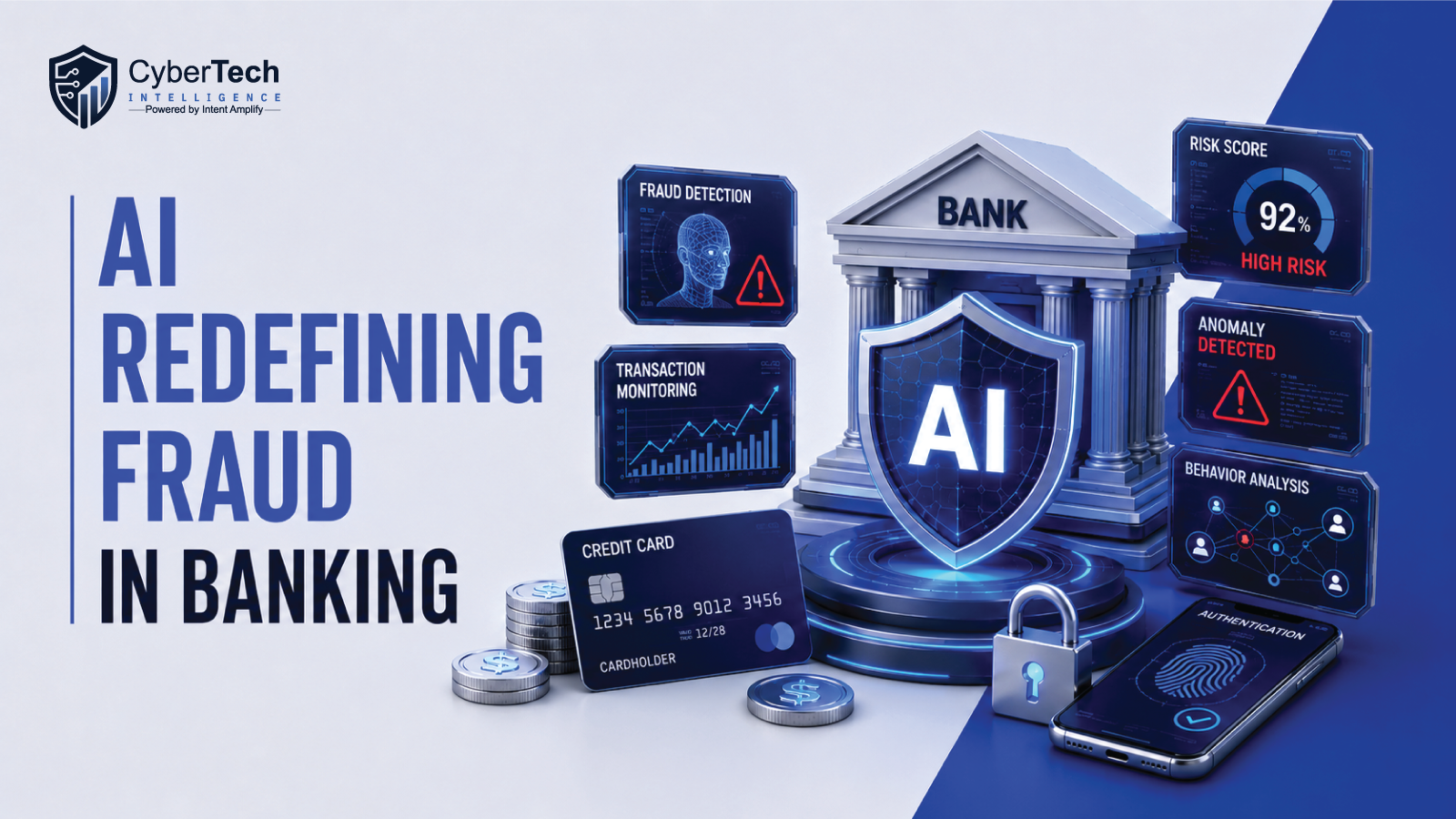
Deepfake fraud is turning identity from something criminals steal into something they can assemble and deploy across the banking lifecycle. Banks now need continuous assurance that tests who is acting, whether a transaction makes sense, and how quickly suspicious activity can be contained.
At a Glance
AI-enabled fraud can fabricate identities, documents, voices, video, and payment narratives, not merely reuse stolen credentials. FinCEN has documented the use of generative AI and deepfake media in schemes targeting financial institutions and their customers.
Point-in-time know-your-customer (KYC) and authentication controls leave gaps when threat actors manipulate onboarding, account access, beneficiaries, and payment intent as one connected journey.
Effective fraud prevention now requires trust-chain assurance across identity, interaction, intent, and interdiction.
The Fraud Model Has Outgrown Identity Theft
A customer passes the document check. The selfie appears to match. The voice sounds familiar. The payment request follows a credible business story. Every individual signal looks plausible. Yet the customer, conversation, or authority behind the transfer may have been manufactured.
Traditional identity theft begins with information taken from a real person. Generative AI lets a threat actor combine stolen data with synthetic attributes, forged records, cloned speech, and interactive media, constructing the evidence a bank, employee, or customer expects to see.
The FBI recorded 22,364 complaints carrying an AI-related descriptor and $893.3 million in adjusted losses in 2025.
Deloitte estimates that generative AI could push U.S. fraud losses to $40 billion by 2027, compared with $12.3 billion in 2023. This is a forward-looking estimate rather than a current loss total, but it indicates how AI could change the economics of established fraud channels.
The datasets measure different categories. The FBI reports complaints and adjusted losses submitted to IC3, while Deloitte presents a scenario-based industry forecast. Together, they suggest that AI is increasing the reach, realism, and potential financial impact of banking fraud.
CyberTech Intelligence Perspective
AI-driven fraud should be treated as a trust-chain failure, not a narrow identity-verification problem. The strategic question is whether the identity, device, behavior, request, beneficiary, and transaction remain coherent from onboarding through settlement.
AI Manufactures the Evidence Banks Were Built to Trust
FinCEN has reported an increase in suspicious activity reporting involving suspected deepfake media, particularly fraudulent identity documents designed to circumvent identity verification and authentication.
The U.S. Treasury's 2026 National Money Laundering Risk Assessment adds a downstream consequence: malicious actors have opened accounts using fraudulent identities suspected to have been produced with generative AI and then used those accounts to receive or launder proceeds from other fraud schemes.
A document can be consistent and still be false. A matching face can be synthetic. A voice can answer a challenge because the attacker has assembled enough personal data to anticipate it.
Identity verification against deepfake attacks must therefore include device provenance, capture integrity, behavioral biometrics, account history, and transaction context. The objective is to establish that the evidence belongs to a genuine, authorized individual acting with legitimate intent.
The Attack Now Spans the Full Banking Lifecycle
At onboarding, synthetic identity fraud can blend fabricated information with genuine data. During account access, stolen credentials can be reinforced by a cloned voice or deepfake selfie. AI social engineering can then drive beneficiary changes or payment approval, while AI-created accounts become laundering infrastructure.
FinCEN identifies the use of falsified identity documents, deepfake media, executive impersonation, and fraudulent account activity as relevant typologies for financial institutions.
The Treasury's 2026 National Money Laundering Risk Assessment similarly connects identity fraud, cyber-enabled crime, fraudulent accounts, and the laundering of criminal proceeds.
Identity teams see liveness anomalies. Cybersecurity teams see device risk. Fraud operations see payment behavior. Anti-money-laundering (AML) teams see beneficiary networks. Separate queues leave the bank with fragments rather than the complete attack path.
According to CyberTech Intelligence research and analysis, the defining shift is from identity assurance to transaction-coherence assurance: testing whether the person, interaction, purpose, recipient, and movement of funds tell the same credible story.
Why Deepfake Detection Alone Is an Incomplete Control
Deepfake detection is necessary, but it is not a verdict. NIST notes in Reducing Risks Posed by Synthetic Content that provenance, watermarking, labeling, and synthetic-media detection can improve transparency. However, these methods do not by themselves establish that content is trustworthy, legitimate, or being used in an authentic context.
Attackers are also targeting the verification channel. Entrust's vendor-produced 2026 Identity Fraud Report, based on more than 1 billion identity-verification events across 195 countries and more than 30 industries, found that deepfakes accounted for 1 in 5 biometric fraud attempts and that injection attacks increased 40% year over year.
Entrust also reported that deepfake selfie incidents increased by 58% during 2025. Because Entrust is an identity-verification vendor, these findings should be treated as directional rather than universal banking-sector measurements.
The bank must ask more than "Is this media synthetic?"
It must also ask, "Does this request make sense for this customer, device, beneficiary, amount, and moment?"
The Federal Reserve has emphasized that financial institutions can assess both sides of a transaction: the person sending the payment and the legitimacy of the recipient. This widens fraud prevention beyond authentication and toward transaction-level validation.
CyberTech Intelligence Observation
Mature fraud programs will correlate evidence and reduce authority when signals diverge.
A suspicious media score should trigger beneficiary review, behavioral analysis, independent verification, and a time-bound hold, not another isolated alert.
CyberTech Intelligence AI Fraud Trust-Chain Framework
- Framework Layer
- Executive Question
- Assurance Outcome
Identity
Is a real, authorized person or entity present at onboarding and critical account changes?
Reduces synthetic identity fraud, account takeover, and false account creation.
Interaction
Can the bank trust the document, device, capture path, voice, video, and session?
Exposes forged documents, deepfake voice attacks, injected media, and channel manipulation.
Intent
Does the action fit the customer's behavior, beneficiary relationship, amount, and stated purpose?
Identifies payment fraud and BEC before funds are released.
Interdiction
Can teams pause, step up, revoke, recall, and preserve evidence quickly?
Limits loss and improves investigation and recovery.
Read the eBook
The Deepfake Defense Playbook: Building AI Fraud Detection and Identity Resilience Across BFSI
Use this eBook to understand how banking teams are operationalizing layered identity verification, behavioral biometrics, recipient controls, and deepfake voice fraud prevention.
CyberTech Intelligence Executive Readiness Scorecard
The Future of Financial Trust 2026: AI-Driven Fraud, Identity Verification, and Executive Impersonation provides a scorecard built around verified outcomes rather than purchased technologies.
Use the report to assess how identity, fraud, cybersecurity, AML, payment, and contact-center controls operate as one enterprise decision architecture.
Measure Coherence, Not Authentication Success
Leadership should track contradictory evidence before money moves, verified beneficiary changes, time to revoke access, time to hold or recall a payment, customer friction, and prevented-loss value.
AI Fraud Control Maturity Model
- Maturity Layer
- What It Measures
- Executive Evidence
Point-in-Time Identity
Documents, selfies, credentials, and onboarding checks.
KYC pass rates, false accepts, and manual-review outcomes.
Adaptive Identity Control
Device intelligence, liveness, behavioral biometrics, and step-up authentication.
Risk-score changes, challenge results, and recovery exceptions.
Transaction Coherence
Beneficiary history, payment velocity, amount, purpose, and behavior.
Holds, prevented losses, and anomalous-payee reviews.
Orchestrated Interdiction
Coordination across fraud, cyber, identity, AML, and payments.
Time to hold, revoke, recall, investigate, and escalate.
Board-Ready Evidence
Exposure, customer friction, control effectiveness, and loss outcomes.
Executive dashboards, incident chronology, and exception registers.
Treasury's Financial Services AI Risk Management Framework adapts the NIST AI Risk Management Framework to financial-services-specific operational, regulatory, cybersecurity, and consumer-protection considerations.
The buyer decision point is whether a technology improves trust-chain control effectiveness, not whether it carries an "AI-powered" label.
Five Executive Decisions That Change the Loss Curve
1. Map Fraud Journeys, Not Isolated Typologies
Model how synthetic identity fraud, account takeover, executive impersonation, BEC, payment fraud, and money laundering connect. Assign ownership at each handoff.
2. Treat Biometrics as Evidence, Not Proof
Combine liveness, device intelligence, behavioral analytics, transaction context, and adaptive authentication. Reverify after material account or beneficiary changes.
3. Unify Fraud, Cyber, Identity, AML, and Payment Telemetry
A suspicious selfie, anomalous login, new payee, and rapid transfer should create one coordinated case. Shared evidence should inform one decision rather than generate several disconnected alerts.
4. Place Deliberate Friction Around Irreversible Actions
Apply independent callbacks, dual authorization, recipient validation, cooling-off periods, and risk-based holds according to potential loss. Friction should be concentrated around high-consequence actions rather than imposed uniformly on every customer.
5. Test Synthetic Adversary Scenarios
Exercise AI-generated documents, deepfake calls, video injection, executive impersonation, and AI-powered phishing. Measure detection, escalation, recall readiness, and evidence preservation.
No bank can make every digital interaction perfectly authentic. The achievable objective is bounded authority, observable behavior, and an interdiction process fast enough to act before plausible deception becomes financial loss.
The Next Banking-Fraud Mandate
The strongest fraud programs will not claim one model can detect every fake. They will prove who initiated the action, what changed, who receives value, why the transaction is credible, and how quickly it can be stopped.
Effective AI fraud detection follows a continuous trust model: establish identity, verify interaction integrity, test intent, scrutinize the recipient, and preserve evidence.
That is the shift beyond identity theft and the control architecture banks now need.
About CyberTech Intelligence
CyberTech Intelligence is an enterprise cybersecurity intelligence platform that helps security leaders, technology decision-makers, and go-to-market teams navigate emerging risks through executive-ready research and strategic market insight.
Through buyer-focused cybersecurity narratives, CyberTech Intelligence helps vendors connect fraud, identity, and AI capabilities and their category positioning to the decisions banking leaders are making.
Request an AI Fraud and Deepfake Readiness Assessment
AI-driven fraud now requires more than a stronger KYC message or a standalone deepfake-detection claim. Vendors need to show how their platforms support continuous identity verification, detect manipulated interactions, correlate behavioral and transaction risk, and interdict suspicious payments.
CyberTech Intelligence helps vendors across AI fraud detection, identity verification, behavioral biometrics, AML, payment security, and adjacent financial cybersecurity categories map their capabilities to BFSI buyer priorities and demand opportunities.
Request an AI Fraud and Deepfake Readiness Assessment: Contact Us Today
References
Federal Bureau of Investigation. 2025 Internet Crime Report. 2026. Available at: https://www.ic3.gov/AnnualReport/Reports/2025_IC3Report.pdf
Deloitte Center for Financial Services. Generative AI Is Expected to Magnify the Risk of Deepfakes and Other Fraud in Banking. 2024. Available at: https://www.deloitte.com/us/en/insights/industry/financial-services/deepfake-banking-fraud-risk-on-the-rise.html
Financial Crimes Enforcement Network. Alert on Fraud Schemes Involving Deepfake Media Targeting Financial Institutions. 2024. Available at: https://www.fincen.gov/system/files/shared/FinCEN-Alert-DeepFakes-Alert508FINAL.pdf
U.S. Department of the Treasury. 2026 National Money Laundering Risk Assessment. 2026. Available at: https://home.treasury.gov/system/files/246/2026-NMLRA.pdf
National Institute of Standards and Technology. Reducing Risks Posed by Synthetic Content: An Overview of Technical Approaches to Digital Content Transparency. 2024. Available at: https://nvlpubs.nist.gov/nistpubs/ai/NIST.AI.100-4.pdf
Entrust. 2026 Identity Fraud Report. Vendor-produced research; source context disclosed. Available at: https://www.entrust.com/resources/reports/identity-fraud-report
Federal Reserve Board. Deepfakes and the AI Arms Race in Bank Cybersecurity. 2025. Available at: https://www.federalreserve.gov/newsevents/speech/barr20250417a.htm
U.S. Department of the Treasury. Financial Services AI Risk Management Framework. 2026. Available at: https://home.treasury.gov/news/press-releases/sb0401


Author
CyberTech Intelligence Editorial Desk
Author