Insight
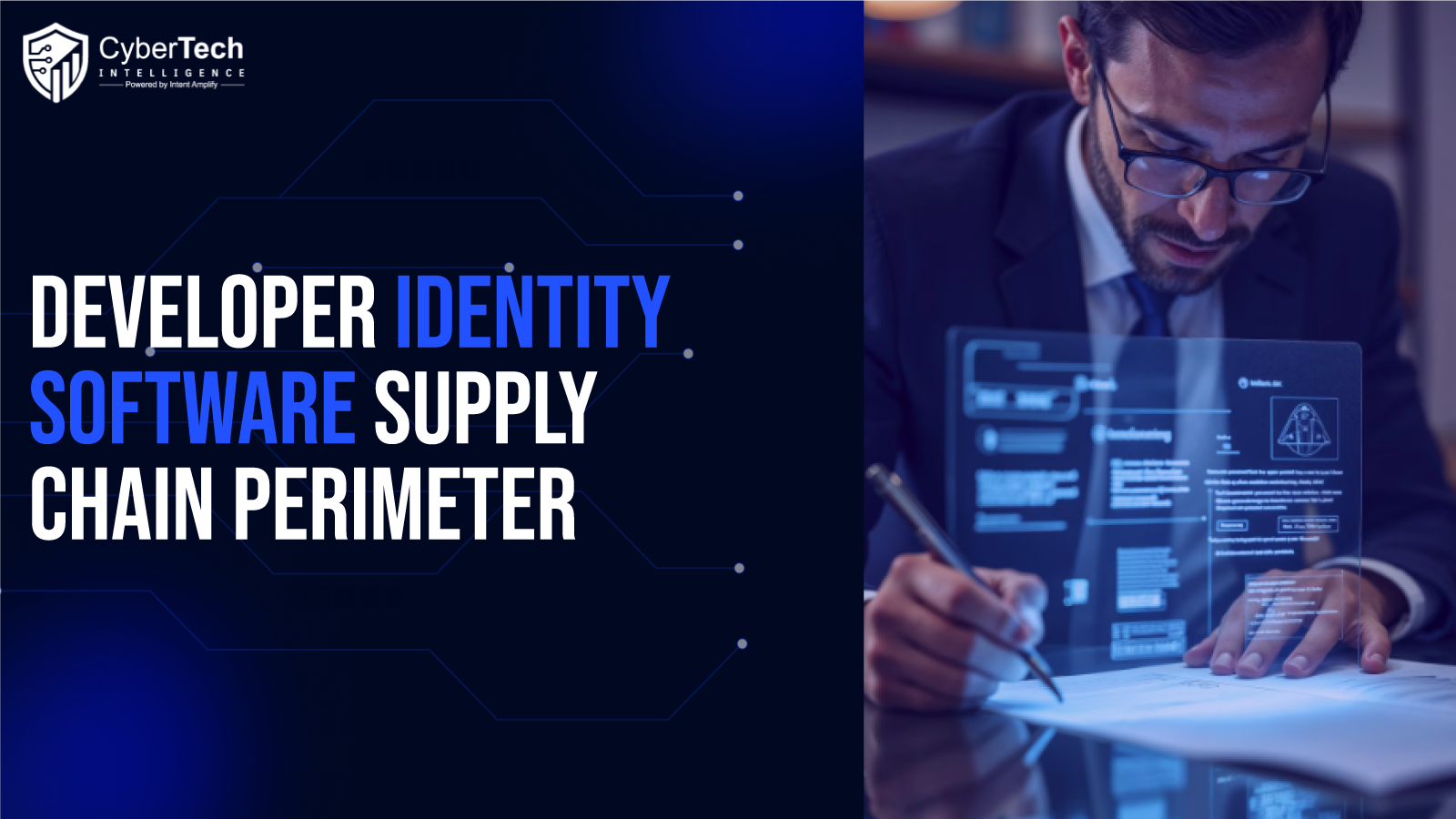
Developer identity has become one of the most important control points in software supply chain security. Maintainer accounts, GitHub identities, package registry credentials, CI/CD service accounts, and automation tokens can all influence what code is changed, published, built, signed, or deployed.
Recent npm and PyPI attack waves show why developer identity belongs at the center of the software trust conversation. Malicious packages matter, but many downstream risks depend on identity and credential paths: who can publish, who can approve, which tokens are available, which automation accounts can run builds, and which identities can promote artifacts toward production.
Executive Interpretation
The perimeter for software supply chain defense is no longer only the network edge or the production environment. It is the set of identities that can shape software before it reaches production. A compromised developer account, maintainer account, package publishing token, or CI/CD identity can become a source-code, package, build, or deployment compromise.
Executives should ask whether engineering identities are governed with the same seriousness as privileged production access. If a developer identity can approve code, publish packages, access secrets, or trigger deployment, it is part of the enterprise software trust boundary.
Priority Controls
- Privileged engineering access: identify developer, maintainer, registry, and CI/CD identities that can modify source, publish packages, access secrets, sign artifacts, or trigger deployment.
- Strong authentication: require phishing-resistant MFA where feasible for high-impact engineering, registry, repository, and automation accounts.
- Least privilege: reduce standing privileges, separate code approval from release authority, and limit service-account reach across repositories, registries, and pipelines.
- Token governance: inventory GitHub, registry, package publishing, cloud, and CI/CD tokens; scope them narrowly; rotate them quickly after suspicious activity.
- Behavior monitoring: watch for unusual repository access, package publishing, workflow changes, branch protection changes, credential creation, and artifact signing activity.
- Evidence readiness: preserve approval, identity, token, build, publishing, signing, and deployment evidence so the organization can explain what happened when trust is challenged.
CyberTech Intelligence View
Developer identity governance should not be framed as mistrust of engineering teams. It is a way to protect the people and workflows that create enterprise software value. Good controls make trusted work easier to repeat and reduce the chance that one compromised identity becomes a broad supply chain event.
The near-term opportunity is to connect identity controls with package governance, CI/CD secrets protection, and provenance. Identity shows who or what acted. Secrets controls limit what an identity can expose. Provenance helps prove whether the resulting artifact can be trusted.
Where Leaders Should Focus First
The first focus area should be privileged engineering identities. Leaders should know which users, maintainers, service accounts, bots, and workflow identities can affect critical code, package publishing, artifact signing, or production deployment.
The second focus area should be token exposure and rotation readiness. If GitHub, npm, PyPI, cloud, or CI/CD tokens are long-lived or broadly scoped, a limited account compromise can become a broader software trust failure.
The third focus area should be identity-to-artifact evidence. When a maintainer account, developer account, or CI/CD identity becomes suspect, the enterprise should be able to identify affected commits, builds, packages, signatures, and released artifacts quickly.
References
This asset is based on publicly available incident reporting, security advisories, and software supply chain research. Claims are bounded to those sources and do not assert that any specific reader, company, or sector has been compromised.
- Vercel security bulletin, April 2026: https://vercel.com/kb/bulletin/vercel-april-2026-security-incident
- Cloud Security Alliance research note on AI SaaS supply chain exposure: https://labs.cloudsecurityalliance.org/research/csa-research-note-ai-saas-supply-chain-vercel-contextai-2026/
- NHS Digital Cyber Alert CC-4781: https://digital.nhs.uk/cyber-alerts/2026/cc-4781
- Palo Alto Networks Unit 42 research on npm supply chain attacks: https://unit42.paloaltonetworks.com/monitoring-npm-supply-chain-attacks/
- UK NCSC guidance on software supply chain attacks: https://www.ncsc.gov.uk/blogs/software-supply-chain-attacks-check-your-dependencies
- Sonatype State of the Software Supply Chain 2026: https://www.sonatype.com/state-of-the-software-supply-chain/2026/open-source-malware


