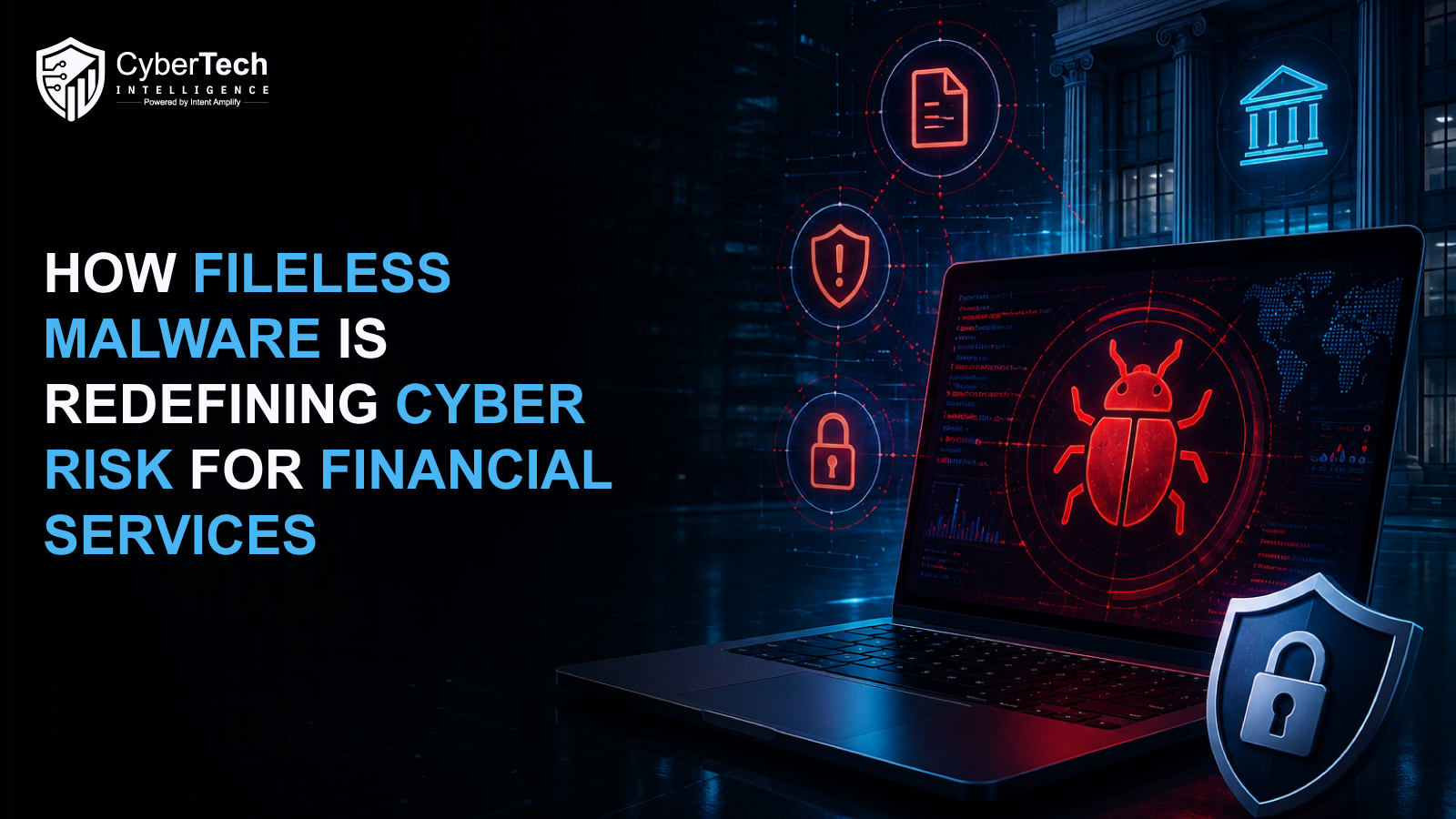
The financial services industry has always been a prime target for cybercriminals, but the tactics used to compromise organizations continue to evolve. Fortra Intelligence and Research Experts’ (FIRE) recent analysis into the Phantom Stealer malware campaign highlights a troubling shift toward highly evasive, fileless attacks designed to bypass traditional security controls while harvesting credentials, financial data, and sensitive business information.
For banks and financial institutions, the significance of this threat extends beyond a single malware family. Phantom Stealer represents a broader trend in cybercrime where attackers combine social engineering, malware-as-a-service (MaaS) business models, and fileless execution techniques to maximize impact while minimizing detection.
The result is a threat landscape where a single compromised employee account can become the entry point to customer data, financial systems, privileged infrastructure, and, ultimately, large-scale operational disruption.
The New Reality of Initial Access
The Phantom campaign begins with a familiar tactic: phishing.
Attackers send emails containing archive files disguised as legitimate business documents such as requests for quote (RFQs) or other routine financial communications. The documents appear credible and align closely with the daily workflow of employees in banking and corporate environments.
What makes this campaign noteworthy is not the phishing lure itself, but what happens after the user interacts with the attachment.
Instead of deploying a traditional executable that can be detected through signatures or file scanning, the malware executes almost entirely in memory. Through multiple layers of obfuscation and encryption, the attack injects malicious code into legitimate Windows processes, allowing it to operate with a significantly reduced forensic footprint.
This fileless approach presents a substantial challenge for organizations that continue to rely heavily on legacy endpoint protection technologies. Security controls designed to identify known malware hashes or suspicious files on disk often struggle against threats that never write a conventional executable to the system.
Why Financial Institutions Are Being Targeted
Financial organizations remain among the most attractive targets for cybercriminals because they offer multiple paths to monetization.
A single compromised employee credential can provide access to customer records, internal financial systems, payment platforms, treasury operations, cloud applications, or privileged administrative resources. In many cases, browser sessions and authentication cookies can be just as valuable as usernames and passwords because they may allow attackers to bypass certain authentication requirements.
The Phantom campaign specifically targets these opportunities. Its primary objective is credential harvesting, including browser-stored passwords, session tokens, and other authentication artifacts.
From an attacker's perspective, this approach offers flexibility. Stolen credentials can be used directly for fraud, sold on underground markets, leveraged for lateral movement within a network, or utilized as a precursor to ransomware deployment.
The financial sector's increasing reliance on cloud services, SaaS platforms, and interconnected business applications further amplifies the potential impact of credential theft. Attackers no longer need to breach a data center directly. Often, compromising a trusted identity is enough.
The Emerging Risk of Agentic Cyber Threats
While Phantom Stealer itself is not an agentic AI attack, it illustrates the type of credential acquisition that could fuel future agentic threat operations.
As artificial intelligence becomes more integrated into both business processes and cybercrime operations, stolen credentials become increasingly valuable. Agentic systems can automate reconnaissance, identify high-value targets, adapt phishing campaigns, and accelerate lateral movement once access is obtained.
In this environment, credential theft is no longer simply a data security problem. It becomes an operational risk multiplier.
Organizations should assume that future adversaries will combine automation, AI-driven decision-making, and stolen identities to execute attacks at a scale and speed that traditional security teams struggle to match.
This reality makes identity protection one of the most critical priorities for financial institutions moving forward.
Three Actions Financial Institutions Must Take Immediately
While no single control can eliminate the risk of sophisticated phishing campaigns, organizations can significantly reduce their exposure through a focused set of defensive measures.
1. Deploy Behavioral Detection and Modern EDR Capabilities
Fileless malware is specifically designed to evade traditional signature-based defenses. Security teams should prioritize endpoint detection and response (EDR) solutions capable of identifying suspicious behaviors such as PowerShell abuse, process injection, credential harvesting activity, and unusual memory execution patterns.
Behavioral analytics are increasingly essential for detecting threats that leave little or no artifact on disk.
2. Strengthen Identity Security and Enforce MFA Everywhere
Credential theft remains the attacker's ultimate objective. Financial institutions should enforce multi-factor authentication across all systems, eliminate unnecessary browser-stored credentials, and establish regular credential rotation procedures for privileged accounts.
Organizations should also monitor for suspicious authentication activity and unusual session behavior that may indicate credential abuse.
3. Harden Email Security and Improve User Awareness
Because phishing remains the primary entry point, security leaders must continue investing in both technical controls and workforce education.
Email gateways should be configured to inspect and restrict archive-based attachments, particularly those containing executable content or scripts. Employees should be trained to recognize suspicious requests involving financial transactions, quote requests, invoices, and other business-themed lures commonly used in targeted attacks.
Security awareness training is most effective when it reflects the realistic tactics employees encounter in their daily work.
Looking Ahead
The Phantom Stealer campaign demonstrates that cybercriminals continue to innovate around one central objective: gaining access to trusted identities.
For financial institutions, the lesson is clear. Defending against modern threats is no longer just about blocking malware. It requires protecting credentials, monitoring behavior, and assuming attackers will increasingly leverage automation and AI-enhanced capabilities once access is achieved.
Organizations that focus on identity security, behavioral detection, and phishing resilience will be better positioned to withstand the next generation of cyber threats. Those that continue relying on legacy approaches may find that by the time a compromise becomes visible, the most valuable assets have already been exposed.