Executive Snapshot
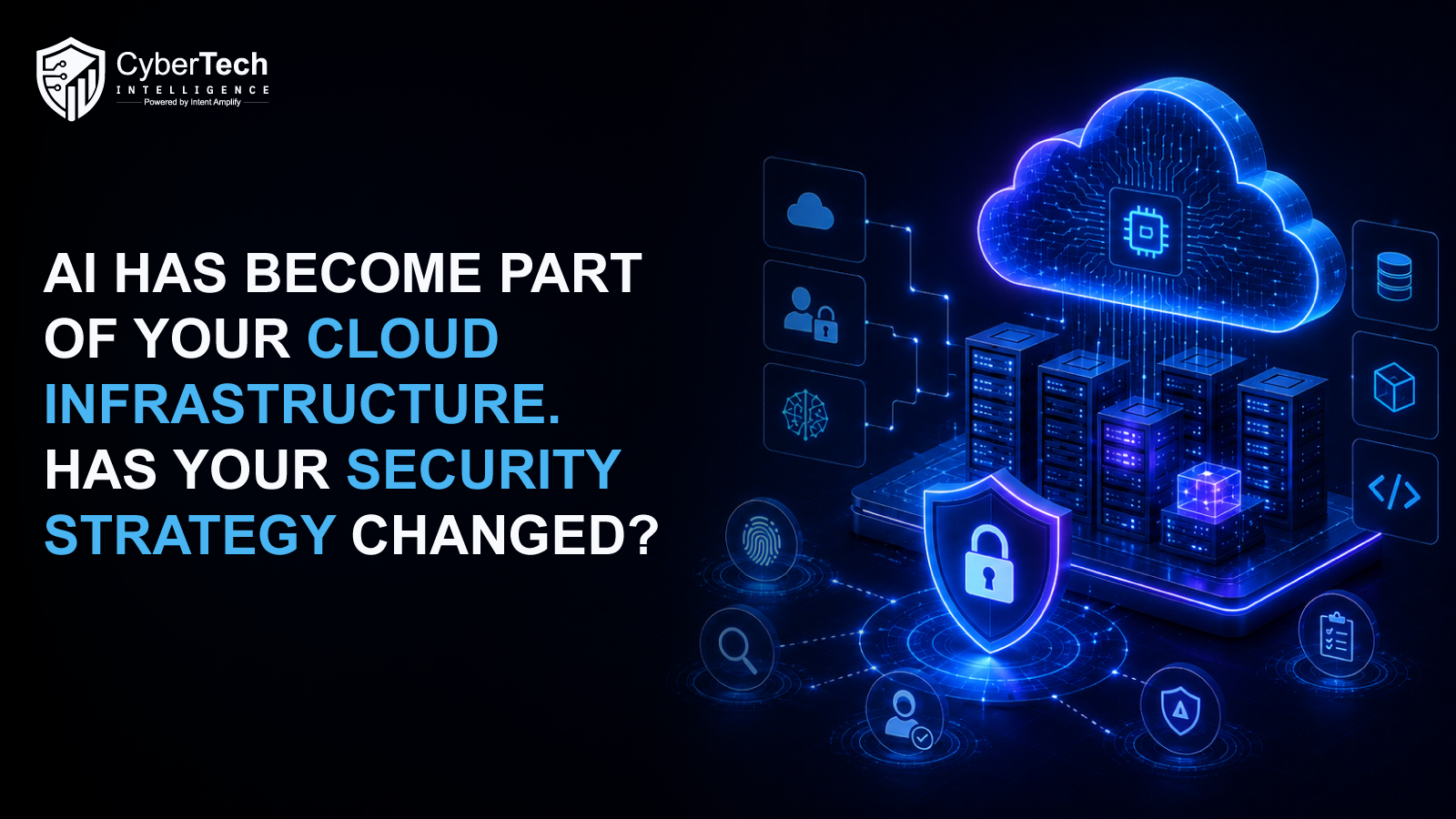
Model endpoints, retrieval pipelines, vector databases, AI agents, GPU resources, and machine identities now operate inside production cloud environments. AI workload security therefore depends on more than protecting a model endpoint. It requires governance over the execution path: the data an AI system retrieves, the identities it assumes, the tools it invokes, and the cloud resources it can access.
Palo Alto Networks reported that 99% of organizations experienced an attack targeting an AI application or service during the previous year. The same study found that 41% reported increased API attacks, while 53% identified permissive identity and access management practices as a leading contributor to data exfiltration. These findings reinforce a practical reality: APIs and non-human identities have become critical trust boundaries for enterprise AI, yet governance and monitoring often lag behind their adoption.¹
For cloud and security leaders, AI workload security belongs within the enterprise cloud security architecture rather than as a standalone AI initiative. Enterprise AI security now depends on three connected capabilities: posture and attack-path context, controlled identity and data access, and runtime behavior tied to effective response
AI Is Rewriting the Cloud Attack Surface
A conventional workload receives a request, executes predefined logic, accesses approved resources, and returns a result. AI applications can interpret instructions, retrieve information dynamically, select tools, generate code, and initiate actions. Their operational behavior is less predictable, and their trust relationships are broader.
An AI service may run in a controlled Kubernetes cluster while depending on an external model provider, a vector database, a software repository, and several APIs. Each dependency introduces credentials, permissions, and data flows. A weak plug-in, exposed API, poisoned artifact, or overprivileged service account may provide an easier route into the environment.
Security teams must understand how identities, workloads, data, and AI services combine to create exploitable paths. A finding has limited meaning without context about what it can reach.
Why Posture Management Cannot Carry the Strategy Alone
Cloud security posture management remains necessary. Misconfigured storage, exposed services, broad network access, and missing encryption still create material risk. Yet posture findings describe configuration states. They do not always explain what an AI workload can access, what it is doing, or how an attacker could move through it.
AI-aware cloud security posture management extends conventional CSPM by adding context about deployed models, accessible data, invoking identities, permitted actions, and investigation readiness.
This is where the distinction between cloud security posture management and a Cloud-Native Application Protection Platform (CNAPP) becomes operationally important. CSPM identifies configuration weaknesses. A CNAPP should correlate posture and attack-path context, identity and data access, and runtime behavior and response evidence.
Cloud attack path analysis then becomes more useful than finding volume. A public endpoint may represent limited exposure until it reaches an overprivileged service account, regulated data, or a pipeline capable of modifying production artifacts.
For buyers, this changes investment prioritization. The highest-risk finding is not always the most severe configuration issue in isolation; it is the exposure that connects identity, data, runtime behavior, and business-critical cloud resources.
CyberTech Intelligence Perspective: AI Security Is a Control-Plane Problem
AI workload security is often framed as a model-security discipline. That view is too narrow.
The more consequential risk lies in the control plane surrounding the model. A malicious prompt may alter application behavior, but the effect depends on what the application is authorized to do. If it cannot access sensitive information, invoke privileged tools, or modify production resources, the damage remains constrained. When those permissions are broad, an application-layer weakness can become an enterprise incident.
IBM reported that 13% of surveyed organizations experienced a breach involving an AI model or application. Among organizations reporting an AI-related breach, 97% lacked appropriate AI access controls. That uncertainty suggests some enterprises cannot observe AI activity well enough to determine whether controls have failed. [2]
The evidence points to an access-governance problem as much as a model-security problem. Model testing cannot compensate for excessive privilege or incomplete telemetry.
Runtime Security Must Follow Behavior
Predeployment controls provide only a partial view of AI risk. Infrastructure-as-code scanning can identify insecure templates. Container security can detect vulnerable packages. Model validation can test known attack patterns. None can predict every prompt, retrieval sequence, tool call, or runtime decision.
Cloud runtime security must observe how AI workloads behave after deployment. Relevant signals include abnormal model invocation, unusual data retrieval, unauthorized tool execution, and unexpected workload changes.
CrowdStrike reported that the average eCrime breakout time fell to 29 minutes in 2025. It also recorded a 266% increase in cloud-conscious intrusions by state-nexus adversaries. These figures show why periodic posture reviews and delayed alert correlation are insufficient when attackers can move across identity, endpoint, and cloud domains within minutes. [3]
Runtime detection must support containment. Security teams need the means to revoke a workload identity, suspend an agent tool, isolate a container, block a model endpoint, or interrupt suspicious data movement before the attack path progresses.
Kubernetes Has Become Part of AI Security Architecture
The Cloud Native Computing Foundation reported that 82% of container users ran Kubernetes in production in 2025. [4]
This convergence expands the scope of Kubernetes security. Admission policies, isolation, secrets management, segmentation, image scanning, and least privilege remain essential. AI deployments add requirements around GPU access, model artifacts, inference endpoints, and high-value service accounts.
Kubernetes security posture management should verify that workloads are isolated according to data sensitivity and operational function. Development models should not inherit production credentials. Inference services should not have unrestricted access to training repositories. Shared nodes should not create unintended paths between workloads with different trust requirements.
CNCF research found that 72% of surveyed practitioners identified security as a leading challenge for mission-critical cloud-native workloads. Adoption maturity does not automatically produce control maturity. As Kubernetes becomes more important to AI operations, inconsistent policy enforcement affects a larger and more sensitive part of the cloud estate. [5]
DevSecOps Must Secure More Than Source Code
AI applications expand the software supply chain beyond source code. A production service may depend on model files, retrieval content, libraries, container images, infrastructure templates, and external APIs.
DevSecOps for AI applications should validate infrastructure-as-code, packages, model artifacts, images, and deployment manifests before release. Model registries, artifact signing, software bills of materials, controlled data sources, and policy-as-code should become part of the secure development lifecycle.
A separate AI security review at the end of development creates delay without continuous assurance. Product security should define approved patterns, platform engineering should convert them into reusable services, and DevSecOps teams should enforce them within existing workflows.
An Enterprise AI Cloud Security Roadmap
Cloud and security leaders should organize AI cloud security around three connected control layers. This structure helps teams reduce duplication, assign ownership more clearly, and connect technical findings to operational response.
Establish Posture and Attack-Path Context
Build and maintain an inventory of production models, agents, datasets, APIs, clusters, pipelines, repositories, owners, and external dependencies. Security teams should understand not only which assets exist, but also how they are connected and what business functions they support.
Prioritization should focus on reachable attack paths rather than isolated findings. Configuration weaknesses, vulnerabilities, exposed services, and insecure dependencies become more significant when they create a credible route to sensitive data, privileged control planes, production models, or critical business systems.
This layer should answer three questions:
- Which AI assets and dependencies are exposed?
- Which weaknesses can be combined into a viable attack path?
- Which routes could lead to material business impact?
Control Identity and Data Access
Apply least privilege to workloads, service accounts, agents, and other machine identities. Each identity should have a defined owner, a limited business purpose, scoped permissions, short-lived credentials where possible, and a clear revocation process.
Data access should be governed with the same rigor. AI workloads should retrieve only the information required for their approved function. Development environments should not inherit production credentials, and inference services should not receive unrestricted access to training repositories, sensitive databases, or administrative tools.
This layer should determine:
- Which identities can access each AI workload and data source?
- Whether permissions exceed operational requirements.
- Whether agents and services can invoke tools or actions outside their approved purpose.
Connect Runtime Behavior to Response
Monitor how AI workloads behave after deployment. Relevant signals include unusual model invocation, abnormal data retrieval, unauthorized tool use, unexpected workload modification, suspicious network activity, and machine identities operating outside established patterns.
Runtime evidence should trigger defined containment actions. Security teams must be able to revoke an identity, suspend an agent capability, isolate a container, block an endpoint, or interrupt suspicious data movement before an attack path progresses.
Response should also extend back into engineering. Production findings should be traced to the underlying source condition, including code, infrastructure templates, access policies, images, deployment logic, or model configuration. The correction should then be enforced through the delivery pipeline.
Translate Governance Into Enforceable Controls
AI governance should support all three layers through deployment gates, ownership requirements, model and workload inventories, access policies, logging standards, monitoring obligations, and exception workflows.
The objective is not simply to document acceptable AI use. It is to ensure that governance requirements can be observed, tested, enforced, and reported across production cloud environments.
Move From AI Cloud Risk Visibility to a Structured Security Framework
Identifying exposed workloads, excessive machine privileges, insecure data paths, and runtime anomalies is only the first step. Cloud and security leaders also need a repeatable method for connecting these findings to control ownership, remediation priorities, and governance decisions across AI engineering, DevSecOps, product security, and cloud operations.
The ebook develops this approach into a practical framework for assessing AI workload exposure, strengthening cloud-native controls, and aligning runtime security with enterprise AI governance.
Access the AI Cloud Security Framework in the Ebook
CyberTech Intelligence Research Desk Observation
The next divide in multi-cloud security will be between organizations that can identify AI components and those that can prove those components remain within approved identity, data, network, and action boundaries.
That proof requires shared control definitions across cloud platforms, AI engineering, product security, and security operations. Platform teams own the execution environment. AI engineering controls model behavior. Product security defines acceptable patterns. Security operations must detect and contain misuse.
Measure Enterprise Readiness With the AI Cloud Security Scorecard
A security roadmap establishes what must change. The next requirement is determining where the organization is prepared to act and where control gaps remain. The research report’s scorecard evaluates readiness across AI asset visibility, machine identity governance, attack-path analysis, Kubernetes protection, software supply-chain controls, runtime response, and governance enforcement.
Security leaders can use the scorecard to compare current capabilities, identify priority investment areas, and create a clearer basis for executive oversight.
Access the AI Cloud Security Readiness Scorecard in the Research Report
Request an AI Cloud Security Readiness Assessment
Enterprise AI security depends on more than identifying individual configuration weaknesses. Security and technology leaders need evidence showing which AI assets are visible, which machine identities hold excessive access, which attack paths are reachable, and whether runtime and governance controls can contain material exposure.
The AI Cloud Security Readiness Assessment evaluates six measurable areas:
- AI asset visibility: Coverage of models, agents, datasets, APIs, clusters, pipelines, owners, and external dependencies.
- Machine-identity maturity: Assignment, privilege scope, credential lifecycle, monitoring, and revocation of workload and agent identities.
- Reachable attack paths: Routes connecting exposed workloads, excessive privilege, sensitive data, and business-critical cloud resources.
- Kubernetes exposure: Workload isolation, service-account permissions, image integrity, secrets management, network controls, and policy enforcement.
- Runtime response: Detection, investigation, identity revocation, workload isolation, endpoint blocking, and containment readiness.
- Governance enforcement: Translation of AI governance requirements into deployment gates, access policies, logging standards, inventories, and exception workflows.
The assessment provides security leaders with a prioritized view of current maturity, material control gaps, ownership requirements, and recommended roadmap actions.
Request an AI Cloud Security Readiness Assessment
Conclusion
AI workloads are extending cloud access, data movement, and automation faster than many enterprises can demonstrate effective control. The central issue is therefore not whether AI is present in the cloud, but whether security teams can prove that its identities, dependencies, actions, and data access remain within approved boundaries.
That assurance requires three connected capabilities: posture and attack-path context, controlled identity and data access, and runtime evidence tied to containment. Governance must reinforce those capabilities through enforceable policies, ownership, monitoring, and retained evidence.
The executive implication is clear: AI expansion should not outpace the organization’s ability to identify material exposure, assign accountability, and interrupt a credible attack path before it affects the business.
References
- Palo Alto Networks (2025) State of Cloud Security Report 2025. Available at: https://www.paloaltonetworks.com/state-of-cloud-native-security
- IBM (2025) Cost of a Data Breach Report 2025. Available at: https://www-api.ibm.com/adobe/assets/urn:aaid:aem:607b9590-38e0-4c91-b433-aa8a17f5b5e8/original/as/cost-of-a-data-breach-2025-full-report.pdf
- CrowdStrike (2026) CrowdStrike 2026 Global Threat Report: Evasive Adversary Wields AI. Available at: https://www.crowdstrike.com/en-us/blog/crowdstrike-2026-global-threat-report-findings/
- Cloud Native Computing Foundation (2026) The CNCF Annual Cloud Native Survey: The Infrastructure of AI’s Future. Available at: https://www.cncf.io/reports/the-cncf-annual-cloud-native-survey/
- Cloud Native Computing Foundation (2025) What 500+ Experts Revealed About Kubernetes Adoption and Workloads. Available at: https://www.cncf.io/blog/2025/08/02/what-500-experts-revealed-about-kubernetes-adoption-and-workloads/


