

Executive Summary
For decades, enterprise cryptography has been designed around stability. Once encryption algorithms, certificate infrastructures, and key management systems were deployed, they often remained unchanged for many years. Security teams prioritized reliability, interoperability, and compliance, assuming that the underlying cryptographic foundations would remain effective throughout the lifecycle of enterprise applications.
The emergence of quantum computing challenges this long-standing assumption.
With the standardization of quantum-resistant algorithms by the National Institute of Standards and Technology (NIST), organizations are recognizing that cryptography can no longer be viewed as a static technology. Instead, it must become an adaptable enterprise capability capable of evolving alongside emerging standards, business requirements, and threat landscapes.
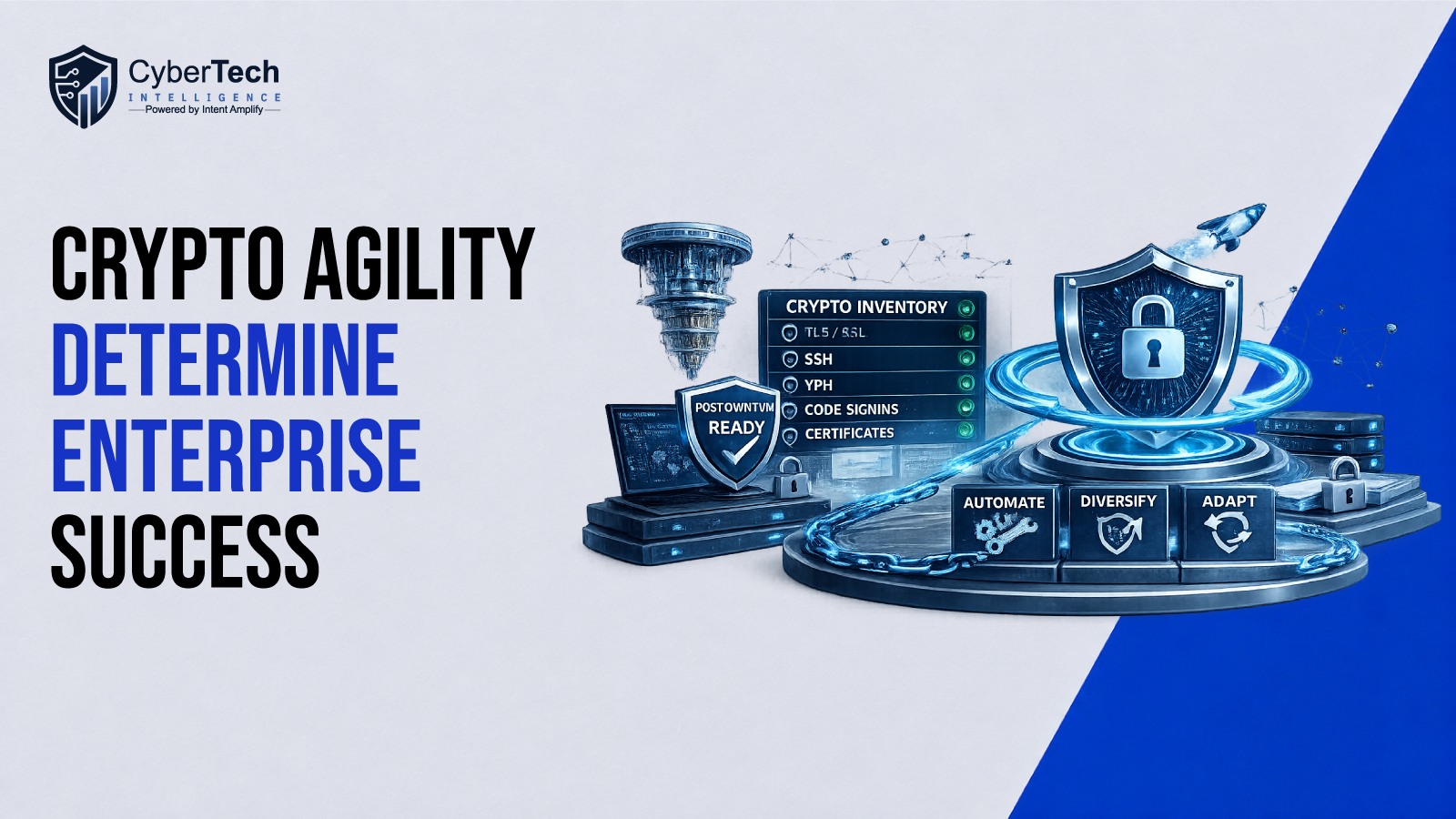
This capability is known as crypto agility.
Crypto agility is often misunderstood as the ability to replace one encryption algorithm with another. In reality, it represents something much broader. It is an architectural and operational approach that enables organizations to update cryptographic components with minimal disruption, reduced operational risk, and stronger governance.
For enterprise leaders, crypto agility is not simply a technical feature—it is a strategic capability that supports long-term cyber resilience, digital trust, and business continuity.
This article explores why crypto agility has become one of the most important success factors for post-quantum readiness and outlines the principles organizations should adopt to build flexible, future-ready cryptographic infrastructures.
Cryptography Was Designed for Stability - The Future Requires Adaptability
Historically, enterprise cryptography has been implemented with longevity in mind.
Organizations selected encryption standards, deployed Public Key Infrastructure (PKI), issued digital certificates, and embedded cryptographic libraries into applications with the expectation that these technologies would remain in service for many years. In many environments, cryptographic implementations have outlived the applications they were originally designed to protect.
This approach was practical because changes to cryptographic standards occurred relatively infrequently. When updates were required, organizations generally had sufficient time to plan migrations over extended periods.
Today's environment is fundamentally different.
Several factors are accelerating the pace of cryptographic change:
- Standardization of post-quantum cryptographic algorithms.
- Rapid cloud adoption and hybrid infrastructure expansion.
- Growth of API-driven application ecosystems.
- Increasing use of machine identities and automated workloads.
- Regulatory focus on long-term data protection.
- Expanding software supply chains and third-party integrations.
Collectively, these trends create environments where cryptographic systems must evolve continuously rather than remain static.
Organizations that cannot adapt efficiently may encounter prolonged migration projects, inconsistent implementations, operational disruption, and increased security risk.
CyberTech Intelligence believes that the ability to evolve cryptography efficiently will become a defining characteristic of mature cybersecurity organizations.
What Is Crypto Agility?
Crypto agility refers to an organization's ability to introduce, replace, upgrade, or retire cryptographic algorithms, keys, certificates, protocols, and supporting technologies without requiring widespread redesign of enterprise systems.
Rather than focusing on a single migration event, crypto agility emphasizes continuous adaptability.
A crypto-agile organization can:
- Adopt new cryptographic standards with minimal disruption.
- Replace deprecated algorithms without extensive redevelopment.
- Rotate keys efficiently across distributed environments.
- Modernize certificate infrastructures in a controlled manner.
- Integrate new security protocols into existing architectures.
- Maintain interoperability during phased migrations.
- Respond rapidly to future cryptographic vulnerabilities.
This flexibility enables organizations to treat cryptographic modernization as an ongoing operational capability rather than an infrequent, high-risk transformation project.
Why Crypto Agility Matters Beyond Quantum Computing
Although post-quantum cryptography has brought renewed attention to crypto agility, its value extends well beyond the quantum era.
Enterprise technology environments continue to evolve rapidly.
Cloud-native applications.
Containerized workloads.
Artificial intelligence platforms.
Edge computing.
Internet of Things (IoT) ecosystems.
Machine identities.
Confidential computing.
Each introduces new cryptographic requirements.
Organizations with rigid architectures often struggle to accommodate these changes because cryptographic services are tightly coupled with application logic, legacy infrastructure, or vendor-specific implementations.
By contrast, crypto-agile organizations possess architectures that support continuous improvement without requiring major operational disruption.
This adaptability reduces long-term costs while improving organizational resilience.
Characteristics of a Crypto-Agile Enterprise
CyberTech Intelligence identifies several characteristics commonly found in organizations with mature crypto agility.
Cryptography Is Centralized Rather Than Fragmented
Instead of allowing each application or business unit to implement cryptographic functionality independently, organizations establish standardized enterprise services.
Centralized cryptographic services improve governance, simplify maintenance, and reduce implementation inconsistencies.
Certificate Lifecycle Management Is Automated
Manual certificate administration becomes increasingly difficult as enterprises expand cloud services, APIs, machine identities, and distributed applications.
Automation enables organizations to:
- Monitor certificate inventories.
- Prevent unexpected expirations.
- Enforce enterprise policies.
- Reduce operational effort.
- Improve compliance.
Automation also provides leadership with greater visibility into enterprise trust relationships.
Security Standards Are Consistently Applied
Crypto-agile organizations define enterprise-wide standards covering:
- Approved algorithms.
- Key management.
- Certificate policies.
- Secure software development practices.
- Vendor integration requirements.
- Lifecycle management procedures.
Consistency simplifies future modernization efforts because cryptographic changes can be implemented systematically rather than independently across business units.
Enterprise Architecture Supports Change
Perhaps the most important characteristic is architectural flexibility.
Applications are designed to consume cryptographic services through standardized interfaces rather than embedding cryptographic logic directly into business code.
This separation enables organizations to modernize security controls while minimizing application disruption.
CyberTech Intelligence recommends treating architectural flexibility as a strategic investment rather than a technical optimization.
Organizations that adopt this approach today will be significantly better prepared for future cryptographic evolution.
Why Many Organizations Struggle with Crypto Agility
Despite widespread recognition of its importance, relatively few enterprises have achieved mature crypto agility.
Common obstacles include:
- Legacy applications with hard-coded cryptographic libraries.
- Limited visibility into enterprise cryptographic assets.
- Inconsistent certificate management practices.
- Siloed ownership across infrastructure, security, and development teams.
- Vendor dependencies with unclear modernization roadmaps.
- Manual operational processes.
- Lack of executive governance.
These challenges illustrate why crypto agility cannot be solved through technology alone.
It requires coordinated improvements across architecture, governance, operational processes, supplier management, and executive oversight.
Organizations that recognize this broader perspective will be better positioned to build resilient cryptographic ecosystems capable of supporting long-term digital transformation.
Crypto Agility Is the Foundation of Successful Post-Quantum Migration
Many organizations approach post-quantum cryptography as though it were a conventional technology refresh. They anticipate selecting new algorithms, upgrading products, deploying patches, and completing the migration within a defined project timeline.
Enterprise reality is considerably more complex.
Cryptography exists throughout modern digital infrastructure. It protects APIs, cloud workloads, customer identities, payment systems, software supply chains, virtual private networks, email communications, connected devices, operational technology, and countless third-party integrations.
Each of these environments evolves independently.
Applications are updated at different intervals.
Cloud providers release new capabilities continuously.
Vendors follow their own product roadmaps.
Regulatory expectations continue to mature.
Consequently, organizations should avoid viewing post-quantum cryptography as a single migration event.
Instead, they should prepare for an ongoing cycle of cryptographic evolution.
Crypto agility enables this shift.
Rather than asking, "How do we complete migration?" leadership begins asking, "How do we ensure our organization can continuously adapt as cryptographic standards evolve?"
This change in perspective fundamentally alters enterprise planning.
Modernization becomes an operational capability instead of a one-time initiative.
Why Traditional Migration Models Are No Longer Sufficient
Historically, enterprise security upgrades followed predictable cycles.
Organizations upgraded firewalls.
Replaced endpoint software.
Migrated operating systems.
Modernized authentication platforms.
Completed compliance projects.
Each initiative had a beginning and an end.
Cryptography no longer fits this model.
The emergence of post-quantum standards demonstrates that cryptographic algorithms can change over time.
Future developments may introduce:
- New encryption algorithms.
- Updated digital signature standards.
- Enhanced key exchange mechanisms.
- Stronger certificate validation methods.
- Emerging identity technologies.
- New compliance expectations.
Organizations lacking crypto agility will repeat large-scale migration projects whenever these changes occur.
Organizations with mature crypto agility will integrate new standards through established operational processes.
This distinction represents one of the most important competitive advantages in enterprise cybersecurity.
Four Architectural Mistakes That Reduce Crypto Agility
CyberTech Intelligence frequently observes recurring architectural patterns that make cryptographic modernization significantly more difficult.
Recognizing these issues early allows organizations to reduce future migration complexity.
Mistake 1: Hard-Coded Cryptography
Many legacy applications embed cryptographic algorithms directly into application logic.
Changing encryption methods therefore requires:
- Source code modifications.
- Extensive regression testing.
- Application redeployment.
- Business validation.
- Vendor coordination.
This approach creates unnecessary operational risk.
Modern applications should instead consume cryptographic services through standardized interfaces or centralized security libraries.
Doing so separates business functionality from cryptographic implementation, allowing security improvements without major application redesign.
Mistake 2: Fragmented Certificate Management
Certificates frequently accumulate across organizations without centralized governance.
Individual departments often purchase and manage certificates independently.
Cloud teams use separate platforms.
Development teams generate internal certificates.
Third-party applications maintain their own trust stores.
Over time, leadership loses visibility into:
- Certificate ownership.
- Expiration schedules.
- Renewal responsibilities.
- Business dependencies.
Fragmentation increases operational risk while making modernization significantly more complicated.
Centralized certificate lifecycle management improves visibility, simplifies governance, and strengthens enterprise resilience.
Mistake 3: Inconsistent Cryptographic Standards
Different business units often adopt different cryptographic practices.
Some applications use outdated algorithms.
Others follow modern recommendations.
Cloud environments may implement different standards than on-premises infrastructure.
Without enterprise-wide governance, modernization becomes inconsistent.
CyberTech Intelligence recommends establishing standardized policies covering:
- Approved cryptographic algorithms.
- Key lengths.
- Certificate authorities.
- Key rotation practices.
- Secure development standards.
- Vendor requirements.
Consistency significantly improves enterprise agility.
Mistake 4: Limited Business Visibility
Technology teams often understand infrastructure.
Business leaders understand critical services.
Few organizations successfully connect the two.
As a result, security teams may know where certificates exist without understanding which applications generate revenue, support customers, or maintain regulatory compliance.
Crypto agility depends upon understanding both technology and business priorities.
Organizations should continuously map cryptographic assets to business services so modernization decisions reflect operational impact rather than technical convenience.
Public Key Infrastructure (PKI) as the Foundation of Crypto Agility
Public Key Infrastructure remains one of the most critical components of enterprise trust.
PKI supports:
- Digital certificates.
- Identity verification.
- Authentication.
- Secure communications.
- Code signing.
- Email security.
- API protection.
- Device authentication.
Because so many enterprise services depend upon PKI, its modernization directly influences post-quantum readiness.
CyberTech Intelligence recommends that organizations evaluate several aspects of PKI maturity.
Visibility
Can leadership accurately identify:
- Certificate authorities?
- Certificate inventories?
- Trust relationships?
- Ownership?
- Renewal responsibilities?
Without comprehensive visibility, modernization planning becomes speculative.
Automation
Manual certificate management introduces unnecessary operational risk.
Automation enables organizations to:
- Discover certificates continuously.
- Renew certificates automatically.
- Monitor expiration.
- Enforce enterprise policies.
- Reduce administrative effort.
Automation also supports long-term crypto agility by making future algorithm transitions significantly easier.
Governance
PKI modernization should include executive governance.
Organizations should establish policies defining:
- Certificate issuance.
- Trust management.
- Lifecycle ownership.
- Compliance monitoring.
- Vendor integration.
Governance transforms PKI from a technical service into an enterprise trust capability.
Cloud Transformation and Crypto Agility
Cloud computing has fundamentally changed enterprise cryptography.
Organizations increasingly depend on:
- Cloud Key Management Services (KMS).
- Managed certificate services.
- Cloud-native identity platforms.
- API gateways.
- Secret management platforms.
- Serverless applications.
- Container orchestration.
These technologies provide new opportunities for improving crypto agility.
Cloud-native services often simplify:
- Key rotation.
- Certificate management.
- Identity integration.
- Automated policy enforcement.
- Infrastructure standardization.
However, cloud adoption also introduces new governance responsibilities.
Organizations should ensure that cryptographic standards remain consistent across:
- Public cloud.
- Private cloud.
- Hybrid infrastructure.
- SaaS platforms.
- Multi-cloud environments.
CyberTech Intelligence recommends defining enterprise cryptographic policies first and then applying them consistently regardless of deployment model.
DevSecOps Makes Crypto Agility Continuous
Modern software delivery has shifted from periodic releases to continuous integration and continuous deployment (CI/CD).
Security practices must evolve accordingly.
DevSecOps enables organizations to integrate cryptographic governance directly into software development pipelines.
Examples include:
- Automated certificate provisioning.
- Secure secret management.
- Cryptographic policy validation.
- Software signing automation.
- Dependency scanning.
- Infrastructure-as-Code security validation.
Embedding cryptographic controls into development workflows reduces manual effort while ensuring consistent implementation across rapidly evolving application environments.
Crypto agility becomes part of everyday engineering rather than a periodic security initiative.
Zero Trust and Crypto Agility Reinforce Each Other
Zero Trust architecture assumes that trust should never be granted implicitly.
Every identity, device, workload, and connection requires continuous verification.
This philosophy depends heavily upon modern cryptographic services.
Authentication.
Certificate validation.
Identity verification.
Encrypted communications.
Machine identities.
Secure APIs.
Organizations investing in Zero Trust therefore benefit significantly from improved crypto agility.
Likewise, organizations strengthening crypto agility often find themselves better prepared to mature Zero Trust capabilities because both initiatives emphasize:
- Continuous verification.
- Strong identity.
- Centralized policy.
- Automation.
- Governance.
- Adaptability.
Rather than competing for resources, these initiatives should reinforce one another as part of a unified enterprise trust strategy.
Technology Alone Will Not Create Crypto Agility
Enterprise leaders sometimes assume that purchasing new security platforms automatically improves cryptographic flexibility.
Technology certainly plays an important role.
However, sustainable crypto agility also depends upon:
- Executive governance.
- Enterprise architecture.
- Standardized operational processes.
- Cross-functional collaboration.
- Supplier engagement.
- Continuous visibility.
- Business-driven decision-making.
Organizations that address these dimensions together are far more likely to build resilient cryptographic ecosystems capable of supporting future technological change.
Measuring Crypto Agility: Moving Beyond Technical Metrics
Many organizations believe crypto agility improves once they deploy modern encryption algorithms or upgrade Public Key Infrastructure (PKI). While these initiatives are important, they represent only a portion of enterprise readiness.
True crypto agility is an organizational capability.
It combines governance, architecture, operational maturity, automation, supplier management, and executive oversight into a repeatable operating model that enables continuous cryptographic evolution.
CyberTech Intelligence recommends evaluating crypto agility through a maturity-based approach rather than relying solely on implementation milestones.
This enables executive leadership to understand not only what has been deployed, but also how prepared the organization is for future cryptographic change.
Crypto Agility Maturity within the CyberTech Intelligence Enterprise PQC Readiness Framework™
Within the CyberTech Intelligence Enterprise PQC Read
Rather than measuring isolated technical improvements, this framework evaluates how effectively an organization can respond to future cryptographic change with minimal disruption.
Level 1 – Reactive
At this stage, cryptographic management is largely decentralized and undocumented.
Organizations typically experience:
- Limited visibility into cryptographic assets.
- Manual certificate management.
- Legacy algorithms embedded within applications.
- Minimal executive awareness.
- Inconsistent security standards.
- Vendor readiness largely unknown.
Modernization efforts usually begin only after compliance requirements or security incidents create urgency.
This maturity level presents the highest operational risk.
Level 2 – Managed
Organizations begin establishing structured governance.
Characteristics include:
- Initial cryptographic inventory.
- Basic PKI governance.
- Certificate lifecycle documentation.
- Executive awareness developing.
- Individual modernization initiatives underway.
- Vendor discussions beginning.
Although progress becomes measurable, modernization activities often remain project-specific rather than enterprise-wide.
Level 3 – Integrated
Crypto agility becomes integrated into enterprise operations.
Organizations typically demonstrate:
- Comprehensive cryptographic discovery.
- Cross-functional governance committees.
- Enterprise cryptographic standards.
- Automated certificate lifecycle management.
- Supplier readiness assessments.
- Executive reporting dashboards.
Business priorities increasingly influence modernization decisions.
Most enterprise transformation programs should target this maturity level during initial post-quantum readiness initiatives.
Level 4 – Optimized
At this stage, modernization becomes continuous.
Characteristics include:
- Enterprise-wide crypto agility policies.
- Mature DevSecOps integration.
- Cloud-native cryptographic governance.
- Automated compliance monitoring.
- Business service dependency mapping.
- Predictive operational planning.
- Continuous supplier engagement.
Organizations begin responding proactively rather than reactively to industry changes.
Level 5 – Adaptive
Adaptive organizations possess highly resilient trust infrastructures capable of evolving continuously.
Common characteristics include:
- Governance embedded across executive leadership.
- Enterprise-wide cryptographic automation.
- Continuous inventory updates.
- Mature crypto agility architecture.
- AI-assisted operational monitoring.
- Integrated business risk management.
- Ongoing standards evaluation.
- Continuous technology modernization.
Rather than responding to cryptographic change as isolated projects, adaptive organizations treat modernization as part of normal business operations.
CyberTech Intelligence believes this represents the long-term objective for organizations pursuing enterprise digital trust.
Executive KPIs That Demonstrate Crypto Agility
Measuring progress requires metrics that executive leadership can understand.
CyberTech Intelligence recommends reporting indicators across five strategic categories.
Visibility KPIs
Leadership should monitor:
- Percentage of cryptographic assets discovered.
- Business applications mapped to cryptographic dependencies.
- PKI environments documented.
- Certificate inventory completeness.
- Machine identities identified.
Visibility provides confidence that modernization decisions are evidence-based.
Governance KPIs
Governance maturity can be evaluated through:
- Executive sponsor assigned.
- Governance committee participation.
- Enterprise standards approved.
- Cross-functional representation.
- Strategic decisions completed.
Governance indicators demonstrate organizational alignment rather than technical deployment.
Operational KPIs
Operational readiness includes:
- Certificate lifecycle automation.
- Average certificate renewal time.
- Legacy algorithms identified.
- Crypto agility assessments completed.
- Secure development standards implemented.
These metrics measure operational capability and process maturity.
Supplier KPIs
Executive dashboards should include:
- Strategic vendors assessed.
- Published PQC roadmaps reviewed.
- Interoperability testing completed.
- Migration guidance received.
- Long-term support commitments validated.
Because enterprise trust increasingly depends on technology ecosystems, supplier maturity should receive the same attention as internal readiness.
Business KPIs
Ultimately, modernization must support enterprise objectives.
Leadership should therefore evaluate:
- Business-critical services prioritized.
- Long-lived sensitive data protected.
- Regulatory requirements addressed.
- Customer-facing systems modernized.
- Operational resilience improvements.
- Investment milestones achieved.
These indicators connect technical modernization with measurable business outcomes.
A Practical Three-Year Crypto Agility Roadmap
Organizations frequently ask how quickly crypto agility can be achieved.
CyberTech Intelligence recommends viewing maturity as a phased journey rather than a fixed implementation deadline.
Year One: Build Visibility and Governance
Primary objectives:
- Establish executive sponsorship.
- Complete enterprise cryptographic discovery.
- Document PKI environments.
- Form governance committees.
- Define enterprise standards.
- Begin supplier engagement.
The objective is organizational alignment rather than technology replacement.
Year Two: Modernize Core Infrastructure
Leadership should focus on:
- Certificate lifecycle automation.
- PKI modernization.
- Crypto agility architecture.
- Cloud cryptographic governance.
- Secure software development integration.
- Business dependency mapping.
By the end of Year Two, organizations should possess an operational foundation capable of supporting phased modernization.
Year Three: Institutionalize Continuous Improvement
The final phase emphasizes long-term resilience.
Activities include:
- Continuous inventory updates.
- Automated compliance monitoring.
- Recurring executive reporting.
- Vendor governance reviews.
- Architecture optimization.
- Ongoing standards evaluation.
- Enterprise maturity reassessments.
Rather than concluding modernization, organizations transition toward continuous adaptation.
Why Crypto Agility Creates Competitive Advantage
The value of crypto agility extends well beyond cybersecurity.
Organizations capable of adapting rapidly often experience broader operational benefits.
Examples include:
Faster Technology Adoption
Flexible architectures simplify the adoption of emerging security technologies without requiring extensive redevelopment.
Lower Operational Risk
Standardized governance and automated lifecycle management reduce outages, certificate failures, and implementation errors.
Improved Regulatory Readiness
Organizations can respond more efficiently as governments introduce new cryptographic guidance, cybersecurity regulations, and compliance expectations.
Better Vendor Collaboration
Mature governance enables structured engagement with technology providers, improving planning and reducing migration uncertainty.
Greater Executive Confidence
Perhaps most importantly, leadership gains confidence that the organization possesses the operational capability to manage future technological change.
CyberTech Intelligence believes this confidence will become increasingly valuable as cybersecurity evolves beyond static infrastructure toward continuously adaptive digital trust ecosystems.
Crypto Agility Is an Investment in Organizational Resilience
While post-quantum cryptography has accelerated industry attention, crypto agility should not be viewed solely as preparation for quantum computing.
It is an investment in long-term organizational resilience.
The same capabilities that support quantum readiness also strengthen:
- Zero Trust implementation.
- Machine identity management.
- Secure cloud adoption.
- DevSecOps maturity.
- Software supply chain security.
- API protection.
- Enterprise digital trust.
Organizations that embrace crypto agility today will be significantly better positioned to manage whatever cryptographic challenges emerge tomorrow.
CyberTech Intelligence Perspective
Crypto Agility Is Becoming the Foundation of Enterprise Digital Trust
For many years, enterprise cryptography operated quietly in the background.
Applications authenticated users.
Certificates secured websites.
Encryption protected sensitive information.
Digital signatures validated software.
Few executive leaders needed to understand how these technologies worked because they were assumed to be stable, mature, and largely invisible.
That assumption is changing.
The emergence of post-quantum cryptography has highlighted a broader reality: enterprise trust can no longer depend upon static cryptographic foundations.
Technology ecosystems now evolve continuously.
Cloud platforms introduce new capabilities every month.
Software supply chains grow increasingly interconnected.
Machine identities already outnumber human identities in many enterprises.
Artificial intelligence systems generate new security requirements.
Digital services expand across hybrid and multi-cloud environments.
Against this backdrop, organizations require more than stronger algorithms.
They require the ability to adapt continuously without disrupting business operations.
CyberTech Intelligence believes crypto agility is therefore not simply a technical objective—it is a strategic business capability.
Organizations that can evolve their cryptographic infrastructure efficiently will protect digital trust more effectively, modernize faster, and respond with greater confidence to future technology shifts.
The organizations that struggle will not necessarily be those using weaker encryption today.
They will be those whose architecture, governance, and operational processes cannot evolve tomorrow.
Five Executive Recommendations for Building Crypto Agility
1. Design Enterprise Architecture for Change
Enterprise architecture should assume that cryptographic standards will continue evolving.
Applications should avoid embedding cryptographic logic directly into business functionality whenever possible.
Instead, organizations should:
- Centralize cryptographic services.
- Standardize security APIs.
- Reduce application dependencies.
- Separate business logic from cryptographic implementation.
- Support modular technology upgrades.
An architecture designed for flexibility significantly reduces the cost and complexity of future modernization efforts.
2. Modernize Public Key Infrastructure Before It Becomes a Constraint
Public Key Infrastructure (PKI) remains one of the most important components of enterprise trust.
Organizations should evaluate whether their PKI environment supports:
- Automated certificate lifecycle management.
- Enterprise-wide visibility.
- Policy enforcement.
- Hybrid deployments.
- Cloud integration.
- Future algorithm adoption.
Modernizing PKI today establishes a strong operational foundation for tomorrow's cryptographic requirements.
3. Integrate Crypto Agility Into Every Technology Initiative
Crypto agility should not exist as an isolated security program.
Instead, it should become part of every major technology initiative, including:
- Cloud transformation.
- Application modernization.
- Zero Trust implementation.
- DevSecOps programs.
- API security.
- Identity modernization.
- Software supply chain security.
Embedding cryptographic flexibility into ongoing transformation programs reduces future migration effort while improving long-term resilience.
4. Treat Vendors as Long-Term Strategic Partners
Enterprise readiness depends upon the maturity of external technology ecosystems.
Organizations should establish recurring governance discussions with strategic suppliers covering:
- Product roadmaps.
- NIST standards support.
- Migration planning.
- Hybrid cryptographic capabilities.
- Interoperability testing.
- Long-term lifecycle commitments.
Continuous engagement provides better visibility into technology evolution and enables more informed investment decisions.
5. Make Crypto Agility a Permanent Governance Capability
Perhaps the most important recommendation is recognizing that crypto agility should not conclude once post-quantum migration begins.
Technology evolution will continue.
New standards will emerge.
Threats will change.
Business priorities will shift.
Organizations should therefore institutionalize governance through:
- Executive oversight.
- Quarterly maturity reviews.
- Continuous cryptographic discovery.
- Regular supplier assessments.
- Enterprise dashboards.
- Architecture reviews.
Continuous governance ensures that crypto agility remains an enduring organizational capability rather than a temporary project.
The Next Decade of Enterprise Cryptography
Enterprise cryptography is entering a period of continuous transformation.
Future developments are likely to include:
- Broader deployment of quantum-resistant algorithms.
- Expansion of machine identities.
- Increased adoption of confidential computing.
- AI-assisted cryptographic management.
- Greater automation across PKI operations.
- Stronger software supply chain protections.
- More rigorous regulatory expectations.
- Wider adoption of decentralized trust models.
Organizations prepared for continuous change will adapt efficiently regardless of which technologies become dominant.
CyberTech Intelligence expects crypto agility to become a defining characteristic of mature cybersecurity organizations over the next decade.
Just as cloud readiness became an essential enterprise capability, crypto agility will increasingly become a prerequisite for maintaining digital trust in rapidly evolving technology environments.
Executive Takeaway
The conversation surrounding post-quantum cryptography should not focus exclusively on replacing algorithms.
The more important objective is creating organizations capable of responding to future cryptographic change with confidence.
Crypto agility provides that capability.
It enables enterprises to:
- Modernize without disrupting business operations.
- Respond quickly to emerging standards.
- Strengthen digital trust.
- Reduce operational complexity.
- Improve executive decision-making.
- Support long-term cyber resilience.
Organizations that invest in crypto agility today will be better prepared not only for the quantum era but also for the broader evolution of enterprise cybersecurity.
Ultimately, crypto agility is not about preparing for a single technological milestone.
It is about building an enterprise that can adapt continuously, protect digital trust, and innovate securely in an increasingly dynamic world.
Ready to Evaluate Your Enterprise Crypto Agility?
CyberTech Intelligence helps enterprise security leaders assess, strengthen, and operationalize crypto agility through research-backed advisory services and executive assessments.
Our Enterprise Crypto Agility Assessment helps organizations:
- Assess enterprise cryptographic maturity.
- Evaluate Public Key Infrastructure (PKI) readiness.
- Measure crypto agility across cloud, applications, and infrastructure.
- Identify legacy cryptographic dependencies.
- Review governance and executive accountability.
- Assess supplier ecosystem readiness.
- Develop phased modernization roadmaps aligned with business priorities.
Whether your organization is beginning its post-quantum journey or advancing an existing modernization program, our advisory approach delivers actionable insights that support long-term resilience and business continuity.
Contact CyberTech Intelligence to learn how our research and advisory services can help your organization build a flexible, governance-driven cryptographic strategy for the quantum era.
References
- National Institute of Standards and Technology (NIST). Post-Quantum Cryptography Project. https://csrc.nist.gov/projects/post-quantum-cryptography
- NIST. FIPS 203: Module-Lattice-Based Key-Encapsulation Mechanism Standard (ML-KEM). https://csrc.nist.gov/pubs/fips/203/final
- NIST. FIPS 204: Module-Lattice-Based Digital Signature Standard (ML-DSA). https://csrc.nist.gov/pubs/fips/204/final
- NIST. FIPS 205: Stateless Hash-Based Digital Signature Standard (SLH-DSA). https://csrc.nist.gov/pubs/fips/205/final
- National Cybersecurity Center of Excellence (NCCoE). Migration to Post-Quantum Cryptography Project. https://www.nccoe.nist.gov/applied-cryptography/migration-to-pqc
- Cybersecurity and Infrastructure Security Agency (CISA). Post-Quantum Cryptography Resources. https://www.cisa.gov/topics/post-quantum-cryptography
- NIST. Considerations for Achieving Crypto Agility: Strategies and Practices (CSWP 39). https://csrc.nist.gov/pubs/cswp/39/final
Author
CyberTech Intelligence Editorial Desk
Author