
The banking fraud question is changing. For years, the center of gravity was identity theft: a criminal misused information tied to a real person. AI-enabled fraud changes that model because it can manufacture the evidence that banks, employees, and customers expect to trust.
A fraudster can combine stolen data with synthetic attributes, forged documents, cloned speech, interactive media, and credible payment narratives. The result may pass individual checks while failing the larger question: is this real customer, real authority, and real transaction intent?
At a Glance
AI-enabled fraud can fabricate identities, documents, voices, videos, and payment narratives.
FinCEN has documented deepfake media and fraudulent identity documents in schemes targeting financial institutions.
Treasury's 2026 National Money Laundering Risk Assessment connects generative-AI-produced fraudulent identities to accounts used for fraud proceeds and laundering.
Deepfake detection is a signal, not a complete verdict.
The Executive Insight
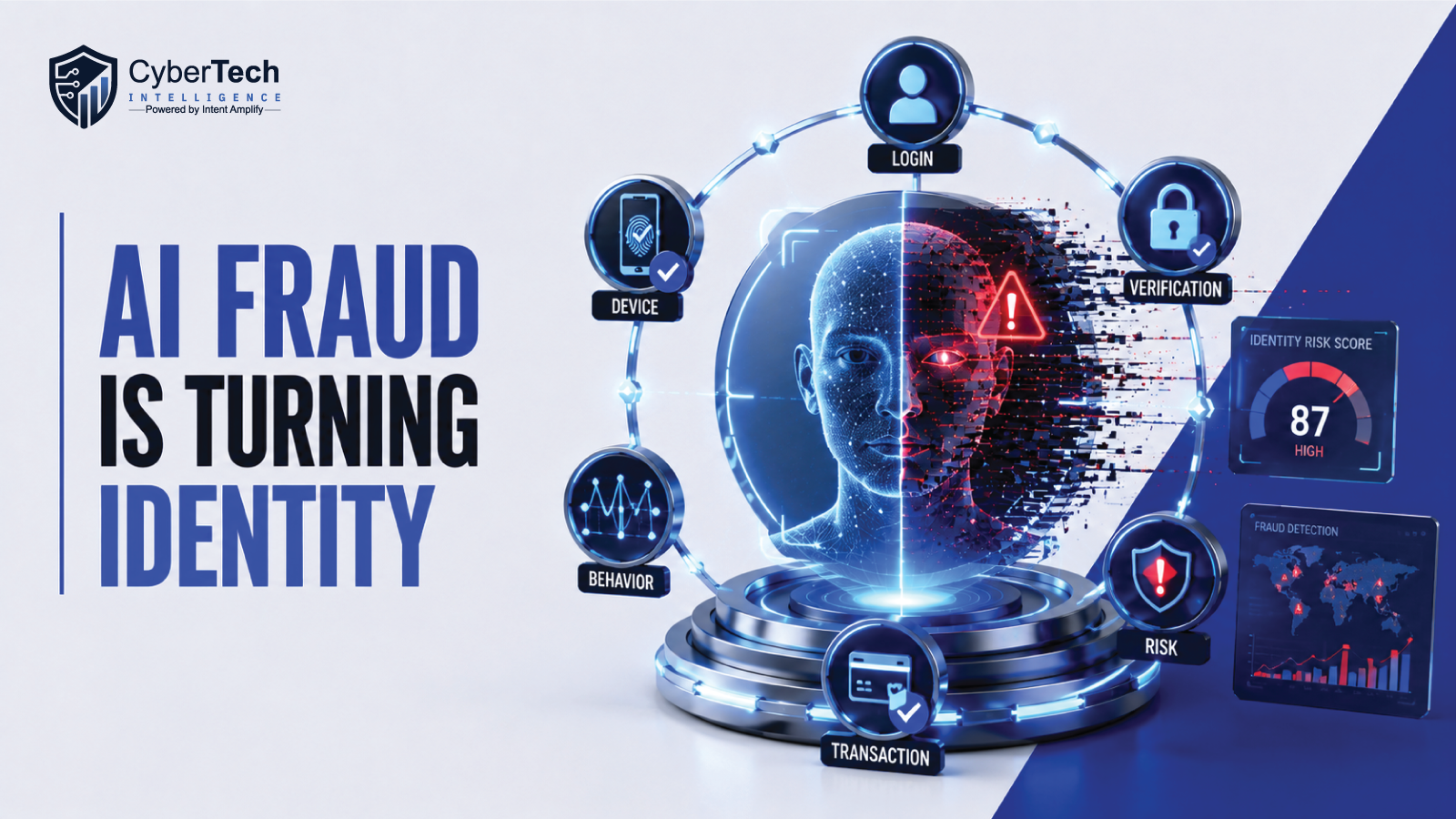
Banks should treat AI fraud as a trust-chain problem. The control decision should not stop at whether a document matches a selfie or a voice sounds familiar. It should test whether identity, device, behavior, request, beneficiary, amount, timing, and payment purpose remain coherent.
That changes the operating model. Identity, fraud, cybersecurity, AML, payment, and contact-center teams need shared evidence and coordinated authority. A suspicious selfie should not live only in an identity queue. A new beneficiary should not live only in a payments queue. A cloned voice risk should not live only in a contact-center workflow. The risk is connected, so the response has to be connected.
Why Deepfake Detection Is Not Enough
NIST has noted that provenance, watermarking, labeling, and synthetic-media detection can improve transparency. But transparency does not automatically establish legitimacy. A video may be authentic and still be used in a fraudulent context. A document may be synthetic and part of a broader laundering scheme. A voice may be cloned, but the more important question is what authority it is trying to exercise.
Banks therefore need layered controls: trusted capture, liveness testing, device intelligence, behavioral biometrics, account history, beneficiary validation, transaction monitoring, adaptive authentication, and independent verification for high-consequence actions.
CyberTech Intelligence Perspective
The mature control posture is not to add friction everywhere. It is to concentrate friction where irreversible loss can occur: new payees, unusual amounts, changed contact details, urgent payment narratives, executive impersonation, first-time beneficiaries, and high-risk account changes.
Trust-Chain Assurance Model
Identity: Is a real and authorized person present?
Interaction: Is the channel, device, document, voice, video, and capture path trustworthy?
Intent: Does the action fit known behavior, payment purpose, beneficiary relationship, and customer context?
Interdiction: Can the bank pause, step up, revoke, recall, investigate, and preserve evidence quickly?
What Leaders Should Do Next
Map fraud journeys across onboarding, login, account changes, beneficiary updates, contact-center authentication, and payments.
Unify identity, fraud, cyber, AML, and payment signals into coordinated cases.
Treat biometrics as evidence, not proof.
Apply deliberate friction around irreversible actions.
Run synthetic adversary exercises using AI-generated documents, deepfake calls, video injection, executive impersonation, and AI-powered phishing.
Read the Research Report
Use this report to assess how identity, fraud, cybersecurity, AML, payment, and contact-center controls operate as one enterprise decision architecture.
About CyberTech Intelligence
CyberTech Intelligence is an enterprise cybersecurity intelligence platform that helps security leaders, technology decision-makers, and go-to-market teams navigate emerging risks through executive-ready research and strategic market insight.
Request an AI Fraud and Deepfake Readiness Assessment
CyberTech Intelligence helps vendors and enterprise teams map AI fraud detection, identity verification, behavioral biometrics, AML, payment security, and related cybersecurity capabilities to BFSI buyer priorities and readiness gaps.
Request an AI Fraud and Deepfake Readiness Assessment: Contact Us Today
References
-
FinCEN. Alert on Fraud Schemes Involving Deepfake Media Targeting Financial Institutions. 2024.
https://www.fincen.gov/system/files/shared/FinCEN-Alert-DeepFakes-Alert508FINAL.pdf -
U.S. Treasury. 2026 National Money Laundering Risk Assessment. 2026.
https://home.treasury.gov/system/files/246/2026-NMLRA.pdf -
NIST. Reducing Risks Posed by Synthetic Content. 2024.
https://nvlpubs.nist.gov/nistpubs/ai/NIST.AI.100-4.pdf -
FBI. 2025 Internet Crime Report. 2026.
https://www.ic3.gov/AnnualReport/Reports/2025_IC3Report.pdf


