
Executive Brief
Quantum security is moving from long-range planning into a commercial countdown. For CISOs, CIOs, risk leaders, procurement teams, and federal suppliers, the 2030 deadline is becoming a planning marker for post-quantum migration, quantum security strategy, encryption modernization, supplier assurance, crypto agility, and long-life data protection.
The White House issued Securing the Nation Against Advanced Cryptographic Attacks in June 2026, creating a formal transition path for federal systems exposed to advanced cryptographic risk. The order gives agencies 30 days to identify a migration lead, requires federal transition guidance within 90 days, and sets a key establishment migration milestone for high-priority federal systems by December 31, 2030.¹
The Federal Register publication of Executive Order 14412 adds a digital-signature migration milestone by December 31, 2031.²
The business signal is broader than government compliance. Cloudflare reported that over two-thirds of browser traffic to its network is already protected with post-quantum encryption, while the company is targeting 2029 to become fully post-quantum secure across its product suite.³
IBM has also highlighted the financial scale of the quantum era, citing estimates that quantum computing could create $450 billion to $850 billion in net income for end users by 2035, while the global quantum computing market was valued at $866 million in 2023 and projected to reach $4.375 billion by 2028.⁴
CyberTech Intelligence assesses that quantum readiness is becoming a credibility test. Organizations must show where encryption dependencies exist, which sensitive data requires protection beyond 2030, which vendors control critical changes, and how leadership will measure readiness before deadline pressure becomes procurement pressure.
CyberTech Intelligence Observation: Quantum Readiness Is Becoming a Proof Problem
Most organizations do not struggle with encryption modernization because security leaders ignore risk. They struggle because encryption is distributed across systems that no single team fully owns.
Certificates may sit with infrastructure. Code signing may sit with engineering. Data retention may sit with legal. Vendor dependencies may sit with procurement. Key lifecycle management may sit with security architecture. SaaS exposure may sit with business units. This fragmentation creates a quantum readiness problem before post-quantum migration even begins.
CyberTech Intelligence observes that quantum readiness is becoming a proof problem. Leaders must prove where encryption exists, which data has long-term confidentiality value, which systems carry deadline exposure, which suppliers control remediation, and whether investment aligns with business risk.
This is also becoming an investment signal. IBM and the U.S. Department of Commerce announced a proposed $1 billion CHIPS award to support a purpose-built quantum foundry initiative, reflecting how quantum capability is becoming a national technology priority, not only a research discipline.⁵
Why This Week Matters for Security Leaders
Three forces will shape the next stage of quantum security strategy.
First, the Harvest Now, Decrypt Later risk is moving from abstract threat language into governance planning. The Federal Register states that adversaries may collect sensitive information today and decrypt it later, once large-scale quantum capabilities become available.²
This creates immediate concern for data that must remain confidential beyond 2030.
Second, large technology providers are preparing for a quantum-safe transition at enterprise scale. Microsoft’s Quantum-Safe Security update notes that its quantum-safe work began in 2014, included an experimental post-quantum-protected VPN tunnel test in 2019, and aims for early quantum-safe capability adoption by 2029, with Microsoft services and products targeted for transition by 2033.⁶
Third, practical migration complexity is real. Cisco’s Quantum-Ready Migration Guide states that moving to post-quantum cryptography is not a rip-and-replace of networking protocols but a fundamental upgrade to the mathematical foundations used to secure communications.⁷
For CISOs, this means post-quantum migration requires phased planning, testing, supplier alignment, funding discipline, and operational governance.
CyberTech Intelligence’s perspective: These signals show a market crossing point. Quantum readiness is no longer only a federal requirement. It is becoming a digital trust expectation.
The CyberTech Intelligence Quantum Security Priority Map™
|
Priority Area |
Executive Question |
Security Implication |
|
Long-Life Data |
Which information remains sensitive after 2030? |
Identifies Harvest Now Decrypt Later exposure |
|
Critical Systems |
Which platforms support regulated, federal, or high-value operations? |
Defines early post-quantum migration targets |
|
Vendor Dependencies |
Which suppliers control encryption changes? |
Reduces third-party uncertainty |
|
Crypto Agility |
Can encryption be changed without major disruption? |
Supports future algorithm transitions |
|
Evidence Readiness |
Can progress be shown to customers, boards, and auditors? |
Turns quantum security into measurable governance |
|
Investment Exposure |
Which systems need funded modernization before deadline pressure rises? |
Prevents last-minute budget escalation |
(Sources: White House Executive Order 14412, Cloudflare 2026 post-quantum roadmap, IBM quantum readiness analysis, Cisco Quantum-Ready Migration Guide, CyberTech Intelligence research and analysis)
This map helps leaders avoid a common mistake: treating quantum readiness as a technical checklist. A stronger approach identifies where unreadiness creates business exposure first.
For a federal contractor, exposure may affect procurement eligibility. For a healthcare organization, it may sit in long-term patient records. For a software provider, it may sit in product trust and code-signing dependencies. For a bank, it may involve transaction integrity and customer data protection.
Post-Quantum Migration Is Becoming a Supplier Test
The contractor language in the federal mandate is one of the strongest commercial signals. The order directs acquisition-related rulemaking for covered contractors, with compliance expectations tied to the 2030 timeline.¹
This means vendor readiness questions may arrive before many suppliers expect them.
Procurement teams should begin asking vendors direct questions:
Do you maintain cryptographic inventory visibility?
Can you explain product-level quantum readiness?
Do you support crypto agility?
Which roadmap milestones align with federal expectations?
Can you document exceptions and compensating controls?
Will customer-facing products support quantum-safe encryption in time?
CyberTech Intelligence expects early supplier scrutiny in cloud, cybersecurity, managed services, SaaS, defense, telecom, healthcare technology, financial infrastructure, and software supply chains. Prepared vendors will answer with evidence. Unprepared vendors will rely on broad intent, which may not satisfy high-assurance buyers.
Weekly Quantum Readiness Checklist
Executive owner assigned
↓
Long-life data categories identified
↓
Critical encryption dependencies mapped
↓
Federal contractor exposure reviewed
↓
Priority suppliers assessed
↓
Crypto agility gaps documented
↓
Exception register created
↓
Board-ready scorecard prepared
(Sources: Federal Register Executive Order 14412, IBM Secure the Post-Quantum Future, Cisco Quantum-Ready Migration Guide, CyberTech Intelligence research and analysis)
The CyberTech Intelligence Quantum Readiness Pulse™
Security leaders should track readiness through five recurring signals.
Pulse 1: Ownership
Has one leader been assigned authority across security, legal, procurement, application, infrastructure, and vendor teams?
Pulse 2: Exposure
Are critical systems, long-life data stores, and federal contract dependencies visible?
Pulse 3: Vendor Assurance
Have suppliers been reviewed for quantum readiness assessment, encryption modernization, crypto agility, and roadmap evidence?
Pulse 4: Investment
Are priority systems funded for assessment, migration planning, or modernization before deadline pressure increases?
Pulse 5: Reporting
Can leadership see progress through metrics instead of informal updates?
IBM’s Secure the Post-Quantum Future frames quantum-safe readiness as an enterprise transformation issue, not only an encryption upgrade.⁸ CyberTech Intelligence agrees. The transition will require governance, technology, supplier coordination, financial planning, and executive communication.
What CISOs Should Do This Week
Start with ownership. A named executive sponsor should coordinate the quantum security strategy across security, infrastructure, application owners, procurement, legal, compliance, and risk leadership.
Next, identify sensitive data that must remain confidential beyond the federal transition window. This should include intellectual property, regulated records, financial archives, customer data, authentication material, source code, and strategic business communications.
Third, begin a vendor readiness review. Focus first on suppliers tied to federal contracts, critical operations, encryption controls, identity systems, cloud workloads, code signing, certificates, and customer-facing platforms.
Fourth, build a board-level baseline. The first version does not need to be perfect. It should show known exposure, unknown exposure, ownership, key suppliers, investment needs, and a 90-day execution plan.
CyberTech Intelligence recommends a 90-day Quantum Readiness Sprint. The sprint should produce an exposure map, supplier review list, crypto agility gap summary, maturity baseline, exception register, and executive scorecard.
Closing Perspective
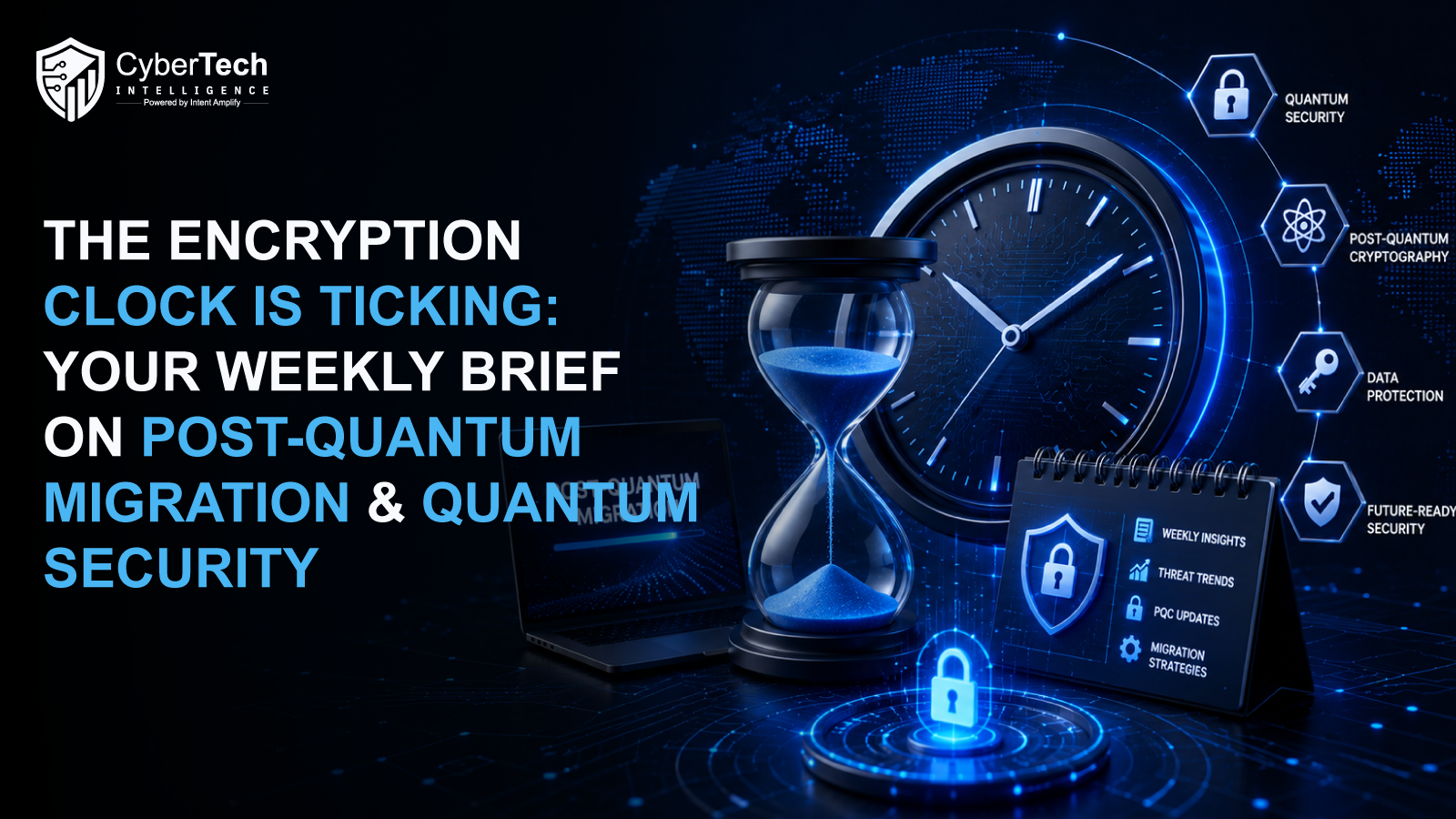
The encryption clock is ticking because quantum security is becoming measurable. By 2030, organizations may need to show far more than awareness. They may need to prove that sensitive data has been assessed, suppliers have been questioned, systems have been prioritized, exceptions have been documented, and leadership has funded the path forward.
The market is already signaling urgency through mandate deadlines, infrastructure-scale deployment, enterprise readiness research, and major technology providers preparing for a quantum-safe transition. The next advantage will belong to organizations that create evidence before customers, auditors, or procurement teams demand it.
CyberTech Intelligence believes quantum readiness will become a credibility test. Intent will not be enough. The organizations best prepared for 2030 will be those that transform quantum readiness from a security initiative into an enterprise governance capability supported by measurable evidence, supplier accountability, executive ownership, and continuous resilience planning.
Assess Your Quantum Readiness with CyberTech Intelligence
CyberTech Intelligence helps CISOs, CIOs, risk leaders, and security teams convert the 2030 quantum mandate into a practical readiness roadmap. For organizations evaluating post-quantum migration, quantum security strategy, Harvest Now, Decrypt Later exposure, crypto agility, quantum readiness assessment, supplier accountability, long-life data risk, or board-ready reporting, CyberTech Intelligence can support exposure mapping, executive workshops, maturity benchmarking, and mandate-aligned advisory.
References
- The White House, Securing the Nation Against Advanced Cryptographic Attacks, June 22, 2026.
https://www.whitehouse.gov/presidential-actions/2026/06/securing-the-nation-against-advanced-cryptographic-attacks/ - Federal Register, Executive Order 14412: Securing the Nation Against Advanced Cryptographic Attacks, June 25, 2026.
https://www.federalregister.gov/documents/2026/06/25/2026-12909/securing-the-nation-against-advanced-cryptographic-attacks - Cloudflare, The White House’s Post-Quantum Executive Order Is an Important Foundation for the Future of Secure Internet Communications, June 2026.
https://blog.cloudflare.com/post-quantum-eo-2026/ - IBM, Make Quantum Readiness Real, IBM Institute for Business Value.
https://www.ibm.com/thought-leadership/institute-business-value/en-us/report/quantum-readiness - IBM, IBM and U.S. Department of Commerce Announce America’s First Purpose-Built Quantum Foundry, Supported by Proposed $1 Billion CHIPS Award, May 2026.
https://newsroom.ibm.com/ibm-and-u-s-department-of-commerce-announce-americas-first-purpose-built-quantum-foundry - Microsoft, Quantum-Safe Security: Progress Towards Next-Generation Cryptography, August 2025.
https://www.microsoft.com/en-us/security/blog/2025/08/20/quantum-safe-security-progress-towards-next-generation-cryptography/ - Cisco, Quantum-Ready Migration Guide, 2026.
https://www.cisco.com/c/en/us/td/docs/solutions/CVD/Campus/Quantum-Ready-Migration-Guide.html - IBM, Secure the Post-Quantum Future, October 2025.
https://www.ibm.com/thought-leadership/institute-business-value/en-us/report/2025-quantum-safe-readiness